Park Ji-hoon's Rise Is Rewriting K-Entertainment Rules
From Wanna One to 13 million moviegoers — how one actor triggered an industry-wide phenomenon
 By Jang Hojin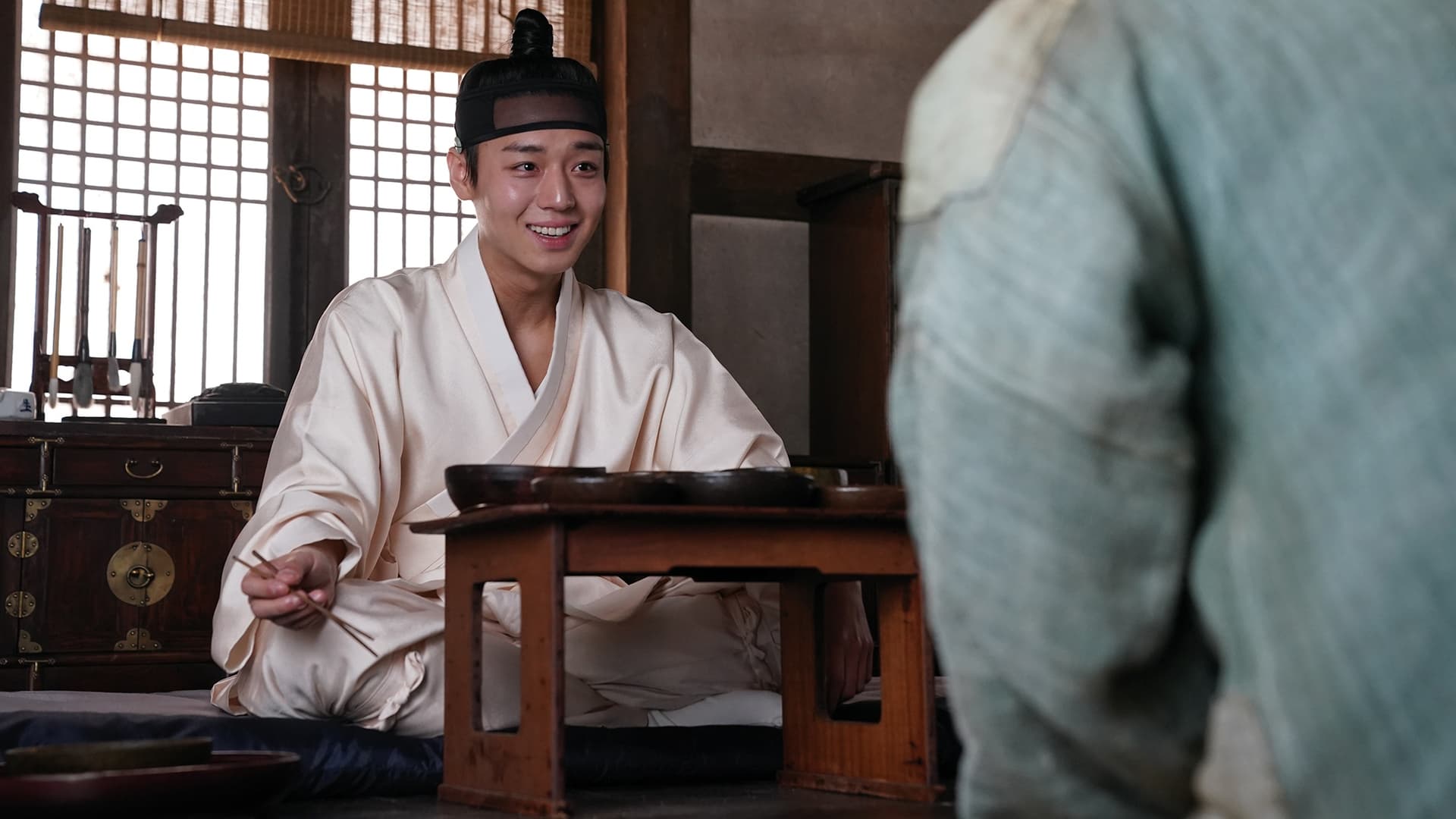
When the Korea Corporate Reputation Research Institute released its March rankings for individual boy group members, the results weren't just surprising — they were historically lopsided. Park Ji-hoon claimed the top spot with a staggering brand reputation score of 12,995,107, a figure so dominant that it exceeded the combined scores of BTS's Jimin at 5.01 million and Jin at 3.60 million. In an industry where BTS members routinely command the highest individual metrics, Park Ji-hoon didn't just edge past them — he more than doubled their combined influence.
This isn't a case of viral luck or algorithmic coincidence. Park Ji-hoon's ascent to the pinnacle of Korean entertainment represents a carefully built, multi-front phenomenon that spans cinema, streaming, advertising, and music. At its center is a 25-year-old former idol who has systematically transformed himself into one of the most bankable names in the industry, and the data tells a story that even seasoned analysts are struggling to fully explain.
The Film That Changed Everything
The catalyst for what the Korean media has dubbed the "Park Ji-hoon Syndrome" is unmistakably his starring role in "The Man Who Lives With the King." The historical drama film, in which Park portrays the tragic young King Danjong, has crossed the 13 million viewer mark — a threshold so significant in Korean cinema that it earns an actor the coveted title of "10 million actor." To put that in perspective, South Korea's total population is roughly 51 million. Achieving 13 million admissions means approximately one in four Korean citizens watched Park Ji-hoon on the big screen.
What makes this achievement particularly remarkable is the nature of the role itself. King Danjong is one of Korean history's most heartbreaking figures — a boy king who was deposed by his own uncle and ultimately met a tragic end. The role demanded extraordinary emotional range, and Park delivered a performance that critics and audiences alike have described as revelatory. Industry observers note that the role required him to convey vulnerability, dignity, and quiet devastation simultaneously, a combination that few actors at any career stage can manage convincingly.
The film's success has rippled outward in ways that extend far beyond box office receipts. It has fundamentally altered how the entertainment industry perceives Park Ji-hoon — not as a former idol dabbling in acting, but as a serious dramatic talent with genuine commercial drawing power.
The Reverse Run Phenomenon
Perhaps the most telling indicator of the Park Ji-hoon effect is what's happening to his back catalog. In Korean entertainment, a "reverse run" occurs when older content experiences a sudden surge in popularity, typically triggered by renewed public interest in a performer. Park Ji-hoon is currently experiencing one of the most comprehensive reverse runs in recent memory.
"Weak Hero Class 1 and 2," his acclaimed action-drama series about school bullying, has re-entered the Top 10 rankings on both Netflix and Wavve, South Korea's major streaming platforms. The series originally aired to strong reviews but is now finding an entirely new audience drawn in by Park's film success. Similarly, "Flower Crew: Joseon Marriage Agency," his historical rom-com from earlier in his career, has seen renewed viewership, as has "Fantasy Love Song" and "Blue Spring From a Distance."
The reverse run extends even to his web drama work. "Love Revolution," a YouTube-based romance series, has seen its summary compilation videos experience dramatic viewership surges. Most strikingly, "Beautiful Audrey," an independent film that received limited theatrical distribution, has recorded a jaw-dropping 1,338.5% month-over-month increase in IPTV and VOD usage. That figure isn't a typo — his indie work is seeing viewership multiply by more than thirteen times in a single month.
This pattern of comprehensive catalog revival is rare even among Korea's biggest stars. It suggests that audiences aren't merely interested in Park Ji-hoon's latest project — they're actively seeking out everything he's ever done, consuming his filmography as a complete body of work.
The Advertising Gold Rush
The commercial sector's response to the Park Ji-hoon phenomenon has been swift and aggressive. Industry reports indicate that CF and advertising demand for Park has exploded across virtually every major consumer category. Fashion brands, beauty companies, food and beverage corporations, and financial institutions are all competing for his endorsement, earning him the label "next-generation CF blue chip" among advertising executives.
One industry insider offered an analysis that helps explain the breadth of his commercial appeal. "Park Ji-hoon has a mysterious look that combines boyish charm with mature sophistication, paired with solid acting skills that give him high brand reliability," the source stated. This duality — youthful enough to appeal to younger demographics while projecting the gravitas that luxury and financial brands require — makes him unusually versatile as a brand ambassador. Most celebrities skew clearly toward one end of that spectrum; Park appears to occupy both simultaneously.
The advertising interest also reflects a broader industry calculation. Brands are betting that Park Ji-hoon's current trajectory isn't a peak but a launchpad, making early partnerships potentially more valuable as his profile continues to grow.
From Wanna One to Solo Powerhouse
Understanding the full scope of Park Ji-hoon's transformation requires acknowledging where he started. He first gained national recognition as a member of Wanna One, the project group formed through Mnet's "Produce 101 Season 2" in 2017. In that competition, his signature "wink" moment became one of the most viral clips in Korean variety show history. But Wanna One was designed to be temporary — the group disbanded after its contractual period, and its members scattered to pursue individual careers with varying degrees of success.
What Park Ji-hoon did next is what separates his trajectory from those of many former project group members. Rather than clinging to idol activities or chasing quick commercial opportunities, he committed to building an acting career with genuine artistic credibility. He chose diverse roles across genres — from web dramas to indie films to historical blockbusters — and invested in developing his craft rather than merely leveraging his existing fanbase.
That strategic patience is now paying dividends in a way that even his most optimistic supporters might not have predicted. His brand reputation score doesn't just reflect acting success; it captures the cumulative impact of a career built on deliberate, progressive choices.
What Comes Next
If the current Park Ji-hoon moment feels overwhelming in its scope, the pipeline of upcoming projects suggests that the phenomenon is still accelerating rather than plateauing. In April 2026, he is set to release a solo album, marking a return to music that will test whether his expanded fame translates into recording success. The same month brings "Wanna One Go," a reunion reality show that will capitalize on nostalgia for the disbanded group while introducing former members to audiences who discovered them through Park's recent work.
May 2026 brings what may be his most strategically important project yet: "The Legend of the Cook Soldier," a new drama series on Tving, the streaming platform that has been aggressively competing with Netflix for Korean content supremacy. The drama represents an opportunity for Park to demonstrate that his film success can translate to the small screen with equal commercial impact, potentially establishing him as one of the rare performers who can anchor projects across every major entertainment format.
The convergence of a solo album, a reunion show, and a major drama series within a two-month window is either extraordinarily ambitious scheduling or a calculated bet that Park Ji-hoon's current momentum can sustain multiple simultaneous launches. Given his brand reputation numbers, the industry appears to be betting heavily on the latter.
The Bigger Picture
What makes the Park Ji-hoon phenomenon worth analyzing beyond the impressive statistics is what it reveals about the evolving structure of Korean entertainment. The traditional pathway — idol group to solo music career, or actor staying within the acting lane — is being replaced by a more fluid model where performers build influence across multiple formats simultaneously. Park Ji-hoon didn't just transition from idol to actor; he's becoming a case study in how to build a sustainable entertainment career that doesn't depend on any single format or platform.
His brand reputation score of nearly 13 million — surpassing combined BTS member scores — isn't just a personal achievement. It's a signal that the Korean entertainment market is capable of producing new centers of gravity, even in an era dominated by established global acts. For an industry that sometimes struggles with the question of what comes after its current generation of superstars, Park Ji-hoon's rise offers a compelling answer: it might already be here.
How do you feel about this article?
저작권자 © KEnterHub 무단전재 및 재배포, AI학습 및 활용 금지
Entertainment Journalist · KEnterHub
Entertainment journalist specializing in K-Pop, K-Drama, and Korean celebrity news. Covers artist comebacks, drama premieres, award shows, and fan culture with in-depth reporting and analysis.
Comments
Please log in to comment