Joseon Thriller 'The Owl' Storms Netflix Korea Top 5 Four Years After Its Theatrical Run
 By Jang Hojin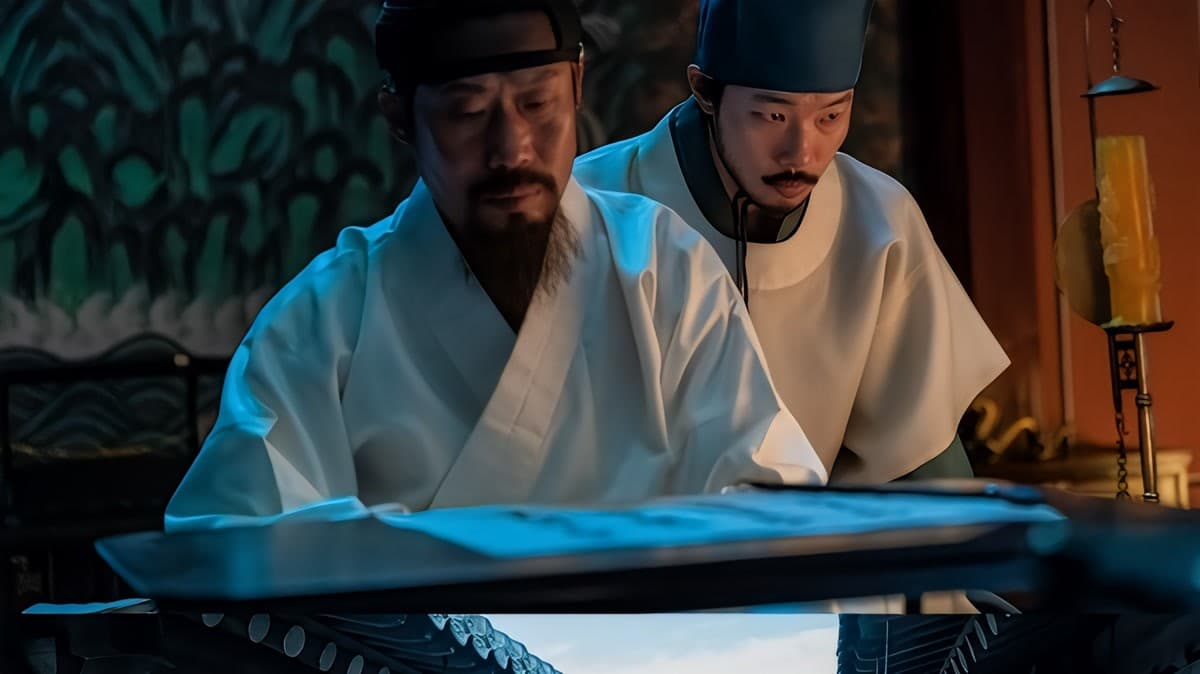
A Korean historical thriller that drew 3.32 million viewers in theaters four years ago is experiencing a dramatic second life on Netflix. The Owl (올빼미), the 2022 Joseon-era suspense film starring Yoo Hae-jin and Ryu Jun-yeol, rocketed to the number four position on Netflix Korea's chart within days of its March 20 release on the streaming platform. The sudden resurgence demonstrates the enduring power of a tightly crafted genre film — and the unpredictable ways audiences rediscover cinema in the streaming age.
Audience reception has been overwhelming. The film currently holds an impressive 8.70 viewer rating on the platform, with comments praising its suffocating atmosphere, electrifying performances, and a pivotal death sequence that many are calling one of the most shocking moments in Korean cinema history.
A Blind Acupuncturist Who Sees Too Much
The Owl is set during the reign of King Injo in the Joseon Dynasty and centers on Gyeong-su (Ryu Jun-yeol), a blind acupuncturist with an extraordinary secret: he can see in the dark. When royal physician Lee Hyeong-ik recognizes his exceptional talent with needles and brings him into the palace, Gyeong-su is drawn into a world of power struggles he never asked to witness. The story takes a devastating turn when Crown Prince Sohyeon, who has just returned after eight years of captivity in Qing China, meets a mysterious and violent end one night inside the palace walls.
Gyeong-su — the only person who can perceive anything in total darkness — witnesses the crown prince's death. What follows is a harrowing one-night ordeal as the young acupuncturist attempts to expose the truth while powerful forces within the palace work to silence him permanently. The premise is deceptively simple yet brilliantly effective: the one person who saw everything is the one person nobody believes can see at all.
Yoo Hae-jin's Most Terrifying Performance
Yoo Hae-jin delivers what may be the most chilling portrayal of his career as King Injo. Initially presenting as a father overwhelmed by mixed emotions at his son's return, his Injo gradually reveals something far more sinister beneath the surface. The king's paranoia builds in microscopic increments — a hardening around the eyes, an unnervingly calm tone masking volcanic rage, hands that clench imperceptibly during moments of apparent composure.
What makes this performance so unsettling is Yoo's complete physical transformation. Known widely for warm, approachable characters, he strips away every trace of likability here to inhabit a ruler whose fear of being displaced has curdled into something monstrous. When Injo finally unleashes the full scope of his madness, it arrives not as a dramatic explosion but as a slow, deliberate unfolding that is far more disturbing. Viewers on Netflix have specifically highlighted this aspect, with many expressing disbelief at the actor's range.
Ryu Jun-yeol: Terror Through Restraint
If Yoo Hae-jin provides The Owl with its antagonistic engine, Ryu Jun-yeol serves as its emotional compass. His Gyeong-su is a character defined by contradictions: physically vulnerable yet perceptually gifted, socially powerless yet morally courageous. Ryu plays every scene with a coiled tension that communicates both the character's fear and his stubborn refusal to look away — metaphorically, at least — from injustice.
The dynamic between the two leads is where The Owl achieves its greatest intensity. Their scenes together function less as conventional confrontations and more as psychological chess matches, with each actor reading the other's microexpressions for signs of weakness. The power imbalance between a king and a blind commoner should make these encounters one-sided, but Ryu injects Gyeong-su with a quiet resilience that keeps every exchange balanced on a knife's edge.
Direction That Builds Dread Like Architecture
Director Ahn Tae-jin, who previously served as assistant director on the acclaimed 2005 film The King and the Clown, makes his commercial feature debut with remarkable confidence. Rather than relying on jump scares or graphic violence, Ahn constructs tension architecturally — layering sound design, shadow, and the claustrophobic geometry of palace corridors into an environment that feels like it is physically closing in on the protagonist.
The crown prince's death scene, widely regarded as the film's centerpiece, exemplifies this approach. The sequence derives its horror not from what is shown but from the agonizing buildup that precedes it. Weeks of carefully established unease, whispered conspiracies, and mounting dread converge in a single moment that fundamentally alters the film's trajectory. From this point forward, The Owl transforms from a slow-burn mystery into a relentless survival thriller that maintains its intensity until the final frame.
Why This Film Is Finding Its Audience Now
The timing of The Owl's Netflix release coincides with heightened interest in Joseon-era Korean cinema, driven in part by the massive theatrical success of historical dramas in early 2026. Audiences hungry for more period content are discovering that The Owl offers something distinctly different from the heartwarming historical narratives currently dominating the box office — it is darker, more psychologically complex, and far more willing to explore the violent undercurrents of royal power.
The film also benefits from a growing appreciation for Korean genre filmmaking on streaming platforms. As viewers become more adventurous in their consumption habits, mid-budget Korean thrillers like The Owl — films that might not have received international theatrical distribution but possess undeniable craft and star power — are finding enthusiastic second audiences. The 8.70 rating suggests that this particular discovery is resonating deeply.
A 3.32 Million Viewer Film That Refused to Stay Buried
During its original 2022 theatrical run, The Owl was considered a solid commercial and critical success, attracting 3.32 million viewers and earning praise for its atmospheric direction and powerhouse performances. However, it was somewhat overshadowed by the crowded release calendar that year and never quite achieved the cultural conversation its quality deserved.
Four years later, the conversation has finally arrived. Netflix viewers are sharing enthusiastic reviews, dissecting the film's historical accuracy, debating the moral implications of Gyeong-su's choices, and ranking it among the best Korean thrillers available on the platform. For a film that many had filed away as a respectable but quiet success, the streaming revival represents something close to vindication — proof that great filmmaking has a long shelf life, and that the right audience will eventually find the right film, even if it takes four years and a change of medium to make the connection.
How do you feel about this article?
저작권자 © KEnterHub 무단전재 및 재배포, AI학습 및 활용 금지
Entertainment Journalist · KEnterHub
Entertainment journalist specializing in K-Pop, K-Drama, and Korean celebrity news. Covers artist comebacks, drama premieres, award shows, and fan culture with in-depth reporting and analysis.
Comments
Please log in to comment