Why 'Wedding Impossible' Is Dominating Netflix Again Two Years Later
From 3% Cable Ratings to Netflix Top 10: The K-Drama Reverse-Run Phenomenon
 By Park Chulwon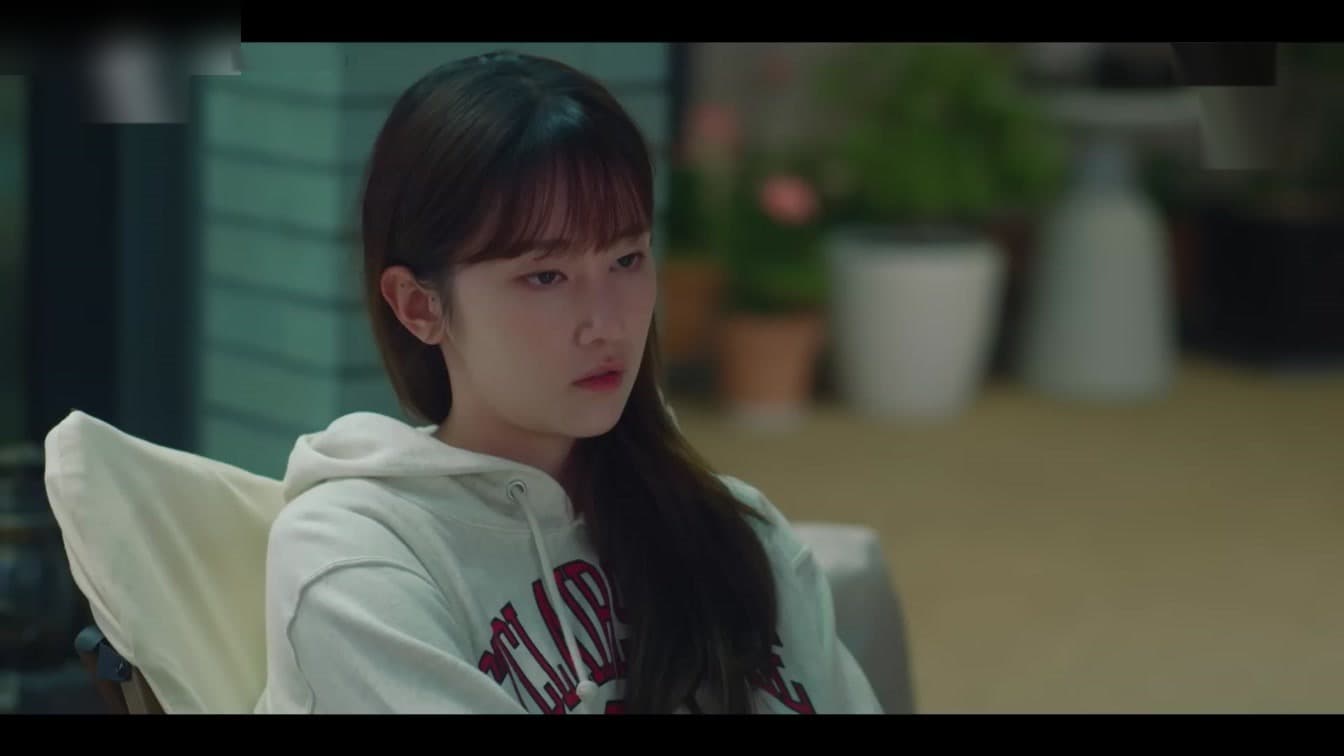
Two years after its finale aired quietly on tvN, Wedding Impossible has crashed back into Netflix Korea's top-10 charts — and it isn't going anywhere. As of early April 2026, the 2024 romantic comedy sat at No. 6 on Netflix Korea's TV series rankings, drawing a fresh wave of viewers who never caught it the first time around. What brought a show with modest cable ratings back into the spotlight is a story that says as much about how K-drama audiences consume content as it does about the drama itself.
The reverse-run (역주행) — a beloved Korean term for content that finds sudden new momentum after its initial release — is not a new phenomenon. But Wedding Impossible's resurgence is a particularly clean example of how streaming platforms, short-form video culture, and algorithmic amplification now operate as a second life cycle for Korean television. The show averaged 3.5% nationwide ratings during its original cable run. That's a respectable number for a tvN Monday-Tuesday drama with limited competition, but it was never a blockbuster. Two years later, it's outperforming most currently airing dramas on Netflix Korea's domestic chart.
The Show That Almost Got Away
Wedding Impossible aired on tvN from February 26 to April 2, 2024. The 12-episode romantic comedy follows Na A-jeong — a struggling actress who agrees to enter a fake marriage to help a gay chaebol heir conceal his relationship — only to find herself entangled with his younger brother, Lee Ji-han, who is determined to stop the arrangement. It's a premise built from familiar K-drama architecture: contract romances, chaebol family dynamics, and mismatched leads who bicker their way into love.
What separated Wedding Impossible from the formula was its casting. Jeon Jong-seo, a Baeksang Film Award-winning actress best known for intense dramatic roles, stepped into romantic comedy for the first time here. Her portrayal of Na A-jeong — direct, unrefined, and unapologetically ambitious — read differently from the passive heroines audiences had grown tired of. Moon Sang-min, making his first lead role, played Ji-han with a quiet wistfulness that critics noted as genuinely affecting. The 188cm lead towering over Jeon Jong-seo's compact frame became a recurring visual shorthand for their dynamic, one that translated particularly well to short-form clips.
The show's finale pulled a 3.7% rating — a recovery from a mid-run dip to 2.2%, but still below its 4.1% series high. It closed to warm reviews and some real affection from viewers who caught it. Then it largely disappeared from conversation. Until now.
How the Algorithm Builds a Second Audience
The mechanics behind Wedding Impossible's revival are worth examining closely, because they're not accidental. The show's return to Netflix Korea's charts follows a pattern that has played out with multiple Korean dramas over the past two years — a pattern driven by three overlapping forces: platform catalog expansion, algorithmic recommendation, and short-form viral content.
Netflix's recommendation engine is responsible for how more than 80% of content on the platform is discovered — not search, not browsing. Once a K-drama brings a new viewer into the ecosystem, the algorithm mines viewing history to surface thematically related content, including back-catalog titles. A viewer who finishes a 2025 rom-com is far more likely to have Wedding Impossible surfaced to them than they would be to find it themselves.
But the algorithm is only the infrastructure. What actually triggers discovery is short-form content. TikTok and YouTube Shorts have become the de facto trailer machine for K-drama back catalogs. A 60-second clip of Moon Sang-min's jealousy reaction or Jeon Jong-seo's scene-stealing physicality reaches users who were never looking for Korean content — and drops them directly into the show's streaming page. Korean content currently represents roughly 9–10% of all Netflix viewing hours globally, second only to American content. Maintaining that share requires feeding the algorithm with fresh discovery signals. Fan-made edits do that work without costing the platform a dollar.
There's also a structural advantage unique to Wedding Impossible: its format. Twelve episodes at roughly 70 minutes each means a committed weekend viewer can complete the entire series in two sittings. That completion rate matters enormously to Netflix's algorithm. A drama viewers finish is a drama the algorithm promotes. A drama viewers abandon is one that disappears.
The LGBTQ+ Factor and International Reach
Wedding Impossible carries an element that accelerates its global reach in ways its original cable airing could not fully capture. The chaebol heir at the center of the fake marriage — Lee Do-han, played by Kim Do-wan — is gay, and the show treats this not as a plot twist or a source of comedy but as a matter-of-fact aspect of his identity. By Korean cable television standards in 2024, that was genuinely unusual.
International audiences streaming via Amazon Prime Video in regions outside Korea have engaged with this storyline with particular enthusiasm. Fan communities in Southeast Asia, Latin America, and Europe have amplified scenes featuring Kim Do-wan's character, contributing to the broader social media footprint that feeds Netflix's discovery engine domestically. The LGBTQ+ narrative thread — rare enough in Korean cable drama to feel notable, normalized enough not to feel exploitative — created a constituency that has remained active two years after the finale.
This is the quiet machinery of K-drama's global expansion at work. Wedding Impossible wasn't designed to go viral internationally. But the combination of an unconventional heroine, a standout male lead in his first starring role, and a representation milestone that resonated across borders produced a show that travels. The algorithm rewards exactly that kind of cross-demographic reach.
What the Reverse-Run Tells Us About Streaming Strategy
Wedding Impossible's comeback isn't an isolated case — it's a preview of how K-drama distribution strategy is evolving. Classic Korean shows are being retooled and re-released with intent: Wavve's 2025 remaster of My Lovely Sam Soon drove new paid subscriptions on its release weekend. Netflix's December 2024 deal with SBS brought shows including The Sandglass and The Penthouse to the platform in Korea, deliberately placing catalog content in front of a generation of viewers who never saw the originals. Winter Sonata received a 4K theatrical re-release in Japan in March 2026 — 24 years after its first broadcast — to sold-out screenings.
The reverse-run is no longer accidental. Platforms are engineering it. Algorithmic curation, strategic catalog licensing, and short-form content seeding are combining to create deliberate second-life cycles for Korean dramas. Wedding Impossible benefited from this ecosystem without being centrally planned into it — which is precisely what makes its return so instructive. When a show triggers the cycle organically, it means the content itself was always strong enough. The platform just needed time to find the right audience for it.
Outlook: A New Discovery Pattern
The question now is whether Wedding Impossible's resurgence will hold. Netflix rankings are notoriously volatile — a show can enter the top 10 on algorithmic momentum and exit within two weeks if new arrivals pull attention away. But the indicators are good. The cast's profiles remain active: Jeon Jong-seo has continued working in high-profile projects, and Moon Sang-min's visibility has grown since his lead debut. New viewers discovering Wedding Impossible in April 2026 have plenty of recent content to sustain their interest in both actors.
More broadly, this moment signals something important about how K-drama fandom is changing. The two-year lag between a show's cable run and its streaming peak is becoming a recognized part of the content lifecycle — not a failure, but a feature. For creators and platforms alike, the lesson is clear: in the K-drama streaming era, the first airing is just the opening chapter.
How do you feel about this article?
저작권자 © KEnterHub 무단전재 및 재배포, AI학습 및 활용 금지
Entertainment Journalist · KEnterHub
Entertainment journalist focused on Korean music, film, and the global K-Wave. Reports on industry trends, celebrity profiles, and the intersection of Korean pop culture and international audiences.
Comments
Please log in to comment