Why Super Junior Still Fills Arenas After 20 Years
The group’s sold-out 16-city world tour and cinema broadcasts reveal something bigger about K-pop’s staying power
 By Jang Hojin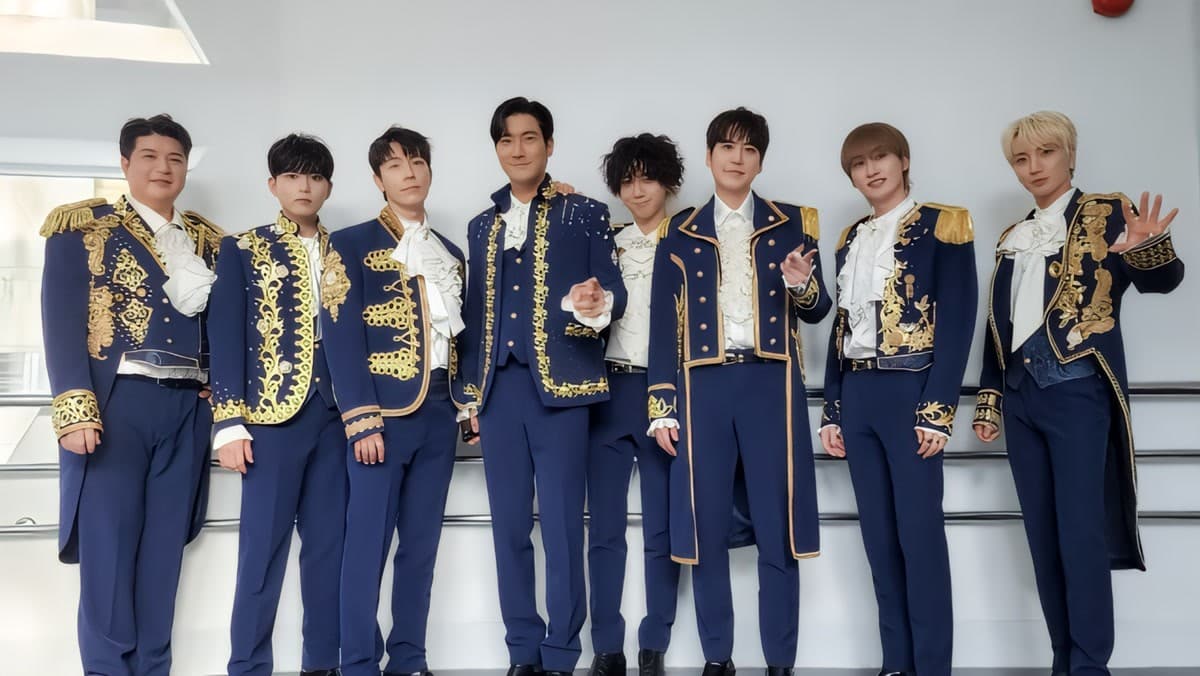
On September 13, 2025, Super Junior performed their 200th headlining concert in Jakarta. It was a milestone that no K-pop group had reached before under a single concert brand, and it happened twenty years after the group debuted on SBS Inkigayo with "Twins (Knock Out)" on November 6, 2005. Now, as they prepare for a sold-out encore run at Seoul's KSPO DOME from April 3 to 5, the question is no longer whether second-generation K-pop groups can still draw crowds. The question is why anyone doubted they could.
Super Junior's "Super Show 10: SJ-Core" encore represents the culmination of a world tour that has spanned 16 cities across Asia and Latin America since August 2025. Every date sold out. In Taipei, 80,000 fans queued virtually for tickets that disappeared in under a minute. The Seoul dates — originally planned for two nights — added a third after fan club pre-sales exhausted all available seats. These are not the numbers of a legacy act coasting on nostalgia. They are the numbers of a group operating at peak commercial demand, two decades into their career.
The Scale of a 20-Year Machine
The "Super Show" concert brand launched in 2008, making it one of the longest-running concert series in K-pop history. Over 18 years, it has evolved from a straightforward arena show into a production spectacle — the upcoming Seoul encore will feature a 360-degree open stage utilizing the full KSPO DOME floor. The group's 10 active members (Leeteuk, Heechul, Yesung, Shindong, Eunhyuk, Donghae, Siwon, Ryeowook, and Kyuhyun) bring a combined stage experience that simply cannot be replicated by younger acts.
The tour's geographic reach tells its own story. From Seoul to Hong Kong, Jakarta to Manila, Mexico City to Monterrey, Lima to Santiago, Taipei to Bangkok, and on through Singapore, Macau, Kuala Lumpur, Kaohsiung, and Saitama — Super Junior's audience spans continents in a way that even some fourth-generation groups have yet to achieve. Their Latin American fanbase, cultivated over years of dedicated touring, represents one of the most committed international followings in the entire K-pop ecosystem.
Behind these concerts sits a discography of 12 studio albums, the most recent being "Super Junior25" released in July 2025 with lead single "Express Mode." The group pioneered the subunit system that is now standard across the industry, launching five distinct subgroups — K.R.Y., T, M, Happy, and D&E — each targeting different musical niches and regional markets. This structural innovation alone would secure their place in K-pop history. That they are still actively touring while doing it elevates their legacy into something unprecedented.
The 2nd Generation Renaissance
Super Junior's endurance is remarkable on its own, but it becomes even more significant in the context of a broader second-generation revival. BIGBANG — who debuted in 2006 — confirmed a 2026 comeback with G-Dragon, Taeyang, and Daesung set to headline Coachella in April. SHINee's members continue thriving as soloists, with Taemin also performing at Coachella 2026 and Key and Minho running solo tours. TVXQ's Yunho released a solo album in late 2025.
This convergence is historically unusual. For the first time in years, BTS, BLACKPINK, EXO, and BIGBANG will all be active within the same 12-month window — a scenario driven largely by military service completions and contract renewals. But where newer groups return from hiatus into a competitive landscape they must re-learn, second-generation acts like Super Junior return to a fanbase that never left. The ELF fandom, now two decades old, has matured into a demographic with significant spending power and deep emotional investment.
The financial implications are substantial. Super Junior's Seoul concerts drew 30,000 fans across three days in August 2025, with ticket prices reflecting premium positioning. Multiply this by 16 international cities — each sold out — and the tour's gross revenue likely places it among the highest-earning K-pop tours of the past year. This from a group that many industry analysts had quietly written off as commercially past their peak.
Concerts on the Big Screen
Perhaps the most forward-looking element of Super Show 10 is its embrace of cinema broadcasting. The August 22 opening show was broadcast live to theaters across 14 regions worldwide, including Korea, Japan, Hong Kong, Indonesia, Thailand, Mexico, the UK, Spain, Denmark, Saudi Arabia, and the UAE. The April encore will receive the same treatment through a partnership with Lotte Cinema across 19 domestic theaters.
This strategy taps into a growing trend that has transformed K-pop's live entertainment model. BTS's "ARIRANG" tour was broadcast to over 3,500 theaters in 75 countries in 2026 — the largest such deployment ever. Stray Kids released "The dominATE Experience" as a concert film in theaters and IMAX in February 2026. SEVENTEEN premiered a concert movie globally in April 2025. Academic research published in SAGE journals has described K-pop livecast concerts as "the next best experience to a real live concert," validating a format that evolved from a COVID-era necessity into a permanent revenue stream.
For Super Junior, cinema broadcasts serve a dual purpose: they extend the concert experience to fans who cannot secure tickets (a real problem when shows sell out in under a minute), and they provide an additional monetization layer for content that would otherwise be limited to a single venue. It is a strategy born of scarcity — and one that turns overflow demand into a feature rather than a frustration.
The Longevity Playbook
What Super Junior's 20th anniversary ultimately reveals is that K-pop's obsession with novelty has blinded the industry to the enormous value of longevity. While agencies pour resources into launching new groups every year, the groups that have survived two decades command a unique market position: they offer something no rookie can replicate — shared history, proven reliability, and the emotional weight of a relationship built over years.
The "Super Show" brand itself has become a product independent of any single album cycle. Fans attend not for one comeback but for the accumulated experience of a group that has performed together for 7,000 days. In an industry where groups disband after five years with alarming regularity, Super Junior's mere existence is a statement — and their sold-out arenas are proof that the market agrees.
As they take the KSPO DOME stage in April with a 360-degree production that promises to be the most ambitious of their career, Super Junior is not just celebrating a milestone. They are rewriting what a K-pop career can look like — and in the process, making a case that the most valuable asset in entertainment is not youth, but time.
How do you feel about this article?
저작권자 © KEnterHub 무단전재 및 재배포, AI학습 및 활용 금지
Entertainment Journalist · KEnterHub
Entertainment journalist specializing in K-Pop, K-Drama, and Korean celebrity news. Covers artist comebacks, drama premieres, award shows, and fan culture with in-depth reporting and analysis.
Comments
Please log in to comment