Why Jun Ji-hyun Broke Down at Cannes After Colony Premiere
The Korean superstar's first-ever Cannes red carpet ended with tears — and 2,300 fans who refused to stop cheering
 By Jang Hojin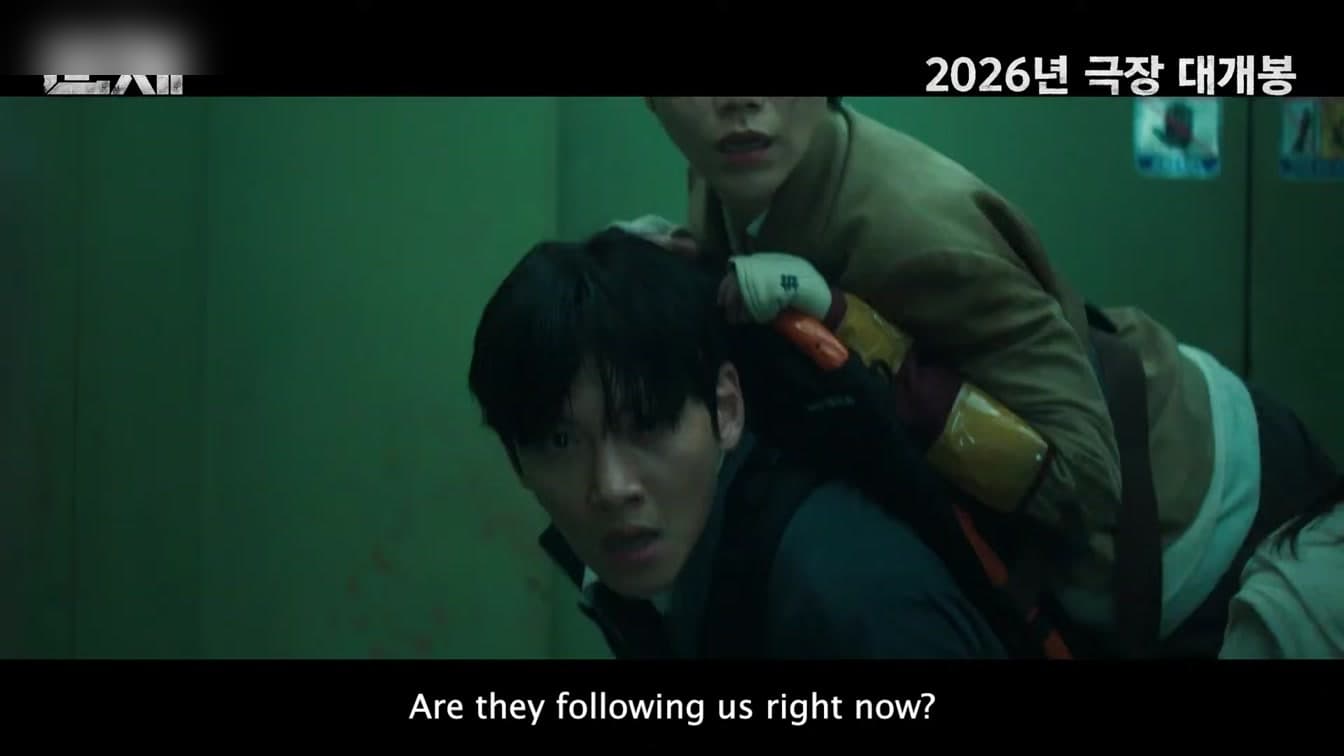
Jun Ji-hyun had never stood on the Cannes red carpet before Saturday night. After 26 years in South Korea's entertainment industry — and an 11-year absence from the big screen — she finally made her way to the French Riviera with Colony (군체), director Yeon Sang-ho's action-horror thriller. When the 2,300-seat Lumière Theatre refused to sit down after the credits rolled, Jun Ji-hyun couldn't hold back her tears.
The scene unfolded in the early hours of May 16 at the 79th Cannes Film Festival's Midnight Screening, one of the festival's most coveted slots for genre cinema. The film had barely finished when the audience rose to their feet. The standing ovation lasted seven full minutes.
A Long Time Coming
For Jun Ji-hyun, the moment carried particular weight. Her last theatrical film, Assassination (암살), came out in 2015. In the years that followed, she stepped back from cinema entirely, making only a brief return with the 2021 television drama Jirisan. An invitation to Cannes — in a film she genuinely believed in — was a different kind of homecoming to the art form that first made her famous.
"When I received Director Yeon Sang-ho's script after a long time, I told him, 'Isn't this how a film script should be?'" she told reporters at the festival. When the standing ovation broke out and her name was called, she described an emotion she couldn't contain. "I was overwhelmed. To come to Cannes with a Korean film — I was overwhelmed, and various emotions crossed my mind."
In Colony, she plays Kwon Se-jeong, a biotech professor caught in a quarantined Seoul high-rise as a mysterious infection sweeps through the building. What makes the film unusual — and what has critics divided — is how the infected evolve: not as mindless threats, but as a collective, developing coordination and adapting their behavior in real time. It's a concept Yeon Sang-ho has described as a metaphor for artificial intelligence and the way modern societies form and enforce consensus at scale.
It's also a physically demanding role. Jun Ji-hyun trained for months before filming, bringing the same intensity to the project that she's always reserved for her most significant work. Her presence in the trailer — composed, precise, running through a building that has turned entirely hostile — immediately drew attention when the film was announced.
Yeon Sang-ho Returns to Cannes — Ten Years After Train to Busan
The director's presence at Cannes in 2026 carries its own history. A decade ago, Train to Busan premiered in this same Midnight Screening section and helped spark the global appetite for Korean genre cinema that ultimately led, in 2019, to Parasite's Palme d'Or. Colony marks Yeon's return to the same slot, the same time of night, ten years on — this time with a story that explicitly grapples with how the world has changed in the interval.
"Dreaming of coming to Cannes with a film and finally being able to show Colony here — it's truly an honor," he told the audience after the screening. "This will be one of the memories that stays with me for a very long time while making films." He ended his remarks in French: "Merci beaucoup." The room laughed and applauded again.
The cast joining him on the red carpet — Koo Kyo-hwan, Ji Chang-wook, Shin Hyun-been, and Kim Shin-rok alongside Jun Ji-hyun — shared one thing in common with their director: for every one of them, this was their first time at Cannes. The premiere ran late after a previous screening overran its schedule, pushing the red carpet to nearly 1 AM. The crowd outside the theatre hadn't moved.
Park Chan-wook's Surprise Appearance and the Critics Watching Closely
Among those watching that evening was Park Chan-wook — director of Oldboy, The Handmaiden, and Decision to Leave — who this year serves as president of the jury for Cannes' main competition. Despite a schedule that requires watching multiple films per day, Park appeared unannounced at the Colony red carpet alongside festival executive director Thierry Frémaux. He greeted the director and each cast member individually with an embrace.
Afterward, Park privately told Yeon: "Wow. Remarkable." The director shared the exchange publicly later — a quiet endorsement from one of Korean cinema's most respected voices, addressed to a director whose career has helped define the industry's global ambitions.
The New York Asian Film Festival was watching too. Samuel Jamier, NYAFF's president, praised Colony as "formally innovative, with visceral tension unlike anything in current genre cinema," and selected it as the opening film for the festival's 25th anniversary edition. French magazine Trois Couleurs called the film "a perfect framework for intense, precise, and immersive action sequences." Next Best Picture editor Matt Neglia described it simply: "A relentless thrill ride from start to finish."
Critical response has not been uniformly enthusiastic. IndieWire acknowledged the film's technical proficiency but found the AI and authoritarianism metaphors "don't hit as hard as intended." The Playlist called it a "mixed bag" — impressive action, genuine innovation in the zombie genre, but too much dead air between set pieces. The South China Morning Post gave it three stars, describing it as "slick but empty," with ideas about social media and collective behavior that "prove somewhat dead behind the eyes."
What Colony Is Really About
The film's central premise marks a deliberate departure from conventional zombie storytelling. In Yeon Sang-ho's concept, the infection doesn't reduce people to animalistic rage — it strips away individual will and replaces it with collective coordination. Groups of infected begin to think together, communicate, anticipate. They evolve in real time and develop an intelligence that is genuinely difficult to outmaneuver.
"Today's fear lies in collective intelligence," the director has explained, "the kind formed through rapid information exchange — like artificial intelligence — that suppresses individual opinions through universality." Where Train to Busan's monsters were visceral and immediate, Colony's feel uncanny in a different way: they're organized, and they're getting smarter.
Kwon Se-jeong, Jun Ji-hyun's character, understands this dynamic better than most of the building's survivors. She's a scientist confronting a threat that operates on principles she recognizes — and that's part of what makes her situation so frightening. The role requires Jun Ji-hyun to project competence under pressure rather than emotional vulnerability, which may explain why some reviewers found her character underwritten while others saw it as precisely the right choice for this kind of thriller.
Global Release and What Comes Next
Showbox secured distribution for Colony across more than 120 territories before the film had even screened at Cannes. Well Go USA Entertainment acquired North American rights for a theatrical release on August 28, 2026. StudioCanal handles the UK, Gaga Corporation takes Japan, and ARP Sélection covers France — a near-complete map of the world's major film markets, reflecting the global confidence that Korean cinema now commands.
In South Korea, the film opens on May 21 — just three days after its Cannes premiere. Pre-booking data surged to the top of Korean reservation charts within hours of the ovation footage spreading on social media. Clips of Jun Ji-hyun wiping away tears in the Lumière Theatre circulated widely through the night, driving a wave of interest that translated directly into ticket sales by the next morning.
For Jun Ji-hyun, who has spent more than two decades selecting her projects with unusual care, the Cannes premiere offers something rare: proof that the gamble of returning to cinema after eleven years, in a genre she'd never worked in before, with a director whose work she trusted, was the right call. The Lumière Theatre gave her a verdict that couldn't be manufactured — 2,300 strangers on their feet, refusing to sit down.
How do you feel about this article?
저작권자 © KEnterHub 무단전재 및 재배포, AI학습 및 활용 금지
Entertainment Journalist · KEnterHub
Entertainment journalist specializing in K-Pop, K-Drama, and Korean celebrity news. Covers artist comebacks, drama premieres, award shows, and fan culture with in-depth reporting and analysis.
Comments
Please log in to comment