Why Critics Are Already Calling 'Wild Thing' Korea's Comedy of the Year
Gang Dong-won's first ensemble comedy earned the comparison Korean film fans have been waiting for — and it opens June 3
 By Park Chulwon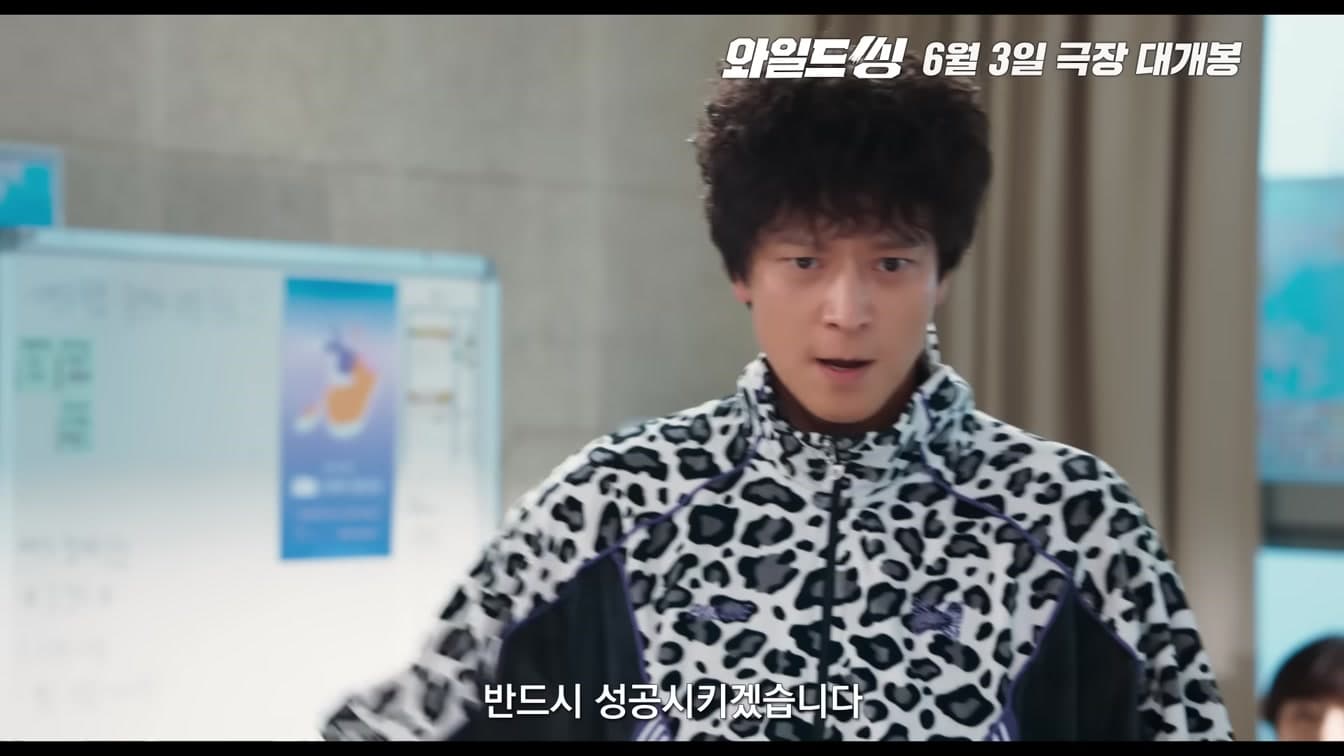
When Korean critics reach for the name Extreme Job to describe a new film, everyone in the industry pays attention. Extreme Job (극한직업, 2019), the breakneck police-goes-undercover-at-a-fried-chicken-restaurant comedy, accumulated 16.26 million admissions and became the second-highest-grossing Korean film ever made — a benchmark so high that most comedies spend years trying not to be compared to it unfavorably. When the comparison is favorable, something real is happening.
On May 18, 2026, the action-comedy film Wild Thing (와일드 씽) held its press screening at Lotte Cinema World Tower in Seoul. The next morning, the reviews arrived — and several of them reached for Extreme Job. iMBC Entertainment's Kim Gyunghee called it "the most powerful laugh-out-loud experience since Extreme Job." Maeil Business's Park Roa wrote that "the comedic chemistry between Gang Dong-won and Oh Jung-se fully detonates." The consistent verdict across Korean entertainment press: this film had earned its hype. Wild Thing opens nationwide on June 3, 2026.
What the Gang Dong-won Risk Actually Looks Like From the Inside
Gang Dong-won has built one of Korean cinema's most carefully managed filmographies. His credits tilt toward the genre-serious — action, thriller, historical — and the choices have been deliberate enough that his face carries a certain expectation. An audience that watches him in Peninsula or Master arrives with assumptions about the register they are entering. Wild Thing inverts every one of those assumptions, casting him as Hwang Hyeon-woo, a breakdancer-turned-K-pop-idol who spent the 1990s as the last member added to a three-person mixed dance group called Triangle, and who now, 20 years after the group's unexpected scandal-forced dissolution, has one more chance at a comeback.
At the press conference following the May 18 screening, Gang Dong-won described the challenge in straightforward terms: "For actors, performing on stage is the biggest challenge. A well-known idol has to show their skills on stage, but actors aren't supposed to look at the camera. But for an idol, if you don't look at your camera during shooting, it's a mistake." He spent extended periods training in breakdancing to make Hwang Hyeon-woo's physical credibility land. That he treated this as seriously as he treats action choreography is evident in the critical response.
The ensemble dynamic amplifies what Gang Dong-won alone couldn't carry. Eom Tae-goo plays Gu Sang-gu, Triangle's token rapper whose actual musical contribution never exceeded a bar or two. Park Ji-hyun plays Byeon Domi, the group's real power — the main vocalist who runs the backstage as firmly as the frontman runs the stage — drawing consciously on Lee Hyori's dual charisma. Oh Jung-se plays Choi Seonggon, a ballad singer who spent 39 consecutive weeks at number two on the 가요 Top Ten charts and has spent the years since becoming a wild boar hunter in the mountains. The gap between who these people were at their peak and who they've become is the engine of the comedy.
Director Son Jae-gon's Strategic Gamble With the Nostalgia Formula
Son Jae-gon is not a first-time director navigating unfamiliar comedy terrain. His previous film The Villain Upstairs (이층의 악당) established him as someone who understood comedic pacing within contained environments. Wild Thing represents a deliberate expansion of his toolkit — his stated challenge was to move beyond dialogue-driven comedy into something that incorporated action and physical performance without losing the emotional investment that makes audiences care about the outcome.
The nostalgia angle presented its own technical problem. Korean entertainment media has spent years recycling and celebrating the music of the 1990s and early 2000s through variety programs — programs that execute those recreations with high production values and genuine talent. The question Son Jae-gon was asking himself, as he described at the press conference: "What if our result is worse than those variety shows? What if it just looks like repetition?" His solution was to widen the temporal frame — rather than anchoring to a specific sub-era, the music of Wild Thing draws from across the full 1990s-to-2000s range, so that each viewer filters it through their own nostalgic memory rather than a prescribed reference point. "Depending on your experience and memories, you'll see the style you remember," he said. The manufacturing of a personalized nostalgia response — rather than a shared one — is a more sophisticated strategy than it sounds.
The Extreme Job Benchmark — What That Comparison Actually Measures
Extreme Job's 16.26 million admissions in 2019 set a standard that Korean comedies still reference as a high-water mark. But the comparison critics are making to Wild Thing is not primarily a box office prediction — it is a quality claim about the kind of laughter the film generates. Extreme Job's achievement was to make a premise (undercover cops running a chicken restaurant) sustain genuine comedic escalation through an entire runtime without the logic collapsing. The difficulty of that is underestimated. Most comedies front-load their best material and coast through the third act.
The critical consensus on Wild Thing, based on the press screening, is that it achieves a similar structural quality: the humor builds and compounds rather than depletes, and the ending — specifically a final performance sequence — lands with the kind of cathartic effect that requires the preceding 100 minutes to have worked emotionally, not just comedically. Oh Jung-se, whose character's arc from disgraced ballad singer to mountain recluse forms the film's secondary emotional spine, described the finale as the most demanding thing he'd filmed: performing as a solo artist in front of a full audience with the camera rolling, holding the character's desperation while hitting the technical marks of an actual concert performance. The critics who watched it gave him the credit.
Why a June 3 Opening Could Be Well-Timed
The Korean theatrical calendar for summer 2026 has been building in a direction that favors Wild Thing's specific appeal. The current box office leader, Michael — a Hollywood biographical film — has demonstrated that Korean audiences in this period are showing up for event films, not just franchise sequels. Pre-booking data shows Wild Thing holding an 8.2% share against competition that includes Goonche (군체), another anticipated domestic title. For a film whose cast is not primarily known for comedy, that pre-booking share reflects the combined pull of Gang Dong-won's established following, the ensemble's collective appeal, and word spreading from the press screening responses.
The Y2K cultural nostalgia cycle — which has been building across Korean music, fashion, and streaming content since 2022 — also provides a contextual tailwind. Wild Thing is set in the era when groups like H.O.T., Shinhwa, and Fin.K.L defined Korean popular culture. Gang Dong-won noted at the press conference that Hwang Hyeon-woo was modeled as a tribute to the artists of that generation: "It felt right to pay homage to the style of those senior artists from that era." An audience that has spent three years watching 2000s nostalgia cycle through every adjacent format — variety, streaming drama, fashion — arrives at a Wild Thing screening already warm to its premise.
What the Comparison Means for the Film — and for What Comes After
If Wild Thing performs at the level its press reception suggests it might, the implications extend beyond its own box office run. Korean studio budgets for comedy have contracted since Extreme Job — the industry's response to that film's outlier success was not to make more comedies at scale, but to interpret it as a fluke and return to safer genre investments. A second breakout Korean ensemble comedy within a decade would challenge that interpretation directly.
Director Son Jae-gon's core conviction — articulated at the press conference — is that the film's premise, no matter how elaborate, needs to make the audience want to root for the characters. He described his single criterion for the film's success: "If the audience feels like they want to cheer Triangle on." That is also the criterion by which all the best ensemble comedies hold together. Gang Dong-won in a breakdance wig, Eom Tae-goo delivering hip-hop lines he was never given enough of, Oh Jung-se as an eternally frustrated ballad singer turned mountain hunter, Park Ji-hyun carrying a group on her back while pretending she is not — if the early reviews are right, all four of them found their way to that goal.
Wild Thing opens June 3, 2026.
How do you feel about this article?
저작권자 © KEnterHub 무단전재 및 재배포, AI학습 및 활용 금지
Entertainment Journalist · KEnterHub
Entertainment journalist focused on Korean music, film, and the global K-Wave. Reports on industry trends, celebrity profiles, and the intersection of Korean pop culture and international audiences.
Comments
Please log in to comment