Uhm Hye-ran Finally Gets Her Solo Lead — and 'Mad Dance Office' Proves She Was Worth the Wait
The Korean film earns rave audience reviews and sustained box office momentum weeks after opening
 By Park Chulwon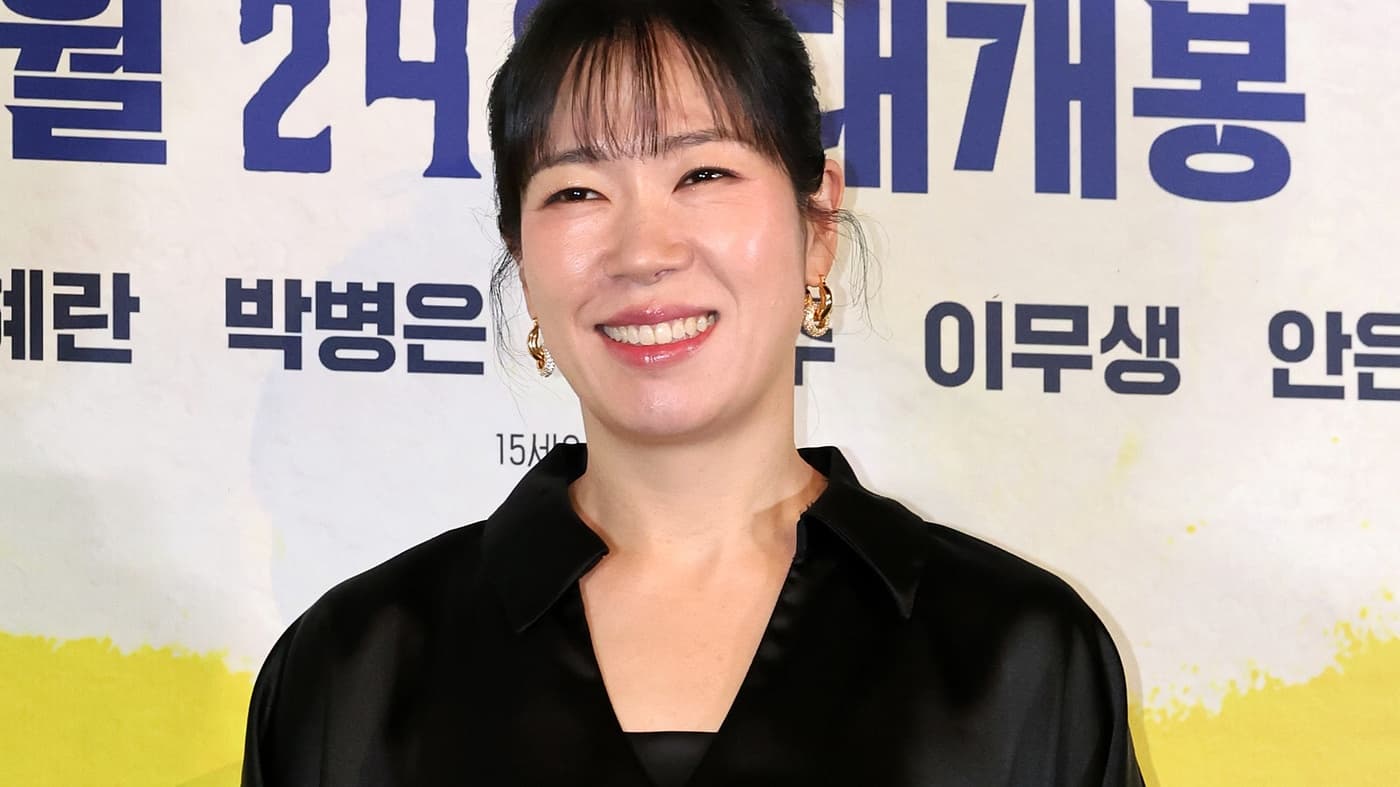
Veteran actress Uhm Hye-ran has been a fixture of Korean cinema and television for years — the kind of performer audiences recognize and trust even when the role is supporting. So when Mad Dance Office, her first solo lead film, opened on March 4, 2026, it came with real stakes. The question wasn't whether she could carry a film. Viewers had always sensed she could. The question was whether the industry would give her the chance to prove it.
The answer arrived quickly, and it was emphatic. Within days of release, Mad Dance Office was drawing the kind of audience reviews that films hope to sustain for weeks. Phrases like "a life drama with quiet, lingering emotion" circulated across social platforms. Viewers described the film as one they returned to thinking about long after the credits rolled — the mark of a movie that lands in a specific and lasting way.
What the Film Is Actually About
At its center, Mad Dance Office follows Guk-hee, a civil servant whose life is fraying at the edges in ways both mundane and painful. The glass ceiling is pressing down on her career. Her relationship with her parents has calcified into mutual disappointment. The rhythm of her daily life offers no real outlet. Then, unexpectedly, she discovers flamenco dancing — and the film tracks what happens when someone finds a physical and emotional language they didn't know they needed.
The premise could easily tip into feel-good formula, but audiences have consistently described Mad Dance Office as something more textured than that. The film doesn't resolve its conflicts neatly. It earns its moments of joy by making the weight of Guk-hee's situation feel genuinely heavy first. That balance — letting the difficulty breathe before the release — is what has given the movie its staying power with viewers who respond to stories about real adult frustration and real adult resilience.
Director Jo Hyunjin brings a restrained visual approach to material that could have leaned into melodrama. The result is a film that trusts its lead performance above all else, and Uhm Hye-ran delivers exactly what that kind of trust requires: a performance that feels lived-in rather than constructed, specific rather than archetypal.
The Cast That Makes It Work
Uhm Hye-ran's performance is the foundation of Mad Dance Office, but the film benefits significantly from its supporting ensemble. Choi Sung-eun, who has been building a reputation as one of Korean cinema's more compelling younger actresses, appears in a key supporting role. Audiences have highlighted her work as a meaningful counterpoint to Uhm Hye-ran's lead — the two share scenes that require tonal precision, and by most accounts they deliver it.
Perhaps the most-discussed supporting performance, however, belongs to Arin, the member of idol group Oh My Girl who has been increasingly active in acting over the past few years. The fact that Arin holds her own alongside two accomplished dramatic actresses in a film this emotionally demanding has become a talking point in its own right. For fans of the idol-to-actress pipeline that has been a persistent feature of Korean entertainment, Arin's performance in Mad Dance Office represents a genuine step forward — not a cameo, not a showcase moment, but a character role that serves the story.
The combination of Uhm Hye-ran's anchoring presence, Choi Sung-eun's supporting work, and Arin's emerging dramatic credibility has given the film a cast that functions as an ensemble even while the story remains clearly centered on Guk-hee's journey.
Box Office Trajectory in a Competitive Landscape
Opening into a domestic market dominated by The Man Who Lives With the King — a megahit that crossed ten million admissions in its run and set multiple records — Mad Dance Office has navigated its box office performance as a smaller-scale film finding its audience through word-of-mouth rather than opening weekend volume.
Early tracking placed it at 7.1% of advance ticket sales in the days around release, positioning it second among new domestic releases. That kind of booking rate for a modestly-budgeted film about a middle-aged civil servant's journey through flamenco is a genuine achievement. It reflects an audience actively seeking out the film rather than encountering it passively, which tends to predict sustained performance over multiple weeks.
By mid-March, cumulative admissions had cleared 45,000 — a figure that situates Mad Dance Office firmly in the category of films that succeed through depth of engagement with a specific audience rather than broad mainstream saturation. In a market where competition from a ten-million-admissions blockbuster was taking the bulk of available screens, that performance speaks to how effectively the film's reputation was carrying it forward.
Why This Moment Matters for Uhm Hye-ran
Korean cinema has a particular relationship with the idea of the veteran supporting actress finally getting her lead vehicle. It happens infrequently, and when it does, the industry and audiences tend to pay attention. Uhm Hye-ran's career has been built through decades of work in which she was consistently the most memorable presence in scenes she wasn't supposed to own — the colleague whose reaction lands harder than the lead's line, the family member whose silence carries more weight than the argument itself.
That kind of accumulation of craft is exactly what Mad Dance Office asks her to bring to a lead role, and audiences are recognizing it. The description "명품 배우" — roughly, "premium actress" or "jewel of an actress" — has followed Uhm Hye-ran through her career as a kind of earned compliment, applied to performers whose technique is so refined that every choice reads as inevitable. In Mad Dance Office, she is doing that work at the center of a film for the first time, and the response suggests audiences have been waiting for exactly this.
Beyond what the film means for Uhm Hye-ran personally, it adds to a recent pattern in Korean cinema of stories about women navigating institutional barriers and personal reinvention. Films like A Bittersweet Life for female-led drama, or more recently the enthusiasm for stories about middle-aged protagonists finding unexpected forms of liberation, have carved out a real audience that Mad Dance Office is now speaking to directly.
Looking Ahead
As Mad Dance Office continues its theatrical run, the film's trajectory will likely follow the path of smaller Korean hits that build through sustained word-of-mouth: slower growth, deeper engagement, and a second-life potential on streaming platforms where its emotional register tends to travel well.
For Uhm Hye-ran, the film's reception also opens up future possibilities. Solo lead vehicles in Korean cinema don't always arrive cleanly — they require a confluence of the right project, the right production support, and the right moment in an actor's career. Mad Dance Office provides evidence that when all three align for her, the result is a film people want to talk about.
And for audiences who have spent years watching her do extraordinary things in supporting roles, the chance to watch her carry a film from beginning to end feels less like a discovery than a long-overdue confirmation of something they already knew.
How do you feel about this article?
저작권자 © KEnterHub 무단전재 및 재배포, AI학습 및 활용 금지
Entertainment Journalist · KEnterHub
Entertainment journalist focused on Korean music, film, and the global K-Wave. Reports on industry trends, celebrity profiles, and the intersection of Korean pop culture and international audiences.
Comments
Please log in to comment