Tony Leung's Venice-Winning Masterpiece 'A City of Sadness' Returns to Korean Theaters in 4K
Hou Hsiao-hsien's 1989 Golden Lion winner gets a full theatrical restoration run in Korea this May
 By Jang Hojin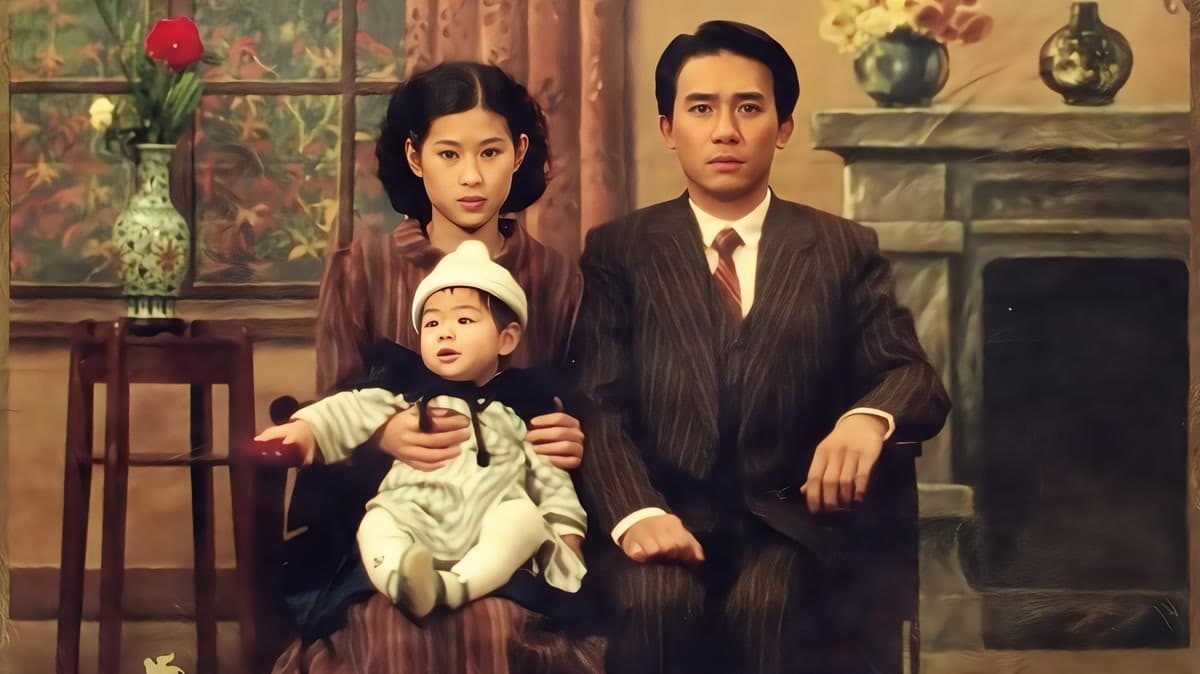
One of the most important films in Taiwanese cinema history is coming back to Korean theaters — this time in 4K. A City of Sadness (悲情城市, 비정성시), directed by Hou Hsiao-hsien and starring Tony Leung Chiu-wai, will receive a theatrical release in Korea in May 2026 following the unveiling of its teaser poster. For cinephiles and fans of Leung's work across the region, the announcement marks the beginning of a long-overdue reencounter with a film that changed what East Asian cinema could say — and how it could say it.
The film earned the Golden Lion at the 46th Venice International Film Festival in 1989, becoming the first Taiwanese production to win the award. More than three decades later, it remains one of the defining works of the Taiwan New Wave and a landmark in Leung's career — a film that asked silence to do the work that dialogue could not, and found in that silence something devastating and beautiful in equal measure.
What the Film Is About — and Why It Still Matters
A City of Sadness is set against one of the most painful episodes in Taiwan's modern history: the February 28 Incident of 1947, known in Mandarin as "二二八" (Er Er Ba), when an anti-government uprising was violently suppressed by Nationalist forces, leading to years of martial law and a period of historical trauma that Taiwanese society would spend decades slowly processing.
Hou Hsiao-hsien tells the story through the Lin family — four brothers navigating the transition from Japanese colonial rule to Nationalist Chinese control, and the catastrophic ruptures that period brings. The youngest brother, Wen-ching, played by Tony Leung, is deaf and mute. He communicates through written notes and photography. The performance is built almost entirely from physicality, stillness, and the camera's willingness to wait with him rather than move past him.
Leung, who was a prominent actor in Hong Kong cinema at the time, described the role as a turning point. He has since referred to the film as "a precious work I wanted to personally choose to show audiences again," a statement that speaks to both the depth of his attachment to it and the rarity of a film that could generate that kind of loyalty from one of its stars more than 35 years after shooting.
Tony Leung and Hou Hsiao-hsien: A Collaboration That Shaped Regional Cinema
The pairing of Leung and Hou Hsiao-hsien was not an obvious one at the time of production. Leung was primarily known for commercial Hong Kong cinema; Hou was already establishing himself as one of Taiwan's most uncompromising directors, working in long takes and elliptical narratives that offered audiences no shortcuts to meaning. The collaboration required a kind of trust that rarely happens between a director and a star, and the result — a performance almost entirely without words that communicates grief, love, and resignation with precision — remains one of the most remarkable achievements in either man's career.
For Hou Hsiao-hsien, A City of Sadness represented a direct confrontation with Taiwanese history at a time when the subject remained politically delicate. The film's release in 1989 arrived just as Taiwan was lifting martial law, creating a cultural moment in which audiences were, for the first time, encountering an art film that reflected back their own suppressed national memory. Its impact was immediate and lasting.
The director has described the film as his most personal work, a statement that carries particular weight given a filmography that includes The Time to Live and the Time to Die (1985) and Flowers of Shanghai (1998). Where much of Hou's cinema operates through accumulated small moments and atmospheric time, A City of Sadness brings those techniques to bear on explicitly historical material — and the combination produces something that functions as both elegy and document.
The 4K Restoration and Its Significance
The teaser poster released ahead of the Korean theatrical run positions the restoration as an event in its own right. The image — Wen-ching's hands adjusting a camera lens, a gesture of framing and observation that cuts to the core of what the film is about — conveys restraint and weight in equal measure. It is a poster designed for audiences who already know what the film is, and who understand that seeing it in 4K in a theater is a categorically different experience from any previous format.
4K restorations of classic films have become increasingly significant cultural events in Korean theaters over the past several years, with audiences demonstrating appetite for precisely this kind of cinematic archaeology. Retrospective screenings of films by Andrei Tarkovsky, Wong Kar-wai, and Bernardo Bertolucci have drawn strong turnout, and A City of Sadness — with its regional resonance, its internationally recognized pedigree, and Tony Leung's continued cultural centrality across East Asia — seems well-positioned to continue that trend.
Why This Release Matters Now
The timing of the Korean theatrical release carries its own significance. Tony Leung remains one of the most beloved actors in the region, his profile elevated further by his role in Marvel's Shang-Chi and the Legend of the Ten Rings (2021), which introduced him to a new generation of global viewers who then went back to explore his earlier work. For many younger Korean audiences, A City of Sadness will represent a first encounter with both Hou Hsiao-hsien's cinema and Leung's foundational career work.
At the same time, the film remains essential viewing for anyone seeking to understand how East Asian cinema responded to its own political histories in the post-war era. A City of Sadness does not explain the February 28 Incident so much as it inhabits it — lives alongside it, through characters whose suffering is never dramatic in the conventional sense but is always present, always accumulating. It is the kind of film that changes how a viewer sees other films, and how a viewer thinks about what cinema is for.
A City of Sadness opens in Korean theaters in May 2026. Further screening details are expected to be announced shortly.
How do you feel about this article?
저작권자 © KEnterHub 무단전재 및 재배포, AI학습 및 활용 금지
Entertainment Journalist · KEnterHub
Entertainment journalist specializing in K-Pop, K-Drama, and Korean celebrity news. Covers artist comebacks, drama premieres, award shows, and fan culture with in-depth reporting and analysis.
Comments
Please log in to comment