These Leslie Cheung Photos Were Never Meant to Be Seen
On the 23rd anniversary of his death, newly released 1998 photographs of Leslie Cheung — showing him tired, withdrawn, and unguarded — are moving fans all over again
 By Jang Hojin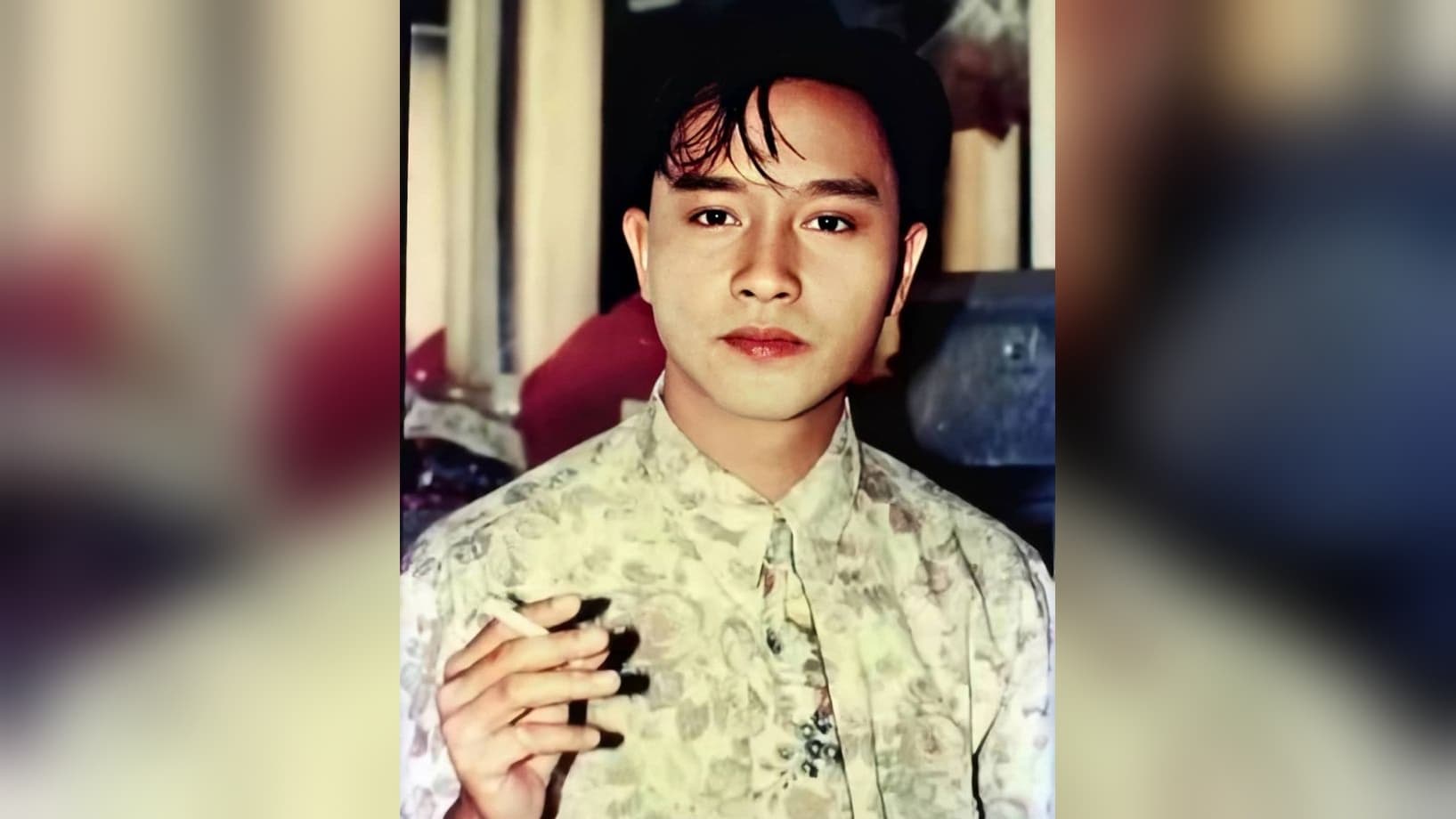
April 1, 2026 was the 23rd anniversary of Leslie Cheung's death. Like every year before it, fans gathered outside the Mandarin Oriental hotel in Hong Kong's Central district — the building from which the legendary actor and singer fell on April 1, 2003. Floral tributes, handwritten letters, album covers, and photographs covered the pavement. A generation of fans who grew up watching him in Farewell My Concubine and Happy Together stood side by side with 19-year-olds who had discovered him through streaming platforms. The crowd called him, as they always have, "Gor Gor" — elder brother.
This year, something new arrived. Korean film company Triple Pictures released a series of previously unpublished photographs of Cheung, taken by cinematographer Kim Hyung-sun during an autumn 1998 shoot. They were images that had never been shared publicly — and when they surfaced, fans immediately understood why they mattered.
"He arrived at the shoot and asked for a brief moment," Kim Hyung-sun recalled. "He appeared unusually tired and exhausted that day." The photographer said that moment — Cheung quiet, withdrawn, carrying something invisible — "best expressed who he was." He pressed the shutter.
The Man Behind the Icon
Born Cheung Fat-chung in Kowloon on September 12, 1956, Leslie Cheung would have turned 70 in 2026. He was the youngest of ten children, raised largely by his grandmother after his parents separated. His father was a renowned tailor — his clients included Alfred Hitchcock and Marlon Brando — and the family existed at a strange intersection of glamour and absence. Cheung chose the name "Leslie" after the actor Leslie Howard, drawn to its gender-neutral quality in a way that felt prescient for everything that followed.
His early career was difficult. He was booed offstage during his debut at the 1977 RTV Asian Singing Contest. Critics called his voice "chicken-like." He returned anyway, year after year, developing the precise combination of vulnerability and intensity that would eventually make him irreplaceable. The 1984 single "Monica" changed everything — a dance-driven pop song that introduced a new kind of star to Cantopop and made Leslie Cheung famous across East Asia overnight.
By 1993, he had completed one of the most remarkable performances in the history of East Asian cinema: Chen Dieyi in Chen Kaige's Farewell My Concubine (패왕별희). The film became the first Chinese production to win the Palme d'Or at Cannes. Cheung's portrayal of a Peking opera singer who cannot separate performance from reality, devotion from obsession, was described by critics as career-defining and generation-defining. Wong Kar-wai, who directed him in three films, later said simply: "I don't think I would make a Leslie Cheung movie and cast anybody to play him. He cannot be replaced."
The Photos and What They Capture
The 1998 photographs released this April show Cheung five years before his death, during a period when, by all outward appearances, he was at the height of his powers. His 2000–2001 Passion Tour — 43 concerts, costumes designed by Jean Paul Gaultier, a concept spanning from angel to devil — was still two years away. His album Red had already broken commercial and artistic ground. He was, publicly, magnificent.
But the photographer saw something else that autumn day. The fatigue. The request for a moment. The face of someone who was carrying more than the performance required.
This is what makes the photographs different from the thousands of professionally staged images of Cheung that already exist. He was, throughout his career, extraordinarily skilled at presentation. Jean Paul Gaultier's costumes. Wong Kar-wai's languid compositions. The perfectly calibrated distance of a star who reveals everything in character and almost nothing in person. These new photographs offer something rarer: an unguarded instant, captured by someone who recognized its weight.
Fan response was immediate and widespread. Many noted that Cheung's inner life — the depression that would eventually be cited in connection with his death, the year of psychiatric treatment he received before April 2003 — was hidden for a long time, perhaps from everyone including himself. Seeing photographs of him looking tired and withdrawn in 1998 reads differently now than it would have then.
Twenty-Three Years of Love That Doesn't Fade
Leslie Cheung died on April 1, a date that initially seemed like a cruel joke. The disbelief was global. In Hong Kong, tens of thousands gathered for his memorial despite the SARS epidemic. In Korea, Japanese, and across Southeast Asia, fans who had grown up with him held vigils.
What has happened in the 23 years since is something the entertainment industry rarely produces: a fandom that has not diminished but transformed. In 2013, fans set a Guinness World Record with 1,956,921 origami cranes — one for each year of the year he was born, 1956. Asteroid 55383 was named Cheungkwokwing in his memory. A 2010 CNN poll placed him third among the most iconic musicians of all time, behind only Michael Jackson and The Beatles. In 2013, he became the first contemporary celebrity included in the Chinese-language Cihai encyclopedia.
This April, in addition to the newly released photographs, two of his films received 4K restoration screenings. Rouge, his 1988 fantasy romance with Anita Mui, screened at CGV Arthouse in Korea with a specially produced tribute video. Farewell My Concubine: The Original was re-released in Korean theaters. A 19-year-old fan at one of the screenings said afterward: "His work still feels fresh, even after 20 or 30 years."
The 1998 photographs released this April exist somewhere between document and elegy. They show a man who was, according to the person who pressed the shutter, unusually tired that day. They show someone who asked for a moment before the shoot. They show, perhaps, the version of Leslie Cheung that the most carefully constructed public image never quite could — a person who was working very hard, for a very long time, before the world finally stopped asking him to.
Fans are not looking at these photographs for new information about who he was. They already know. They are looking, as they have for 23 years, because seeing him again is enough.
How do you feel about this article?
저작권자 © KEnterHub 무단전재 및 재배포, AI학습 및 활용 금지
Entertainment Journalist · KEnterHub
Entertainment journalist specializing in K-Pop, K-Drama, and Korean celebrity news. Covers artist comebacks, drama premieres, award shows, and fan culture with in-depth reporting and analysis.
Comments
Please log in to comment