The Story of Why Shin Dong-yup Stepped In to Defend Sayuri — and It's Beautiful
On a recent YouTube episode, Sayuri shared a long-remembered backstage moment that reveals the real Shin Dong-yup
 By Park Chulwon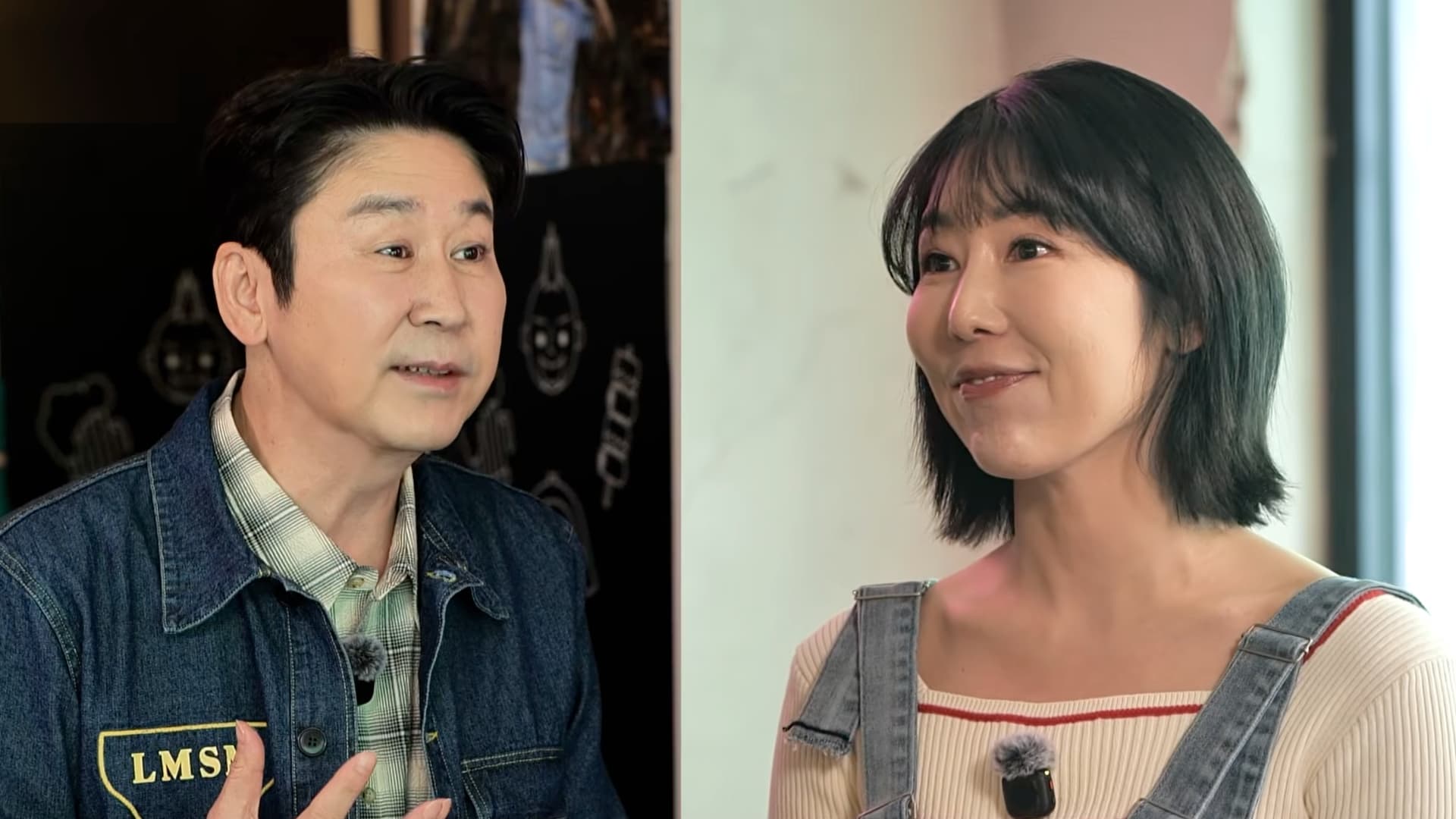
In Korean entertainment, stories about celebrities behaving badly tend to get the most traction. But sometimes, the stories worth remembering are the ones about someone stepping in — and this week, television personality Sayuri shared one of those stories, and it has been making the rounds ever since.
On March 30, an episode of the YouTube series Shin Dong-yup's Cheap Bro (짠한형 신동엽) dropped with Sayuri and comedian Kim Gyeong-wook as guests. What viewers weren't expecting was the moment where Sayuri described a long-ago incident in a backstage waiting room — and the person who stood up for her when she couldn't.
What Happened in the Waiting Room
Sayuri described the scene simply: before a recording, she was sharing a waiting room with another female celebrity when the atmosphere turned unexpectedly hostile. "She said a lot of really bad things to me," Sayuri recalled, her tone matter-of-fact. "I was just there quietly, not saying anything."
That might have been where the story ended, except for one detail: Shin Dong-yup was there too. "He came in and saw what was happening," Sayuri said. "And 신동엽 오빠 got genuinely angry on my behalf. He told her directly that the way she was treating me wasn't acceptable." She paused, then added, "I'd never seen him angry before that moment."
The host of the show, who was sitting across from the guest sharing this story about him, responded with characteristic self-deprecation. But the audience watching at home got the picture clearly: this was Shin Dong-yup doing what he consistently does in the Korean entertainment industry — treating everyone in the room with equal respect, and quietly insisting others do the same.
Why the Story Matters: Who Sayuri Is
To fully appreciate why this story resonated, context about Sayuri helps. Born Fujita Sayuri in Osaka in 1984, she came to South Korea in 2003 to study Korean — and never quite left. She built a career as one of Korea's most distinctive foreign-born television personalities, becoming fluent in Korean, English, Japanese, and German, and carving out a reputation as someone entirely herself on screen.
Her personal life decisions made her a cultural flashpoint in the best sense: in 2020, she became one of the first Korean entertainment figures to publicly discuss having a child via sperm donation as a single mother. Her son Zen was born that year. The decision sparked enormous conversation in South Korea, a country where the traditional family structure remains deeply embedded in public discourse. Sayuri navigated the controversy with openness and humor, and came out the other side more beloved than before.
Being a foreign-born woman raising a child alone in a highly conformist media industry means navigating a great deal of casual judgment. The waiting room incident — which Sayuri shared without naming the other person and without visible bitterness — speaks to a texture of experience that many women in entertainment will recognize.
Shin Dong-yup: Korea's Quiet Defender
Shin Dong-yup, who has been one of South Korea's most prominent comedians and television hosts for more than two decades, has accumulated a reputation over the years as someone who pays attention to how people treat each other on set. His show Shin Dong-yup's Cheap Bro has become known as a space where guests speak honestly, often more honestly than they would elsewhere in Korean entertainment media.
Stories about him quietly correcting behavior or defending colleagues have surfaced before — the kind of anecdotes that circulate in Korean fan communities as evidence of consistent character rather than performed virtue. Sayuri's story fits neatly into that pattern. He didn't announce what he was doing. He didn't make it a public moment. He just said, directly and privately, that what was happening was not okay.
The Korean internet's response to Sayuri's account has been warmly enthusiastic. Comments under the YouTube episode and across Korean social platforms described the story as a "미담" — a term meaning a heartwarming tale of someone doing the right thing. In an era when entertainment news often focuses on who said what to whom in the worst possible way, a story about a veteran entertainer using his position to protect someone with less leverage feels genuinely worth sharing.
The Moment That Stayed With Her
What makes Sayuri's telling of the story effective is its understatement. She isn't narrating a dramatic rescue. She is describing a moment where someone who could have stayed quiet chose not to — and how that moment stayed with her for years afterward. "I thought to myself: this person actually cares," she said on the show. "Not just about the people watching, but about the people in the room."
In a media environment that rewards loudness and controversy, that distinction matters. Sayuri's appreciation for the moment isn't about the scale of what happened. It's about the fact that it happened at all — that someone noticed, and said something, when they didn't have to.
The episode continues streaming on YouTube, and the clip of Sayuri's account has been widely shared across Korean entertainment social media since its release. For Shin Dong-yup, it's one more quiet addition to a record that speaks for itself. For Sayuri, it was a chance to say out loud something she had apparently been grateful for a long time.
The broader context is worth noting. Sayuri has been a fixture of Korean entertainment for nearly two decades, and the affection the Korean public holds for her goes well beyond novelty. She represents a particular kind of cultural integration — someone who came from elsewhere, learned a new language and cultural register, and built something genuine rather than performative. The fact that she shared this story on a variety show rather than through a carefully managed statement says something about how she has chosen to operate throughout her career: directly, personally, without excessive calculation.
For fans of both Sayuri and Shin Dong-yup, the episode offers something relatively rare in entertainment media: a reminder that the relationships forged behind the cameras can be real, and that real often looks like this — someone saying a hard thing quietly, in a waiting room, when they didn't have to.
How do you feel about this article?
저작권자 © KEnterHub 무단전재 및 재배포, AI학습 및 활용 금지
Entertainment Journalist · KEnterHub
Entertainment journalist focused on Korean music, film, and the global K-Wave. Reports on industry trends, celebrity profiles, and the intersection of Korean pop culture and international audiences.
Comments
Please log in to comment