The Ryuichi Sakamoto Film Found in a Basement Comes to Korea
A 1984 documentary lost for decades gets a 4K restoration and its first-ever Korean theatrical run
 By Park Chulwon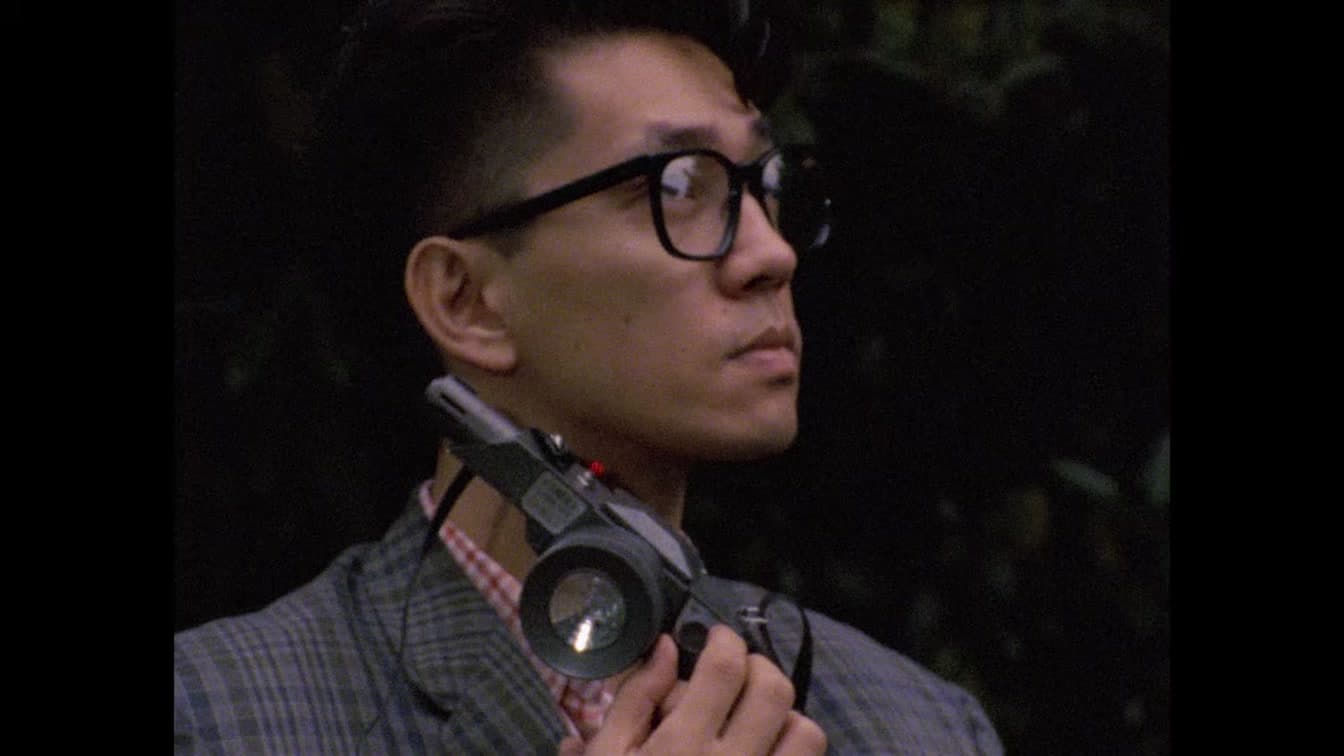
Ryuichi Sakamoto was 32 years old, midway through what would become one of the most transformative years of his career, when a filmmaker named Elizabeth Lennard followed him around Tokyo for a week with a 16mm camera. The resulting documentary, Tokyo Melody: A Film About Ryuichi Sakamoto, screened at a handful of film festivals in 1985 and then largely vanished — until the original film elements were rediscovered in Lennard's basement decades later. Now, newly restored in 4K, the film arrives in Korean theaters on April 15 for its first-ever domestic run.
The premiere comes during a particularly meaningful stretch for Sakamoto's fans in Korea. March 2026 marks the third anniversary of his passing, and Korean distributor Jinjin has positioned the release alongside another documentary, Ryuichi Sakamoto: Diary, which opens April 1 and covers his final three and a half years of life. Together, the two films offer something rare: a chance to see the full arc of an artist's life — from restless young creator to reflective elder statesman of music — in successive weeks at the cinema.
Who Was Ryuichi Sakamoto?
For readers less familiar with his work, a brief introduction: born in Tokyo in 1952, Sakamoto spent his late twenties as a founding member of Yellow Magic Orchestra (YMO), the electronic music trio that became one of Japan's biggest cultural exports in the late 1970s and early 1980s. YMO's synthesizer-driven sound was genuinely ahead of its time — the group influenced everyone from European electronic acts to later generations of K-pop producers.
But Sakamoto's solo ambitions ran parallel to and beyond YMO. In 1983, he took on a dual role in Nagisa Oshima's Merry Christmas, Mr. Lawrence — acting opposite David Bowie while also composing the film's iconic score. That combination of acting and composing in a single production was emblematic of his interdisciplinary restlessness. A few years later, his score for Bernardo Bertolucci's The Last Emperor (1987) won him the Academy Award for Best Original Score, cementing his global reputation.
In Korea specifically, Sakamoto has long held a devoted following. His melodic sensibility translated particularly well to Korean audiences, and tracks like "Merry Christmas Mr. Lawrence," "Rain," and the later solo work "Opus" became touchstones for a generation of Korean music listeners and film composers. A tribute concert series performed across Korean cities in March 2026 drew enthusiastic audiences — evidence that his fanbase here remains not just loyal but actively engaged.
The Story Behind the Film
When Elizabeth Lennard arrived in Tokyo in May 1984, Sakamoto was at a creative crossroads. YMO had recently gone on hiatus, and he was deep in the process of recording his fourth solo album, Ongaku Zukan (音楽図鑑, or Illustrated Musical Encyclopedia) — an experimental record that saw him fusing Western classical structures with Japanese folk music and electronic synthesis. The film captures him in that in-between state: neither the group phenomenon of YMO nor yet the globally celebrated film composer he would become.
Lennard's camera follows Sakamoto into the studio, where he works with engineers and operates a Fairlight CMI synthesizer — an instrument that, in 1984, represented the cutting edge of digital music production. The footage also includes YMO concert material, giving audiences a sense of the scale he had already achieved before pivoting toward something more introspective. It is a portrait of an artist at 32 who knows exactly where he has been and is still figuring out where he wants to go.
The documentary screened at the Rotterdam and Locarno international film festivals in 1985, and made its Japanese theatrical debut at the inaugural Tokyo International Film Festival that same year. After a French television broadcast in 1986, it essentially disappeared from circulation. Copies on VHS and DVD were rare; the original 16mm negative was thought to be lost.
Its rediscovery — in the director's basement, exactly the kind of serendipitous archival rescue that film preservationists dream of — enabled a painstaking 4K restoration. The restored version screened at the Toronto International Film Festival in 2024 as part of a Sakamoto retrospective, before opening theatrically in Japan across 20 screens in January 2026. A pop-up store in Tokyo's Shibuya PARCO coincided with the Japanese release, and international distribution rights were handled by Film Constellation.
A Double Premiere for Korean Fans
The April 2026 Korean release is notable for being the film's first domestic theatrical run — Korean audiences had no opportunity to see it during its original 1985 festival circuit, and it never received a home video release in the country.
That this premiere coincides with Sakamoto's third death anniversary (he passed away on March 28, 2023, following a years-long battle with cancer) gives the screenings an emotional dimension beyond simple nostalgia. Tokyo Melody shows him at his most vital and searching. Ryuichi Sakamoto: Diary, opening just two weeks earlier on April 1, documents his final creative period. Seen in sequence, the pair form a kind of temporal bookend that no planned theatrical release could have engineered.
Korean media has framed the double release in exactly these terms: a chance to meet the "beginning" and the "end" of one of music's most complete artistic lives. The phrasing resonates because Sakamoto's career genuinely had that kind of coherent arc — from synthesizer experimentation in the 1970s to Oscar-winning film scores, to the spare, intimate piano music of his final years.
What Audiences Can Expect
Unlike his later concert films — particularly the quiet and meditative Ryuichi Sakamoto: Opus (2023), shot in black and white — Tokyo Melody is full of energy. The 1984 Sakamoto on screen is curious, sometimes impatient, clearly excited about where his music is headed. He speaks about his concept of time in music, his resistance to conventional melodic structure, and his fascination with the collision of Eastern and Western musical traditions.
The 4K restoration delivers the film with a visual quality far beyond what the original 16mm prints could have offered in 1985, while preserving the intimacy of Lennard's observational style. This is not a polished promotional piece — it is the record of a week in the life of someone who had not yet become a legend, still in the process of becoming.
For longtime Sakamoto fans in Korea, Tokyo Melody opens April 15 at select theaters nationwide. Given the companion programming and the anniversary timing, it is unlikely to run long. For those who have followed his work — or who want to understand where one of music's most thoughtful voices began — this is one of the more remarkable archival recoveries to reach Korean screens in recent memory. Tickets and screenings are available through participating theaters, with the distributor Jinjin handling domestic release logistics.
How do you feel about this article?
저작권자 © KEnterHub 무단전재 및 재배포, AI학습 및 활용 금지
Entertainment Journalist · KEnterHub
Entertainment journalist focused on Korean music, film, and the global K-Wave. Reports on industry trends, celebrity profiles, and the intersection of Korean pop culture and international audiences.
Comments
Please log in to comment