The Man Who Played the Phantom 2,700 Times and Chose Korea Over Broadway
Brad Little's journey from the stage of the Phantom to the streets of Seoul reveals something surprising about Korea's cultural pull.
 By Jang Hojin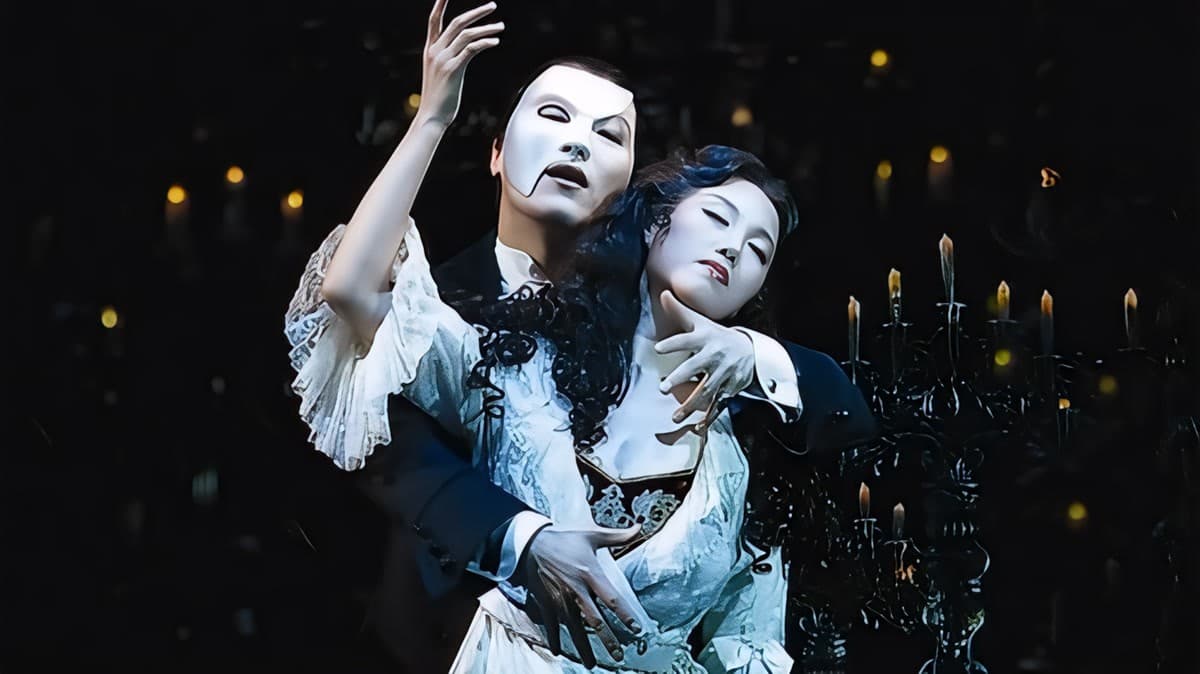
Brad Little has played the Phantom more than 2,700 times. He has performed the role on Broadway, on international tours, and on stages from New York to Tokyo. But it was Seoul — and a specific production of a different musical entirely — that changed the course of his life. Today, Little lives in South Korea with his Korean wife, teaches musical theater to children, and has become one of the most compelling examples of what Korea's performing arts scene has quietly become: one of the most powerful magnets for world-class theatrical talent on the planet.
On April 7, 2026, KBS1's long-running documentary series "My Neighbor Charles" (이웃집 찰스) aired an episode following Little's life in Seoul — including the behind-the-scenes story of a charity performance that took an unexpected turn. But the real story is not what happened on stage that day. It is what drew one of Broadway's most experienced performers to a country he had never planned to call home.
The Man Behind the Mask: 2,700 Performances and Counting
To understand why Little's choice matters, you first have to understand the scale of his career. The Phantom of the Opera is one of the most demanding roles in Western musical theater — a character who requires operatic vocal range, physical stamina, and emotional intensity night after night. Most celebrated performers cycle through the role for a season or two. Little made it his life's work.
Over the course of his career, Little performed the role of the Phantom more than 2,700 times, across Broadway productions, North American touring companies, and international engagements throughout Asia. He also played the lead in "Jekyll & Hyde" during multiple Korean runs, most notably a celebrated 2009 production at Seoul's Sejong Center for the Performing Arts. He has won a Barrymore Award for Best Actor in a Musical — Philadelphia's equivalent of a Tony. By any measure, he is a decorated veteran of the art form. What makes his story unusual is not the number of performances. It is what happened between them.
Why Korea Captured a Broadway Legend
Korea's musical theater market is, by global standards, extraordinary. The country's performing arts industry generated ₩1.732 trillion ($1.25 billion) in revenue in 2025 — an 18.8% increase over the previous year. Musical theater is the dominant driver of that growth, with approximately four million audience members attending productions in the first half of 2025 alone. The country's audiences are legendarily dedicated: it is common for fans to see the same production ten, twenty, or even thirty times in a single run, supporting multiple cast lineups and building deep personal relationships with the performers.
For a performer accustomed to the transactional efficiency of Broadway audiences — arrive, applaud, leave — the Korean reception to musical theater can feel genuinely disorienting. Standing ovations are not politeness rituals. Fan communities form around specific performers, tracking their performance schedules and filling theaters specifically to see them. The fan culture that drives K-pop — the passionate, personal investment in an artist's journey — has been applied with equal intensity to the world of musical theater.
Korea's international ambitions in the art form are now being recognized globally. In 2025, "Maybe Happy Ending," a Korean-created musical, won the Tony Award for Best Musical — the first Korean-originated production ever to do so. The Broadway establishment, which had long treated Korean theater as a curious import market, suddenly had to grapple with the possibility that the center of gravity for musical theater was shifting.
A Love Story Written in Greasepaint
Little's personal connection to Korea is inseparable from his professional one. During his "Jekyll & Hyde" run in Seoul, the production's makeup artist — a Korean woman named Minkyung — was assigned to his dressing room. She was sixteen years his junior. She also worked alongside him every night for weeks.
What began as professional familiarity became something neither had planned. Little and Minkyung pursued a relationship across the practical difficulties of an international career: his touring schedule, her life in Seoul, and a considerable cultural gap between a small-town American actor and a Korean family with expectations about who their daughter would marry. When the age difference became apparent — and when it emerged that Minkyung's mother was only three years older than her prospective son-in-law — the resistance from her parents was predictable.
Little refused to give up. He pursued the relationship with the same methodical determination he had brought to mastering one of theater's most demanding roles. He learned Korean customs, built a relationship with Minkyung's parents over years of visits and patience, and eventually won their acceptance. The couple married and settled in South Korea, where Little has remained — a choice that says as much about the pull of a country as it does about the pull of a person.
Teaching the Next Generation
"Mistakes are okay. Just enjoy it." That is Little's teaching philosophy, described by those who have observed his workshops. After decades of professional performance at the highest level, he has turned his attention to sharing the craft — running musical theater classes for children in Seoul, where his approach prioritizes joy over perfection. The results, by accounts of those who have seen them, speak for themselves.
The charity performance featured on "My Neighbor Charles" is a product of that work: a stage show where his students perform alongside him, culminating in a solo performance of his signature role. The production required meticulous preparation — Little personally blocked every entrance and checked every stage effect. Which makes the mystery of his apparent disappearance before his solo moment all the more intriguing for viewers who tuned in.
His work with young performers connects to a broader trend in Korean musical theater: a growing pipeline of domestically trained talent that is increasingly capable of competing on international stages. The generation of Korean performers who grew up watching actors like Little has begun to populate the casts of major productions worldwide.
What His Story Tells Us About Korea's Cultural Pull
It would be easy to read Little's story as a personal love story with an unusual backdrop. But it is also a data point in a larger pattern. Korea has, with remarkable consistency, attracted world-class performers in both the commercial music and theatrical sectors — not by offering the highest fees, but by offering something harder to quantify: audiences who care with unusual intensity.
In an era when K-pop is conquering Billboard charts and Korean film and television are redefining global entertainment, the musical theater sector's quiet parallel story is often overlooked. But the numbers tell a consistent story. The country that built one of the world's most passionate entertainment audiences has made itself indispensable to the art forms it loves. For performers who have experienced that relationship firsthand, walking away has proven remarkably difficult.
Little has played the Phantom 2,700 times. He has given the same role his full professional commitment for decades. Finding something worth that level of commitment in a city on the other side of the world — and choosing to stay — may be the most revealing performance of his career.
How do you feel about this article?
저작권자 © KEnterHub 무단전재 및 재배포, AI학습 및 활용 금지
Entertainment Journalist · KEnterHub
Entertainment journalist specializing in K-Pop, K-Drama, and Korean celebrity news. Covers artist comebacks, drama premieres, award shows, and fan culture with in-depth reporting and analysis.
Comments
Please log in to comment