Seoul Before New York: Why 'The Devil Wears Prada 2' Reveals Hollywood's New Asia Strategy
Meryl Streep's first-ever visit to Korea is not a coincidence — it's a blueprint
 By Jang Hojin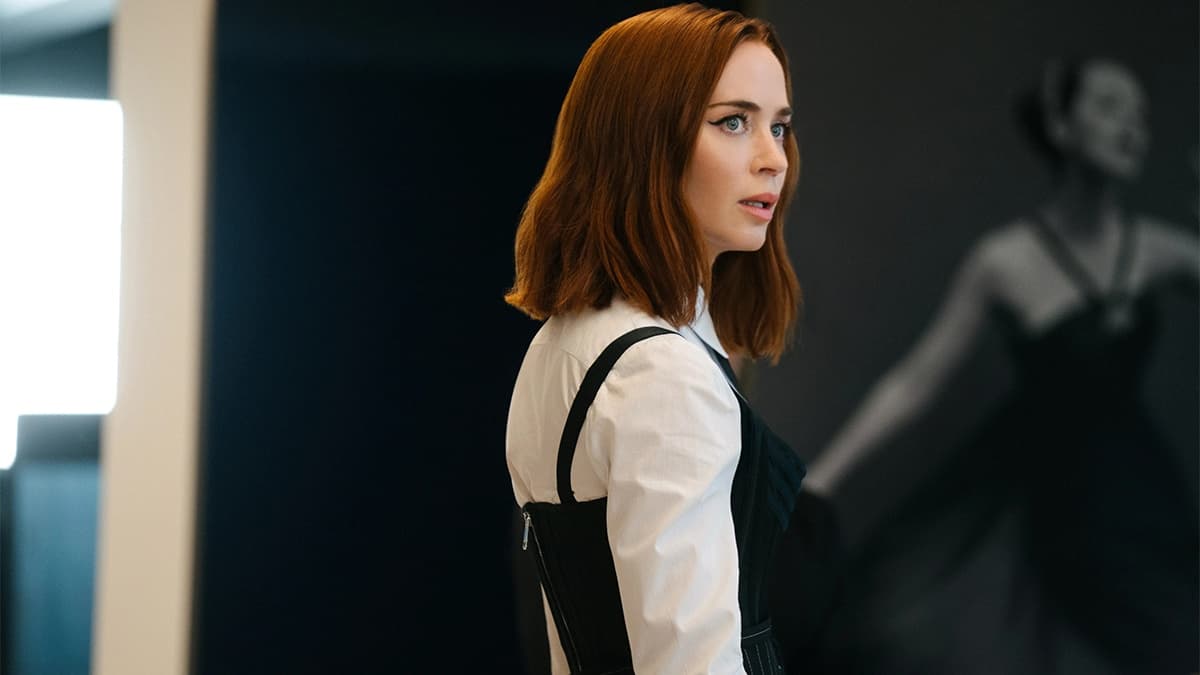
When Meryl Streep stepped off a plane in Seoul on April 8, 2026, it marked more than just her first-ever visit to Korea. For Hollywood watchers paying attention, it marked something far larger: the moment a two-time Oscar winner arrived in a city that, twenty years ago, would have been a mid-tier stop on any global press tour — but today commands the same strategic attention as London or New York.
The occasion was the Seoul press conference for "The Devil Wears Prada 2," the long-awaited sequel to the 2006 cultural phenomenon, held at the Four Seasons Seoul in Gwanghwamun. Alongside Streep, Anne Hathaway flew in for back-to-back events: a morning press conference and an afternoon red carpet at Yeongdeungpo Times Square. Remarkably, Korea is the first country in the world to receive the film's press tour — and the first to open the movie, with its theatrical release set for April 29, two full days before the United States premiere. That is not a scheduling quirk. It is a statement.
Hollywood studios do not choose premiere markets casually. Every first stop is a declaration of priority, a signal about which audiences the studio considers most strategically valuable. That 20th Century Studios planted its flag in Seoul first — before New York, before London, before Tokyo — tells you everything about how the global entertainment landscape has shifted since the original film premiered in 2006.
A 20-Year Journey From Mid-Tier to Must-Stop
The original "Devil Wears Prada" released in Korea in October 2006 to 1.37 million admissions — a respectable but unremarkable performance by Korean standards of the day. It was enough to prove there was an appetite for stylish Hollywood dramedies, but not enough to position Seoul as a launch priority. At the time, the logic of global press tours ran in one direction: New York or Los Angeles first, Europe second, Asia a distant follow-up.
Twenty years later, that calculus has been turned on its head. Korea's cinema culture has undergone a transformation almost without parallel in the developed world. In 2024, 123.1 million tickets were sold across Korean cinemas — roughly 2.4 tickets per person per year — placing Korea among the top markets globally for per-capita cinema attendance. More critically, it has become an audience that does not just consume culture: it generates it, exports it, and increasingly shapes global taste before Western markets have time to catch up.
K-pop, K-drama, and Korean cinema did not just become popular. They rewired how Western studios think about which markets matter first. When Bong Joon-ho's "Parasite" swept the 2020 Academy Awards, it was a confirmation of something Korean audiences had known for years: their taste was not derivative of the West but generative of what the West would eventually want. Hollywood studios noticed.
The Seoul Premiere Playbook
Hollywood's discovery of Seoul as a strategic launch market has been building for nearly a decade, but the pattern hardened after "Parasite." Studios began deploying their biggest properties accordingly, treating Seoul not as an Asian afterthought but as a cultural amplifier — a city where enthusiasm travels fast and far beyond national borders.
In 2018, Marvel Studios launched the "Black Panther" global press tour from Seoul, a signal flare aimed at a continent, with Korea as the starting pistol. In September 2025, Disney repeated the move with "TRON: Ares," choosing Seoul as the world's first stop — partly because the film starred Korean-American actress Greta Lee, who became the first Korean to headline a Disney blockbuster. The symbolic weight was intentional: the studio knew exactly where to plant that flag first.
"The Devil Wears Prada 2" completes the pattern — but with a twist that makes it more significant still. Unlike Greta Lee's casting or "Parasite's" Oscars-driven prestige, this film has no obvious Korean connection in its storyline or cast. The choice to premiere in Seoul is purely strategic, a sign the approach has become standard practice for 20th Century Studios' biggest releases. When a sequel about fashion editors in New York starts its world tour in Seoul, you know the city has crossed a threshold.
The economics explain why studios keep returning. A strong Korean opening generates social media momentum that reaches diaspora communities in the United States, the United Kingdom, and across Southeast Asia — multiplying the marketing effect far beyond what the domestic box office alone would suggest. Korean audiences also have a demonstrated ability to turn films into cultural events, the kind that trend globally on social platforms and drive the curiosity of audiences who had not been planning to see a film at all.
What Meryl Streep and Anne Hathaway Told Korea
Both stars used the press conference to signal genuine awareness of Korean cultural influence — and the quotes land differently when you consider the source. Meryl Streep, who has spent her career in the most prestigious rooms in global entertainment, noted that her grandchildren bring up Korean culture constantly in conversation. Anne Hathaway went further, saying directly that Korea leads global culture for young people, and that if her character Andy were a journalist covering Korea, she would write about K-pop and K-beauty — and would want to interview directors Park Chan-wook and Bong Joon-ho.
These are not boilerplate press tour comments. They reflect a genuine shift in what the most visible names in Hollywood see when they look at Korea: not a secondary market, but a culture-generating engine that is feeding the tastes and conversations of audiences worldwide. Hathaway's mention of specific Korean directors by name — not just as cultural footnotes but as interview targets worth pursuing — is a detail that would have been unthinkable in a Hollywood press context a decade ago.
The day's schedule reflected Seoul's full symbolic weight: a formal press conference in the morning, a red carpet with thousands of fans at Yeongdeungpo Times Square in the afternoon, and a planned appearance on tvN's "You Quiz on the Block" with host Yoo Jae-suk. That final booking is perhaps the most telling detail of all. Appearing on a beloved Korean variety format — not a stiff broadcast interview but a warm, personality-driven conversation — signals that the studio wanted to meet Korean audiences on their own cultural terms, not just pass through.
What Seoul's New Role Means for Korean Entertainment
The "Devil Wears Prada 2" press conference will not be an isolated event. It confirms that Seoul has permanently entered Hollywood's short list of must-visit cities for A-list promotional campaigns. The more interesting question is whether studios will deepen that commitment into production rather than just promotion.
Signs suggest they will. Netflix Korea is co-producing content that reaches global audiences without translation, Korean directors are crossing into mainstream Hollywood projects at an accelerating pace, and the commercial logic of treating Korean audiences as cultural trendsetters — rather than one more market segment — continues to compound. The traffic is no longer one-way.
Meryl Streep's first trip to Korea, prompted not by a film festival or an honorary award but by a sequel to a fashion comedy, says something both simple and profound: for Hollywood's most prestigious names, Seoul is now worth the journey. The city was always worth it. It took Hollywood twenty years to catch up.
How do you feel about this article?
저작권자 © KEnterHub 무단전재 및 재배포, AI학습 및 활용 금지
Entertainment Journalist · KEnterHub
Entertainment journalist specializing in K-Pop, K-Drama, and Korean celebrity news. Covers artist comebacks, drama premieres, award shows, and fan culture with in-depth reporting and analysis.
Comments
Please log in to comment