Sayuri's Son Thinks He's Korean — And Her Reaction Is Everything
 By Jang Hojin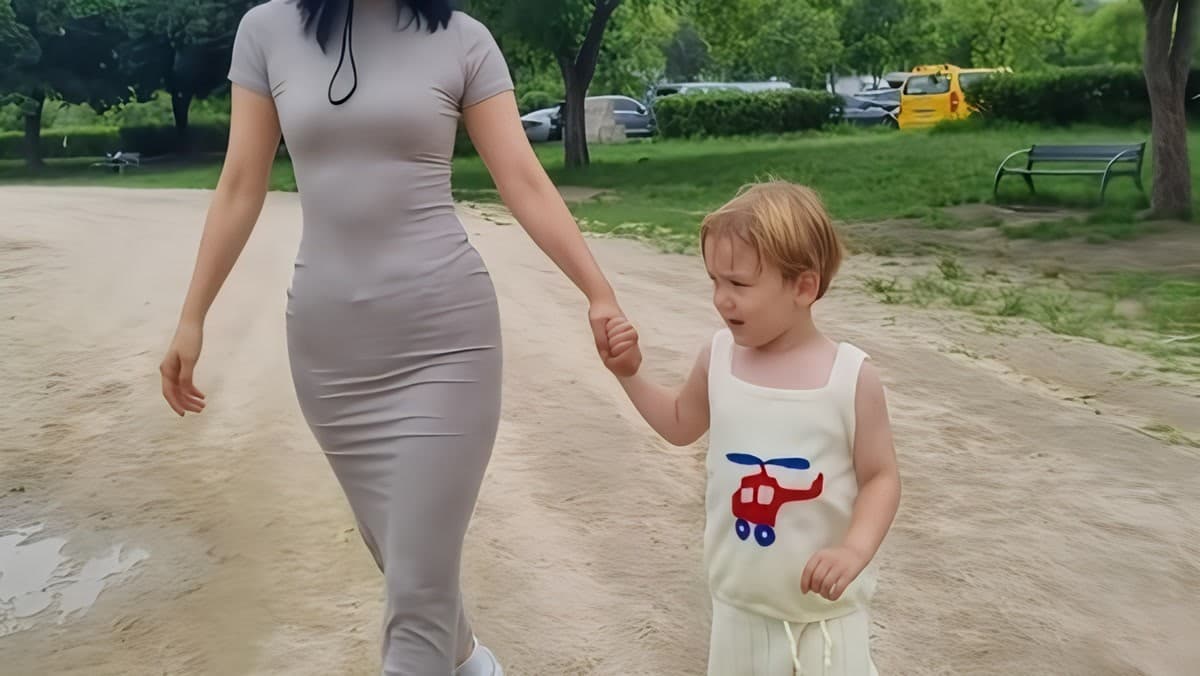
A single Instagram Story posted on March 30, 2026 stopped Korean entertainment fans in their tracks — and it did not come from a K-pop comeback or a drama announcement. It came from Sayuri Fujita, who shared a small, handwritten page from a picture book her five-year-old son Zen had made. The author credit at the bottom of the page read: "BY ZEN LEE."
When Sayuri asked Zen who "Lee" was, he looked at her as if the answer were obvious. "It is my name," he said. Sayuri could barely contain her reaction: "Zen seems to think he is Korean."
For anyone who has followed Sayuri and Zen's story over the past five years, the moment landed with a warmth that is difficult to put into words. It is small, personal, and entirely unscripted — and that is precisely why it has resonated so widely.
A Japanese Star Who Made Korea Home
Sayuri Fujita was born in Okayama, Japan, in 1979, but she has called South Korea home since 2007 — nearly two decades. She built her Korean TV career on KBS programs like Global Talk Show and Wonderful Friday, quickly earning a reputation as one of the most fluent and culturally attuned foreign entertainers on Korean television.
Her Korean is not just functional; fans frequently remark that her humor, timing, and emotional delivery feel entirely natural in the language. Over the years, she transitioned from being "that Japanese panel member" to a recognizable personality in her own right — someone who occupies a genuinely unique space in Korean pop culture, neither fully foreign nor Korean, but something warmly in between.
That in-between quality matters, because it is exactly the world her son Zen is growing up in.
The Unlikely Road to Motherhood
In 2020, Sayuri made a decision that sparked national conversation across South Korea. At 41, facing a doctor's warning that she was approaching menopause, she chose to become a single mother by choice — traveling to Japan to use an anonymous sperm bank, since Korean law at the time prohibited unmarried women from accessing IVF without a legal spouse's consent.
Her chosen donor was a Northern European man. On November 4, 2020, she gave birth to a son in Tokyo. She named him Zen (全), a Chinese character meaning "wholeness" or "entirety" — a name that feels almost prophetic for a child who would grow up carrying multiple worlds inside him.
When KBS invited Sayuri and Zen onto the long-running variety show The Return of Superman in early 2021, more than 3,200 people signed a petition demanding she be removed from the program. Some argued her unconventional family structure sent the wrong message for a family-oriented show. KBS held its ground, issuing an official statement noting that 7.3 percent of Korean households are single-parent households. "The 'Superman' in our title refers to the first hero a child meets after birth," the network wrote — defending Sayuri as exactly that for Zen. The backlash subsided. Sayuri and Zen appeared on the show from May 2021 to August 2023, winning over a large new audience in the process.
Growing Up Between Languages and Cultures
Zen is now five years old, and the picture Sayuri paints of his daily life is quietly remarkable. He has grown up in Seoul, surrounded by Korean at school and in the streets, but Sayuri made a deliberate choice from birth to speak only Japanese to him at home, concerned that Korean would otherwise crowd out his mother tongue.
The strategy appears to have worked beyond expectation. In a November 2025 television appearance, Sayuri revealed that Zen speaks five languages: Korean, Japanese, English, Chinese, and Spanish — at age five. Korean comes from his environment and schoolmates. Japanese comes from his mother's voice at home. The other languages come from a combination of media exposure and what can only be described as a five-year-old's fearless curiosity about the world.
For a child with a Japanese mother, a Western biological father he has never met, and a life built entirely inside Korean culture, questions of identity are not abstract. They are the texture of every day. And yet Zen appears to have answered the question — at least for now — in the most confident way possible: by writing "Lee" after his name.
The Picture Book That Started It All
The picture book at the center of the March 30 moment is titled "I Love My Dog" — a small illustrated story Zen made himself, filled with drawings of a child and a dog. It is the kind of thing millions of children make at kitchen tables around the world, unremarkable in itself.
What made it remarkable was the name on the cover. Not "Zen Fujita," the name on his Japanese birth certificate. Not simply "Zen," the name his mother calls him. But "Zen Lee" — 이젠 — a name that attaches a Korean family surname to his identity as naturally as if it had always been there.
Sayuri's public reaction was gentle and affectionate. She also shared something more personal alongside the pictures: "When I was young, my hobby was making picture books and writing. Watching Zen draw picture books feels like seeing my younger self."
In that light, the moment becomes something larger than a funny identity mix-up. It is a mother recognizing herself in her child — across languages, nationalities, and all the complicated circumstances that brought them to this particular moment in Seoul.
Fan Reaction: Why This Story Resonates
Korean fans responded with immediate warmth. Comments across Naver, Instagram, and entertainment forums described the moment as "too cute," "heart-melting," and "the most relatable thing." Many pointed out that a child who has spent his entire conscious life going to Korean school, watching Korean TV, and hearing Korean all around him would naturally reach for Korean as his primary identity — regardless of what his birth certificate says.
Others noted the broader resonance of the story. Sayuri's case in 2020 and 2021 directly fueled national debate about expanding IVF access for single women in Korea, with politicians citing her situation when proposing amendments to the Bioethics and Safety Act. The child born from that debate is now writing his own name in Korean.
Sayuri has never framed Zen's upbringing as a social statement. She speaks about him the way most parents speak about their children: with wonder, occasional exasperation, and a lot of love. But the story she tells, one Instagram post at a time, quietly expands the definition of what a Korean family can look like — and who gets to feel at home in Korea.
What Comes Next
Sayuri continues to appear on Korean variety programs and maintains an active social media presence. Zen, for his part, is growing up with the full confidence of a child who has decided exactly who he is — at least this week. Whether he keeps the "Lee" or moves on to another answer as he gets older, the picture book will remain.
A small, handmade thing with a big, handwritten name. And somewhere in Seoul, a Japanese mother is realizing she raised someone who feels entirely at home in a country that was never originally supposed to be his.
That might be the most quietly moving K-entertainment story of the year — no stages, no charts, no comeback schedules. Just a five-year-old and a surname he gave himself.
How do you feel about this article?
저작권자 © KEnterHub 무단전재 및 재배포, AI학습 및 활용 금지
Entertainment Journalist · KEnterHub
Entertainment journalist specializing in K-Pop, K-Drama, and Korean celebrity news. Covers artist comebacks, drama premieres, award shows, and fan culture with in-depth reporting and analysis.
Comments
Please log in to comment