Salmokji Review: The Horror Film Turning Korean Fans Into Midnight Pilgrims
The film that turned a quiet reservoir into a 3 a.m. pilgrimage site and proved Korean horror does not need a blockbuster budget
 By Jang Hojin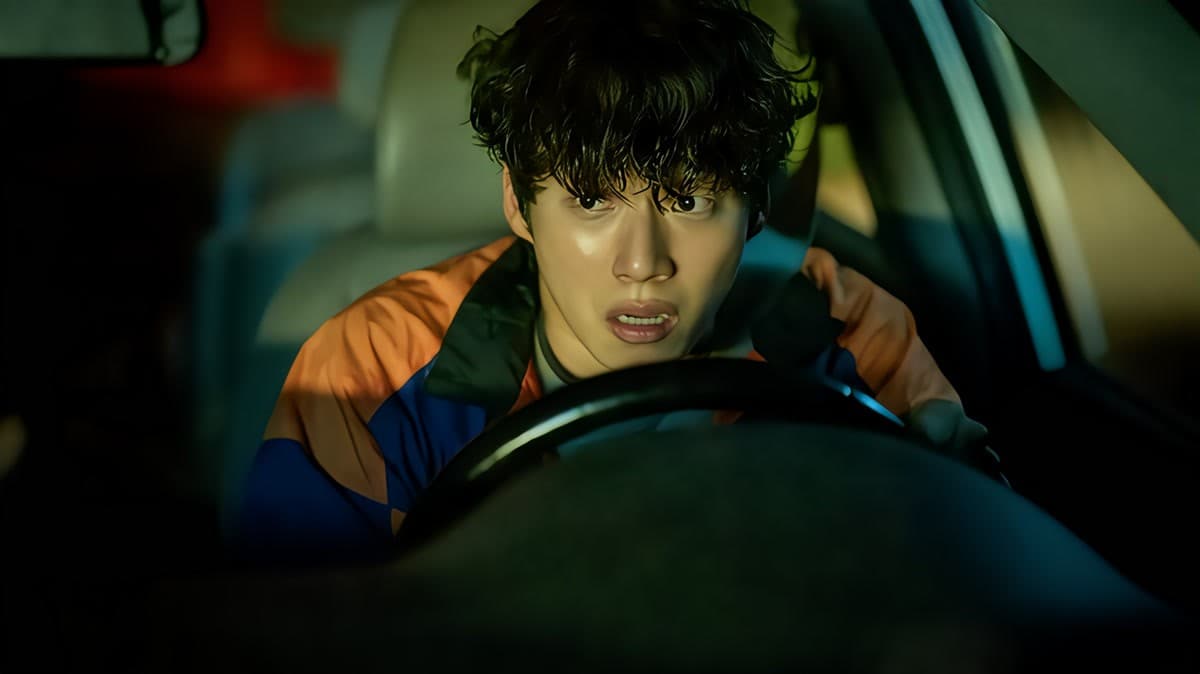
Seven days. That is all it took for Salmokji: Whispering Water to cross its financial break-even threshold — and to turn a provincial reservoir in South Chungcheong Province into one of Korea's most talked-about destinations of 2026. Directed by Lee Sang-min in his solo debut feature and starring Kim Hye-yoon and Lee Jong-won, this modestly budgeted horror film has done something that seasoned producers would call extraordinary: it generated cultural momentum that money alone cannot manufacture.
Between April 8 and April 14, the film accumulated more than 810,000 admissions in Korean theaters, surpassing its break-even target of 800,000 viewers. It held the domestic top spot for six straight days. Verified audience satisfaction on the CGV Egg Index, which measures confirmed viewer reactions, sat at 91%. Meanwhile, on social media, something far stranger was unfolding: hundreds of fans were navigating their cars to the actual filming location — in the middle of the night.
What made this happen, and what does it tell us about where Korean horror cinema is heading?
The Long Road Before Salmokji: Korean Horror's Complicated History
For much of its recent history, Korean horror has been commercially unreliable. The genre's defining domestic success remains Gonjiam: Haunted Asylum (2018), a found-footage chiller that drew 2.68 million admissions on a lean budget and gained a second life on international streaming platforms. The contrast with Salmokji is stark: advance ticket sales the day before its April 8 debut reached 75,000 — more than thirty times Gonjiam's advance bookings of 2,300 at the same pre-release moment. This was not a genre improving incrementally. It was a category shift.
The genre had its intermediate milestones, of course. The Medium (랑종, 2021) demonstrated that Korean audiences would watch Thai-language horror co-productions and discuss them seriously. Exhuma (파묘, 2024) became a genuine phenomenon — more than 10 million admissions, blending folk horror with shamanic ritual and detective thriller mechanics — but it arrived with blockbuster infrastructure behind it. That kind of production is difficult to replicate without matching scale.
Salmokji is asking a different question: what if you don't scale up? Produced for approximately 3 billion Korean won (roughly $2.2 million USD), the film reportedly doubled its revenue from 3 to 7.5 billion won within the first seven days. That ratio — modest investment, outsized return — is the kind of number that reframes conversations in any film industry.
Lee Sang-min's Bet: Real Location Over Special Effects
The premise is economically efficient by design. A documentary film crew notices an unidentified shape in archived road-view camera footage of a reservoir in Chungcheongnam-do. When they travel to the location for a reshoot, what awaits them beneath the dark water is not a camera error. Director Lee Sang-min — who has described himself, without irony, as a coward who scared himself during production — built the film's tension around the geography of that actual reservoir rather than compensating through visual effects budgets he did not have.
This approach connects Salmokji to a deliberate 2026 industry strategy. A wave of modestly scaled Korean horror films has targeted the spring release window: Guishin Boneun App: Yeong arrived in February; Samakdo followed in March; Salmokji claimed April. That timing echoes the success of Gonjiam's March 2018 release and reflects a growing industry consensus that spring, with lighter competition from blockbusters, suits the economics of lean horror production.
What distinguishes Salmokji within that cohort is its pacing. Rather than opening with a barrage of scares, the film builds pressure across its runtime — a structural choice that generated post-screening discussion rather than closing it down. Audience communities spent the following week dissecting the film's intentionally ambiguous ending, sustaining social media visibility long past opening weekend. This kind of viewer-generated debate is not manufacturable; it emerges when a film withholds just enough to keep people talking.
Kim Hye-yoon, cast as producer Han Su-in, arrived in the project carrying audience associations from her bright, cheerful performances in Extraordinary You (2019) and Sky Castle (2018). That familiar warmth is precisely what makes her gradual unraveling in Salmokji unsettling — the character's disintegration feels like a violation of what the actress has previously represented. Lee Jong-won, making his lead theatrical debut, contributes an unglamorous naturalism in early scenes that makes the horror feel grounded before it escalates.
The Reservoir After Midnight: From Film Set to Pilgrimage Site
The aspect of Salmokji's reception that no distributor could have planned is territorial. The film's actual setting — the real Salmokji reservoir in Yesan County — became a tourist destination within days of the film's opening. By its second week, over 100 vehicles were arriving near the reservoir after midnight. Navigation screenshots showing routes to Salmokji circulated on X and Instagram as a form of social credential: proof that you had made the dark drive.
Fans coined Salli-dan-gil — a portmanteau of Salmokji and Gyeongrigdan-gil, the Seoul district associated with cultural cool — to name the phenomenon. The label is telling: it grafts the prestige of an urban cultural landmark onto a rural reservoir that is, by daylight, unremarkable. Visitors recreating the film's most haunted camera angles in their own photographs has become its own social media subcategory.
Korean entertainment has generated location-based tourism before — Parasite's filming sites, Crash Landing on You's sets in various locales — but horror rarely achieves this effect. Fear is usually a deterrent. That Salmokji is drawing visitors precisely to a place that the film frames as threatening suggests the reservoir has acquired, in the span of one week, a kind of mythological weight.
What This Film Is Telling the Industry
Showbox, Salmokji's distributor, is recording its third consecutive hit in 2026 following Manyake Uri and Wang-gwa Saneun Namja. That streak positions the company as the dominant mid-budget distribution force of the year. For other producers watching, the takeaway from Salmokji is not about horror specifically — it is about the economics of restraint: what happens when a film uses a genuine location, real atmosphere, and patient pacing instead of reaching for production scale it cannot justify.
A cast event at Megabox COEX on April 15 will keep the film's profile active through its second week, and the social media conversation around Salli-dan-gil shows no sign of subsiding. But the film's lasting industry impact may be in the productions still being greenlit: projects that will look at Salmokji's revenue ratio and conclude that restraint is a competitive strategy, not a budget concession.
Korean folklore has long placed its most potent spirits in moving water — rivers that claim the unwary, reservoirs that refuse to return what they take. Salmokji did not invent this tradition. It found a reservoir that carried it already, and built a film that let the water speak.
How do you feel about this article?
저작권자 © KEnterHub 무단전재 및 재배포, AI학습 및 활용 금지
Entertainment Journalist · KEnterHub
Entertainment journalist specializing in K-Pop, K-Drama, and Korean celebrity news. Covers artist comebacks, drama premieres, award shows, and fan culture with in-depth reporting and analysis.
Comments
Please log in to comment