Rain's Villain in Bloodhounds Season 2 Is the Best Work of His Acting Career
Netflix K-action sequel raises the stakes with a globe-spanning underground boxing empire
 By Jang Hojin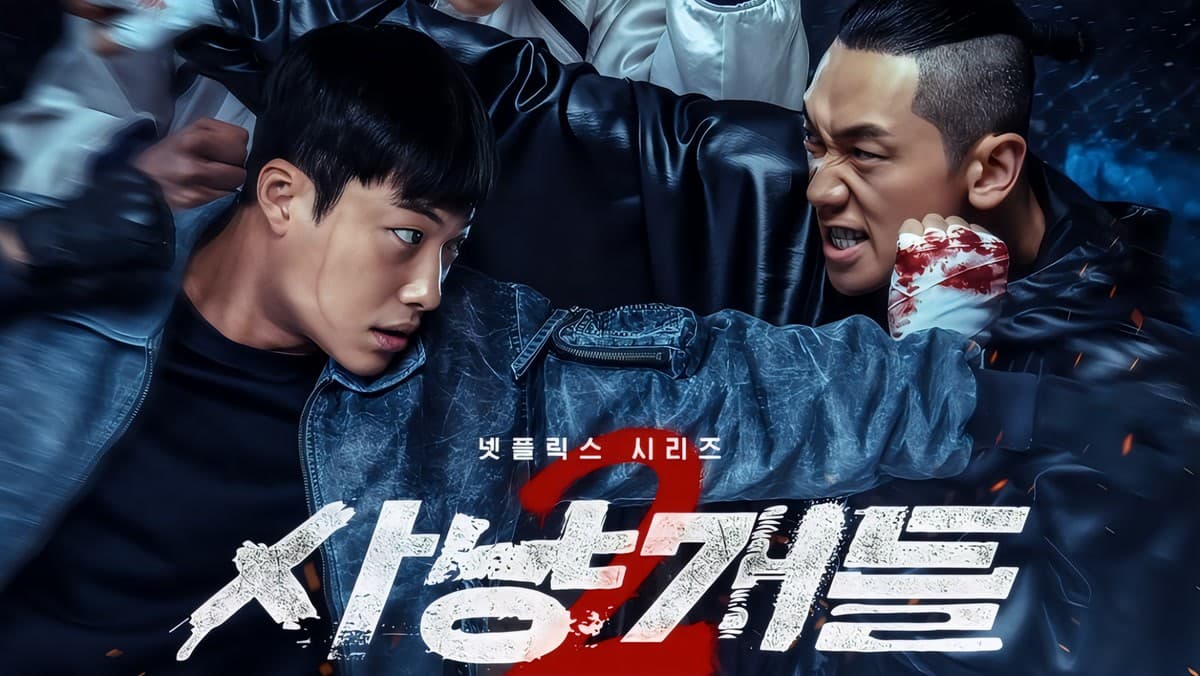
Three years is a long time to wait. When Bloodhounds premiered on Netflix in 2023, it delivered something K-drama had rarely attempted with such conviction: a grounded, brutal action series built on the chemistry of two young men with nothing to lose and everything to prove. The series' first season logged approximately 28 million viewing hours in its opening week, entered the Top 10 in more than 80 countries, and turned Woo Do-hwan and Lee Sang-yi into international names in the K-action space. Expectations for Season 2, which arrived on April 3, 2026, were accordingly massive. The verdict: mostly worth the wait — and in one area, genuinely revelatory.
That area is Rain. The K-pop legend and actor — born Jung Ji-hoon, known globally as the artist behind Rainism and one of the architects of the Korean Wave's early expansion — steps into Bloodhounds Season 2 as Baek Jeong, the architect of a global underground boxing empire. It is, by significant margin, the most committed villain performance of his screen career, and it changes the texture of the entire series.
From Loan Sharks to a Global Underground: The Stakes Get Bigger
Season 2 picks up roughly three years after the events of the first. Gun-woo (Woo Do-hwan) and Woo-jin (Lee Sang-yi) have returned to something resembling ordinary life following the collapse of the illegal loan organization they dismantled. That peace does not last. When Baek Jeong's IKFC emerges — an underground international boxing league operating on the dark web, financed by cryptocurrency, and watched by millions — the two fighters are drawn back into violence by necessity, loyalty, and the moral clarity that has always defined their friendship.
The expansion of scale is the season's most ambitious gamble. Season 1 worked precisely because its world felt contained and credible: two young men, one dangerous city, a system designed to exploit the vulnerable. Stretching that world into a global conspiracy risks losing the intimacy that made the original compelling. For the most part, director Kim Joo-hwan manages the transition with skill, grounding the larger stakes in the physical immediacy of exceptional fight choreography. The action sequences — chase scenes, explosive set pieces, extended ring battles — are technically among the most sophisticated the K-action genre has produced.
Rain's Villain and the Power of a Career Gamble
The element that elevates Season 2 beyond a competent action sequel is Rain's performance. Baek Jeong is not a villain built on menace alone. He is a man with a coherent — if monstrous — worldview, and Rain plays him with a stillness that makes every eruption of violence feel like a controlled decision rather than a loss of control. This forces Woo Do-hwan and Lee Sang-yi to recalibrate. Their chemistry has always been the show's engine, but Rain gives them something to push against that has genuine mass and consequence.
Korean audiences immediately recognized the impact. Early viewer responses described the casting as irreplaceable — praise that reflects both the performance and the cultural resonance of seeing an artist of Rain's stature commit fully to a role that requires him to be frightening. He spends the season shedding every vestige of the charismatic entertainer the public knows, and what emerges is harder and more interesting than anything in his previous acting work. This is not a celebrity cameo performing villainy. It is a complete transformation.
The Star Cameos: Spectacle with Purpose
A notable feature of Season 2 is its array of special appearances. Park Seo-jun returns in an expanded role as NIS agent Sin-hyeong — a character with greater narrative weight than his Season 1 appearance. Dex and Gong Myung appear as black-ops agents whose involvement injects energy into the mid-season. Ryu Soo-young reprises his Season 1 role as Doo-young, a return director Kim described as symbolizing the growth arc of the two leads.
The cameos work because they are purposeful rather than decorative. In a season built around escalating stakes, each arrival serves a function: advance the plot, complicate an alliance, or provide an action dynamic the two leads cannot generate alone. Park Seo-jun's expanded presence is a structurally smart choice — his character bridges Season 1's domestic conflict with the global machinery of Season 2 in ways that feel earned rather than grafted on. The show's greatest achievement may be making its world feel simultaneously larger and no less personal.
Reception and What It Means for K-Action's Future
On MyDramaList, Season 2 holds a score of 8.7 out of 10 from more than 2,200 user ratings — a marginal improvement over Season 1's already strong reception, suggesting the franchise has not just maintained its audience but deepened its hold on them. Pre-release tracking from Consumer Insight's March 2026 OTT evaluation report placed Bloodhounds 2 at No. 1 among anticipated titles with a 21 percent viewing intention rate — more than double the second-ranked title at 10 percent. These numbers reflect the brand equity the original season built over three years and suggest the franchise has staying power beyond the initial wave.
Critical response has been more nuanced. Some reviewers note that Season 2's broader canvas occasionally works against the stripped-down urgency of Season 1 — the shift from a domestic loan shark story to an international conspiracy introduces genre conventions that feel more familiar and less distinctive. But the consensus holds that the action sequences are exceptional, Rain's performance is a genuine revelation, and the emotional bond between Gun-woo and Woo-jin remains the franchise's most reliable asset. That bond has not depreciated in three years. If anything, the wait made it stronger.
What Comes Next
Season 2's finale closes the door on the Baek Jeong arc while deliberately leaving space for the franchise to continue. Netflix has not yet confirmed a third season, but the platform's track record with high-performing Korean action properties — combined with the audience engagement Season 2 is generating — makes renewal a reasonable expectation. If it happens, the challenge will be finding a villain capable of matching what Rain delivered in a season that has reset the benchmark for what a Bloodhounds antagonist can be. That, too, is a good problem to have.
How do you feel about this article?
저작권자 © KEnterHub 무단전재 및 재배포, AI학습 및 활용 금지
Entertainment Journalist · KEnterHub
Entertainment journalist specializing in K-Pop, K-Drama, and Korean celebrity news. Covers artist comebacks, drama premieres, award shows, and fan culture with in-depth reporting and analysis.
Comments
Please log in to comment