Perfect Crown's 7.8% Debut Just Made MBC History
IU and Byeon Woo-seok's alternate-history romance opens as the third-highest MBC Friday-Saturday premiere ever — then climbs to 9.5% by episode two
 By Park Chulwon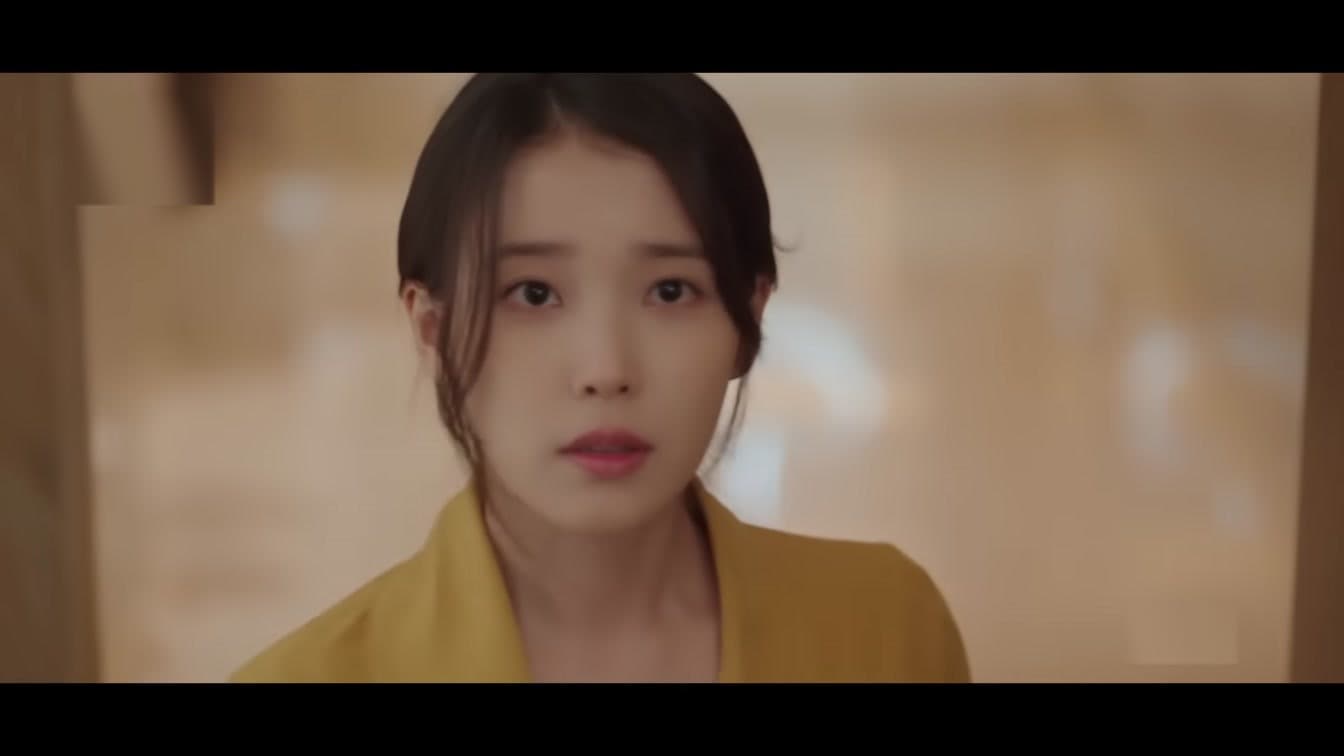
MBC's new weekend drama Perfect Crown (21세기 대군부인) opened on April 10, 2026, with a 7.8% nationwide rating and 8.2% in Seoul — the third-highest premiere ever recorded for an MBC Friday-Saturday drama. Only Chief Detective 1958 (10.1%) and Knight Flower (7.9%) have done better in that slot. By episode two, those numbers had climbed even further: 9.5% nationwide, placing Perfect Crown first across all channels in its timeslot and earning a 5.3% share among the crucial 20-to-54 demographic. For a genre that has watched ratings erode steadily across the streaming era, those figures represent something worth examining carefully — not just a strong debut, but evidence that the right combination of cast, creative team, and concept can still compel a mass television audience in 2026.
The numbers carry added weight when set against their immediate context. Perfect Crown's predecessor in the slot, In Your Radiant Season, finished its run with a 4.0% finale — meaning the new show nearly doubled that figure on its very first night, and more than doubled it by night two. Slot inheritance rarely produces that kind of jump. It signals genuine anticipation rather than habitual viewership, and it places the drama under immediate pressure to sustain what it has begun. That the show met and exceeded that pressure within forty-eight hours suggests something structurally sound is happening beneath the surface-level hype.
The Making of a Phenomenon: From Screenplay Contest to Primetime
Perfect Crown has an origin story that distinguishes it from the vast majority of high-profile K-dramas. The script is an original work by Yoo Ji-won, who won the Excellence Award at the 2022 MBC Drama Screenplay Contest — meaning this is not adapted from a webtoon, novel, or any pre-existing intellectual property. In an industry increasingly dominated by source-material adaptations, that distinction matters. It means the story was built from scratch for television, without the constraints of a pre-existing fanbase's expectations or the structural compromises that adaptation often demands. The script caught MBC's attention precisely because its premise — a constitutional monarchy persisting into modern-day Korea — was original enough to stand out from hundreds of competition entries, yet commercially viable enough to attract A-list talent.
That Yoo Ji-won's screenplay attracted director Park Joon-hwa and leads of IU and Byeon Woo-seok's caliber speaks to the quality of the material itself. In the K-drama ecosystem, top-tier directors and actors have their pick of projects. The fact that Park, coming off the massive success of the Alchemy of Souls duology, chose an unproven writer's screenplay contest entry over established properties tells us something about what he saw in the concept. It also tells us something about MBC's ambition: the network was willing to bet its most valuable timeslot on a fresh voice, backed by proven directorial and acting talent to de-risk the gamble.
The Premise: Alternate History Romance With Political Teeth
Perfect Crown is set in an alternate-history version of Korea where the Joseon dynasty never fully collapsed — the country operates as a constitutional monarchy in the present day, with a royal family that still holds cultural and political significance. The royal household coexists with a modern democratic government, creating a tension between tradition and progress that permeates every relationship in the show. Into this world steps Sung Hui-ju (IU), the second daughter of a chaebol family who possesses enormous wealth but chafes under her status as a commoner — and, more painfully, as an illegitimate child within her own family. She is a woman who has everything society values except the one thing she cannot buy: legitimate standing in the eyes of the monarchy.
Opposite her stands Grand Prince Yi-an (Byeon Woo-seok), the king's second son, a figure of immense title who paradoxically possesses nothing. Under constant surveillance by Queen Dowager Yoon Yi-rang (Gong Seung-yeon), who views him as a potential rival to her own young son's future on the throne, Yi-an navigates palace politics with a careful restraint that masks deeper currents of frustration and longing. Between them forms a contract marriage — Hui-ju offers her wealth in exchange for royal status, Yi-an accepts under circumstances that are far more complicated than simple transaction — and the drama's central engine ignites.
The alternate-history framing is doing meaningful work here. By setting the drama in a monarchical present rather than the historical past, the show can pair traditional Korean courtly aesthetics — the costumes, the ceremony, the hierarchy — with contemporary emotional registers that a modern audience can immediately access. The Grand Prince is not an abstract historical figure; he moves through a world with cars, smartphones, and social dynamics that viewers recognize. The tension between old structures and new sensibilities gives the romance a layer of friction that pure historical dramas sometimes struggle to generate, and pure modern romances rarely attempt.
Content Deep-Dive: The First Two Episodes Dissected
The premiere episode operates primarily as architecture. Director Park Joon-hwa uses the first seventy minutes to establish the drama's two parallel worlds — the gilded cage of the royal palace and the equally constrained world of chaebol politics — before bringing his leads into sustained contact. This is a deliberate structural choice, consistent with how Park has operated in previous projects. His work on What's Wrong With Secretary Kim (2018) and Alchemy of Souls (2022-2023) tends to build romantic tension through delayed gratification rather than early intensity. The first episode's restraint is not a weakness; it is laying foundation.
What the premiere does exceptionally well is establish the emotional logic of each character's desperation. Hui-ju's opening scenes paint a portrait of a woman who has learned to weaponize charm and audacity because the legitimate channels of advancement have been closed to her by birth. IU plays these moments with a precision that recalls her work in My Mister (2018), where she demonstrated an ability to convey enormous emotional weight through minimal expression. Here, the register is lighter — this is a romantic comedy, after all — but the underlying technique is the same: Hui-ju's brightness is a performance within the performance, and IU lets us see just enough of what lies beneath to understand that this character is more complicated than her confident exterior suggests.
Episode two accelerates dramatically. After Hui-ju's marriage proposal is flatly rejected by Yi-an, she launches a campaign of persistent proximity — appearing at his horse-riding grounds, his restaurants, his cinema visits — that is played for comedy but grounded in genuine strategic thinking. The turning point arrives when a scandal erupts: media reports suggest that Hui-ju and Yi-an are already involved and possibly expecting a child. The rumor is false, but the damage is real enough to force Yi-an's hand. His closing declaration — that Hui-ju should prepare herself because she will be his wife — flips the power dynamic entirely and sets the stage for the contract marriage that will structure the remainder of the series.
The episode-two ending is masterfully constructed. What could have been a simple plot device — the forced marriage — is instead layered with competing motivations. Yi-an is not simply capitulating to scandal; he is making a calculated move within the palace chess game that the Queen Dowager has been playing against him. Hui-ju, meanwhile, has gotten what she wanted, but the victory is complicated by the growing realization that Yi-an is not the passive royal she expected. Park Joon-hwa stages the proposal scene with a visual formality that echoes royal portraiture, lending the moment a gravity that elevates it beyond standard rom-com mechanics.
Chart and Performance: What the Numbers Actually Tell Us
The MBC Friday-Saturday slot has produced some of the network's most commercially successful dramas of the past three years. Chief Detective 1958 and Knight Flower — both period pieces with charismatic leads and strong word of mouth — set the current benchmarks. Perfect Crown arrives just 0.1 percentage points behind Knight Flower's opening, which is close enough to be statistically indistinguishable in terms of audience appetite. But the more telling number is what happened next: the 9.5% second episode represents a 21.8% increase over the premiere, a growth trajectory that neither Chief Detective 1958 nor Knight Flower matched in their opening weekends.
That upward momentum deserves careful analysis. A drama that opens high and holds steady is demonstrating pre-built audience loyalty. A drama that opens high and then climbs is demonstrating something rarer: word-of-mouth conversion happening in real time. The 1.7-percentage-point jump between episodes one and two means that a significant number of viewers who did not watch Friday's premiere were persuaded — by social media discussion, by recommendations from friends, by clips circulating online — to tune in on Saturday. In the 2026 media landscape, where streaming platforms offer instant gratification and attention spans are measured in seconds, that kind of overnight audience growth is genuinely remarkable.
Context makes the numbers even more impressive. The Good Data Corporation's FUNdex had already placed Perfect Crown at number one in the TV-OTT combined drama topicality ranking for two consecutive weeks before a single episode had aired. IU and Byeon Woo-seok held the top two positions in the cast topicality ranking for the first week of April. The drama did not simply arrive with hype — it arrived with the kind of multi-platform anticipation that only a handful of productions generate each year. That it then exceeded those expectations, rather than falling victim to them, speaks to the quality of what landed on screen.
IU and Byeon Woo-seok: A Decade in the Making
Perfect Crown reunites IU and Byeon Woo-seok a full decade after their first on-screen encounter in Moon Lovers: Scarlet Heart Ryeo (2016), where Byeon made a brief appearance as IU's unfaithful, debt-ridden former boyfriend. It was a near-cameo role in what was then a much earlier chapter of both careers. The distance they have each traveled since that moment is one of the drama's most compelling meta-narratives.
IU's trajectory since 2016 has been extraordinary by any standard. My Mister (2018) demonstrated dramatic depth that silenced skeptics who viewed her primarily as a singer dabbling in acting. Hotel Del Luna (2019) proved she could anchor a high-concept fantasy series while delivering one of the year's most emotionally devastating performances. Then came When Life Gives You Tangerines (2025) with Park Bo-gum on Netflix — a production that earned a 9.1 rating on IMDb (the highest ever for Korean content on the platform), swept four awards including Best Drama at the 61st Baeksang Arts Awards, and was named by Time magazine as the best Korean drama of 2025. She arrives at Perfect Crown not as a rising talent testing a new medium, but as one of the most commercially and critically validated actors working in Korean television today.
Byeon Woo-seok's ascent has been equally dramatic, if more compressed. Before Lovely Runner (2024), he was a working actor with a solid resume but limited mainstream recognition. That tvN time-travel romance transformed him almost overnight into the "Nation's Boyfriend" — a phenomenon that extended far beyond viewership numbers. While Lovely Runner's peak rating of 5.3% was modest by terrestrial standards, its cultural impact was seismic: Byeon topped Good Data's drama and non-drama buzz rankings simultaneously (a historic first), won the Daesang at the Asia Artist Awards, and accumulated eighteen brand endorsement deals by late 2025. Perfect Crown is his first drama in nearly two years, and the anticipation surrounding his return has been immense.
At the press conference before the premiere, IU reflected on the reunion with characteristic warmth: "Back then, he played the boyfriend who cheated on me with my close friend. Now, ten years later, we're working together for a longer period, but it felt as if we had already been acting together for a decade. There wasn't a single awkward moment." That comfort translates visibly on screen. The early episodes suggest a lead pairing that has the rare ability to generate chemistry through restraint — their best moments in the premiere are not the overtly romantic ones but the fleeting glances and carefully calibrated silences that hint at what is coming.
Director Park Joon-hwa's Strategic Network Migration
Perfect Crown marks director Park Joon-hwa's first project with MBC after a career anchored primarily at tvN. That network migration matters more than it might appear. tvN and MBC have meaningfully different production cultures, audience demographics, and scheduling pressures. Park's track record — What's Wrong With Secretary Kim (2018), Touch Your Heart (2019), the Alchemy of Souls duology (2022-2023) — was built within a cable ecosystem that allowed longer episodes, later timeslots, and somewhat more stylistic freedom. MBC brings broader terrestrial reach and higher potential ratings ceilings, but also tighter structural conventions and a less forgiving audience if pacing falters.
The 7.8%-to-9.5% opening weekend suggests the transition has not only preserved his audience but expanded it. Park's directorial fingerprints are evident throughout the first two episodes: the careful visual composition that treats each frame as portraiture, the willingness to let scenes breathe rather than cutting to the next plot beat, the integration of humor that emerges from character rather than situation. His co-director Bae Hee-young handles the more kinetic sequences — the scandal montage in episode two, the media frenzy surrounding the rumored pregnancy — with an energy that complements Park's more measured approach. The directorial partnership appears well-calibrated for a drama that needs to balance romantic delicacy with political intrigue and comedic timing.
The Supporting Architecture: Gong Seung-yeon and Noh Sang-hyun
Strong romantic dramas are almost always defined by the quality of their supporting cast, and Perfect Crown has invested heavily in this department. Gong Seung-yeon's Queen Dowager Yoon Yi-rang is the drama's structural antagonist, but the premiere establishes her with unusual sophistication. Yi-rang is not presented as straightforwardly villainous — she is a woman whose entire identity has been built around securing her young son's place on the throne, and she views Yi-an's growing prominence as an existential threat to everything she has spent her life constructing. The character operates in the register between sympathy and antagonism, and Gong plays that ambiguity with a precision that suggests she may end up being the drama's most discussed figure.
Noh Sang-hyun rounds out the principal cast as Min Jeong-woo, a loyal confidant to Prince Yi-an who was born into a prominent political family. Jeong-woo uses his connections and influence to help the Prince navigate the palace's treacherous inner circles, and Noh brings a quiet intensity to the role that provides a necessary counterweight to the more flamboyant energy of the two leads. The supporting cast also includes Yoo Su-bin, Lee Yeon, and Chae Seo-an in roles that the first two episodes have only begun to sketch but that appear designed to deepen the drama's political and romantic complications as the story progresses.
Fan and Critic Reception: A Divided but Engaged Audience
The response to Perfect Crown's opening weekend has been intense, polarized, and — crucially — enormous in volume. Korean netizens flooded online forums with reactions that ranged from ecstatic endorsement to pointed criticism. Comments like "IU in a rom-com is an automatic watch" and "Byeon Woo-seok plus IU is an unbeatable combination" captured the enthusiasm of viewers who felt the drama delivered on its considerable promise. Others focused on specific performances, with some netizens expressing divided opinions about Byeon Woo-seok's acting choices — noting concerns about "pronunciation, tone, and facial expressions" that they felt did not match the polish of his Lovely Runner performance.
The criticism deserves contextualization rather than dismissal. Byeon's Yi-an is a fundamentally different character from Ryu Sun-jae in Lovely Runner — where Sun-jae was emotionally expressive and romantically forward, Yi-an is guarded, politically constrained, and deliberately withholding. The flatness that some viewers perceived may well be a performance choice rather than a limitation, and the second episode — where Yi-an's mask begins to crack during the scandal sequence — suggests that Byeon is playing a longer game with the character's emotional arc. Whether audiences have the patience for that approach will be one of the drama's defining tests.
International reception, meanwhile, has been overwhelmingly positive. AsianWiki comments praised IU's versatility, with one representative review noting "Really really good! Always amazing to see IU in a different role." The drama's simultaneous availability on Disney+ for global audiences means that international fan discourse is happening in real time alongside Korean viewership — a dynamic that amplifies the show's cultural footprint and creates the kind of multi-market conversation that advertisers and streaming platforms value enormously.
Global Impact: Disney+ and the International K-Drama Market
Perfect Crown's distribution strategy reflects the evolved reality of K-drama economics in 2026. The show airs on MBC domestically at 21:40 KST every Friday and Saturday, while Disney+ makes episodes available to global subscribers simultaneously. This dual-platform approach — terrestrial broadcast for the Korean audience, premium streaming for international viewers — has become the gold standard for high-profile K-dramas, and Perfect Crown was one of the titles that Disney+ specifically highlighted in its 2026 content announcements. The Hollywood Reporter covered the acquisition as a significant bet on the continued international appetite for Korean romantic content.
The global context matters because it reframes what the domestic ratings represent. A 9.5% Nielsen Korea rating is impressive on its own terms, but it captures only the Korean terrestrial audience. The Disney+ viewership numbers — which are not publicly reported but are understood to be substantial based on the platform's promotional investment — add an international layer that makes Perfect Crown one of the most-watched new dramas worldwide in April 2026. For IU, whose music career already commands a global fanbase, the drama extends her international acting profile into territory that Hotel Del Luna and When Life Gives You Tangerines established but that Perfect Crown has the potential to expand significantly.
The twelve-episode format — running from April 10 to a planned May 16 conclusion — also positions the drama favorably in the global market. International audiences, particularly those who came to K-drama through Netflix and Disney+, tend to prefer shorter series that can be consumed in a concentrated period. At twelve episodes, Perfect Crown is long enough to develop its characters and plot with the depth that distinguishes Korean drama from most Western television, but short enough to avoid the mid-series sag that has historically plagued longer Korean productions.
Verdict: What Perfect Crown Has Built and What It Must Sustain
A strong opening weekend is a statement of potential, not a guarantee of trajectory. Korean dramas have a documented history of high-opening shows that erode under weak episode-to-episode storytelling, and of modest premieres that build steadily through word of mouth. What Perfect Crown has demonstrated in its first two episodes goes beyond simple potential — the 7.8%-to-9.5% growth curve, the first-place finish across all channels, the number-one topicality ranking — this is a drama that has converted anticipation into momentum, which is considerably harder than it looks.
The creative fundamentals are sound. Park Joon-hwa's direction brings a visual elegance and narrative patience that elevates the material beyond standard rom-com fare. IU delivers a lead performance that balances comedic timing with emotional undercurrents in a way that very few actors in Korean television can match. Byeon Woo-seok's more restrained approach to Yi-an is a high-risk choice that could yield enormous rewards if the writing gives him the dramatic moments to justify the early restraint. Gong Seung-yeon's antagonist is constructed with enough moral complexity to sustain audience investment across twelve episodes. And the alternate-history premise provides a narrative framework that is genuinely novel — not a retread of Joseon palace politics or modern chaebol romance, but a hybrid that draws on both traditions while belonging fully to neither.
The questions that remain are the right ones to be asking. Can the contract-marriage premise generate enough narrative variety to sustain a twelve-episode run without becoming repetitive? Will the drama's political subplot — the Queen Dowager's machinations, the chaebol family's ambitions — provide sufficient stakes beyond the central romance? Will Byeon Woo-seok's performance open up in the way the early episodes seem to promise? These are questions of execution, not conception, and execution is exactly where director Park Joon-hwa has historically excelled.
What the opening weekend tells us is this: the audience is here, the talent is performing, the creative infrastructure is solid, and the growth trajectory is pointing upward. In the hyper-competitive landscape of 2026 Korean television — where streaming platforms, terrestrial networks, and cable channels all compete for the same finite pool of viewer attention — Perfect Crown has not just entered the conversation. It has seized it. The rest of the twelve-episode run will determine whether it holds on. But if the first forty-eight hours are any indication, this drama has the tools, the talent, and the structural intelligence to do exactly that.
How do you feel about this article?
저작권자 © KEnterHub 무단전재 및 재배포, AI학습 및 활용 금지
Entertainment Journalist · KEnterHub
Entertainment journalist focused on Korean music, film, and the global K-Wave. Reports on industry trends, celebrity profiles, and the intersection of Korean pop culture and international audiences.
Comments
Please log in to comment