Park Sung-gwang Demanded Champagne on Set — His Best Friend Just Told Everyone
Three KBS comedians celebrate 20 years together with secrets, laughs, and luxury demands
 By Jang Hojin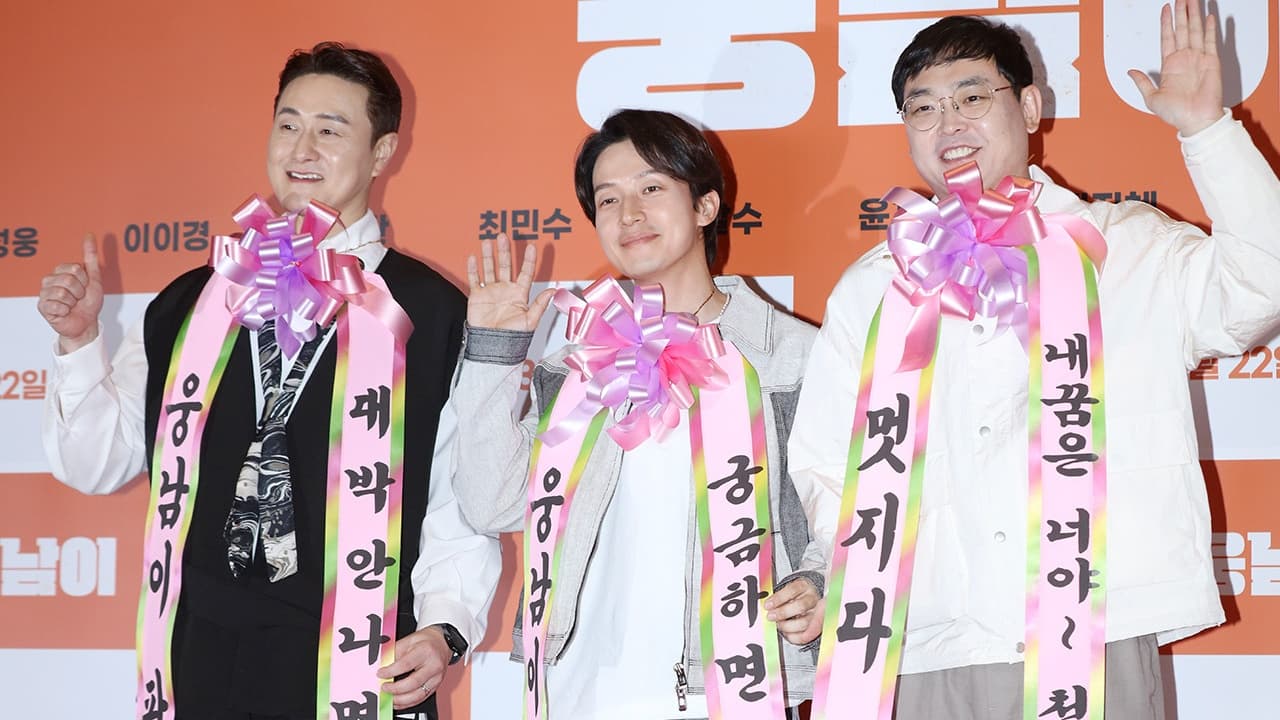
When Shin Dong-yeop invites guests on his YouTube series Jjanhang, he tends to reveal things they would rather keep private. In the April 6 episode, comedian Park Sung-gwang discovered this firsthand — sitting across from his longtime friend and host while hearing his own behind-the-scenes demands read aloud to an increasingly delighted audience.
"He told the production team to prepare champagne and caviar," Shin Dong-yeop announced, watching Park Sung-gwang's expression cycle through surprise, embarrassment, and helpless laughter. The studio erupted. And for viewers who have followed Park Sung-gwang's 20-year career as one of South Korea's most recognizable comedy faces, the moment was entirely in character.
Twenty Years of Making Korea Laugh
The April 6 episode of Jjanhang (짠한형 신동엽) brought together three members of the KBS 22nd batch of comedian recruits — Park Sung-gwang, Heo Kyung-hwan, and Park Young-jin — who debuted together in 2007. Two decades later, all three remain active in Korean entertainment, their careers taking different trajectories through variety shows, dramas, and online content.
The KBS comedian recruitment system, which runs in numbered batches, is a storied institution in Korean entertainment. Making the cut is fiercely competitive, and the comedians who come through together tend to form close bonds forged by shared early struggles. For the 22nd batch, those bonds are apparently still very much intact — and still very much capable of producing mutual embarrassment.
The episode title, "We're Out Here Making People Laugh But We're Nervous," captures something real about the state of Korean comedy in 2026. The three guests spent the hour with hosts Shin Dong-yeop and Jung Ho-cheol trading stories that ranged from their audition days to their current place in an entertainment industry that looks very different than it did when they walked into KBS Studios in 2007.
Park Sung-gwang's Audition Secret — and His Near-Miss
Park Sung-gwang, perhaps the most recognizable of the three comedians to general Korean audiences, shared that he placed first in the 22nd batch audition — a detail that he quickly followed with a confession that he almost didn't make it at all.
The specifics of the near-miss were relayed with the kind of self-deprecating energy that has made Park Sung-gwang a reliable presence in variety formats. For him, the story seems to serve as a reminder that even top-finishers don't arrive at the top by a guaranteed path. The champagne and caviar anecdote, revealed separately by Shin Dong-yeop, suggests that whatever insecurity may have accompanied his early career has long since been replaced by something more comfortable — if occasionally excessive.
"He came in and immediately asked if they could prepare champagne," Shin Dong-yeop continued, seemingly delighted by Park Sung-gwang's visible discomfort. "And caviar." Park Sung-gwang offered no credible denial. Viewers noted that this behavior is, in fact, consistent with the persona he has built over twenty years.
Heo Kyung-hwan: From Gangnam Ambitions to Elementary School Fame
Heo Kyung-hwan's segment of the episode traced a different arc. The comedian, who grew up in Tongyeong in South Korea's southern coast, arrived in Seoul with outsized ambitions about where to live. According to fellow 22nd-batch member Park Young-jin, who recounted the story with obvious fondness, Heo Kyung-hwan caught what Koreans call "강남병" — roughly translated as Gangnam fever, an obsession with living in Seoul's most expensive and status-heavy district.
The situation eventually resolved itself when reality reasserted. Heo Kyung-hwan moved out of Gangnam. But the story of his early determination to belong to a certain version of Seoul life — before the comedy career had actually delivered the income to support it — resonated with viewers who recognize the specific ambition of a young person arriving in a new city and immediately aiming too high.
The episode also included a warmer update from Heo Kyung-hwan: he shared that this year, for the first time, elementary school children he had never met recognized him spontaneously. "They saw me in the elevator and knew who I was," he said. For a comedian who has spent two decades in the industry, the moment had particular meaning. He called it the highlight of his year.
The Particular Bond of the Batch System
What made the episode work — beyond the individual stories — was the texture of a friendship that has been running for twenty years. Park Young-jin, the quieter of the three guests, functioned as a kind of anchor, offering context and commentary on his two batchmates' stories with the authority of someone who was actually there.
The KBS comedian batch system creates cohorts that often stay connected through the entire arc of a career. They compete for the same spots, debut on the same programs, survive the same lean early years, and watch each other's successes and failures at close range. The result, when those relationships hold, is a specific kind of insider fluency — the ability to call out the champagne demand, confirm the Gangnam fever, and tell the audition near-miss story with complete confidence in the details.
For the 22nd batch, twenty years appears to have produced exactly that. The April 6 episode wasn't three comedians performing nostalgic friendship for cameras. It was three people who actually know each other settling into a conversation they've clearly had many versions of before.
How Korean Comedy Has Changed in Twenty Years
The episode title's note of anxiety — "We're out here making people laugh, but we're nervous" — points to something real about the current state of Korean comedy. The institutional infrastructure that supported earlier generations of comedians has shifted considerably. KBS's traditional sketch comedy programs, which once served as the primary launching pad for batch-system graduates, have contracted. The comedy ecosystem has fragmented across streaming platforms, YouTube channels, and variety formats that didn't exist in 2007.
All three members of the 22nd batch have navigated this shifting landscape in different ways. Their conversation on Jjanhang touched on the anxiety of staying relevant in a medium that keeps reinventing its own terms — a topic that, given the platform on which the episode appeared, carried a certain self-aware irony.
Fan Reaction
Viewer responses to the April 6 episode emphasized how much enjoyment came from the interaction between the comedians and the hosts rather than any single segment. The champagne revelation, in particular, generated sustained commentary — with many viewers noting that the ease with which Shin Dong-yeop produced the anecdote suggested it was not exactly a closely guarded secret.
"The way Park Sung-gwang didn't even try to deny it," one viewer wrote. "He just sort of accepted it. That's the mark of a man who knows exactly who he is." Others pointed to Heo Kyung-hwan's elevator story as the episode's quieter emotional note: two decades of work, validated by an elementary schooler who had no reason to pretend.
Twenty years in Korean comedy is not a small thing. The three comedians who walked into KBS Studios in 2007 are still, by every available measure, in the business of making people laugh. One of them apparently still has opinions about beverage service.
How do you feel about this article?
저작권자 © KEnterHub 무단전재 및 재배포, AI학습 및 활용 금지
Entertainment Journalist · KEnterHub
Entertainment journalist specializing in K-Pop, K-Drama, and Korean celebrity news. Covers artist comebacks, drama premieres, award shows, and fan culture with in-depth reporting and analysis.
Comments
Please log in to comment