No One Expected Kim Yuna's Comeback to Look Like This
The figure skating legend transforms into a ballerina for a stunning Google campaign
 By Jang Hojin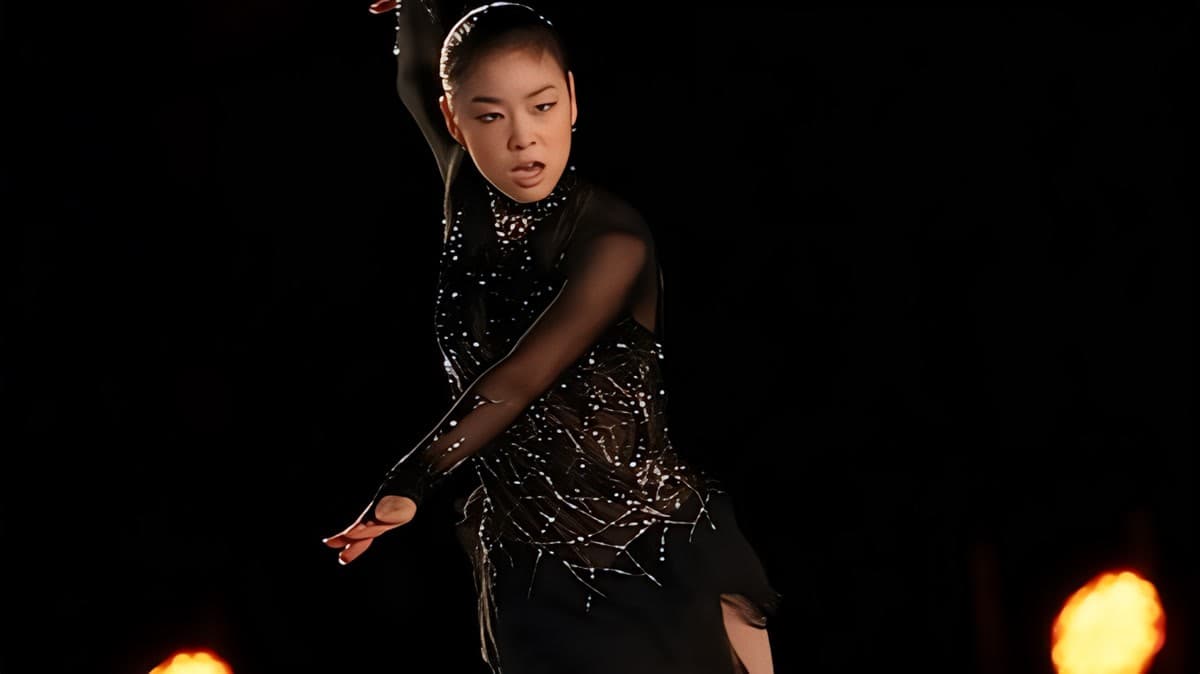
Twelve years after she retired from competitive figure skating, Kim Yuna is stepping back onto a stage — but not the one anyone expected. The woman widely considered the greatest female figure skater in history is transforming into a ballerina, starring in a new Google campaign that reimagines her legendary short program as a contemporary ballet performance. For anyone who followed her career, the announcement landed with the quiet force of something long hoped for and never quite expected to arrive.
The campaign, titled "Our Queen is Back," was produced by Kakao Entertainment through its creative production subsidiary Dolphin Kidnapping — the award-winning team behind some of South Korea's most visually distinctive commercial work. Director Shin Woo-seok leads the project, bringing a cinematic sensibility that promises to honor both the technical rigor of Kim Yuna's athletic legacy and the expressive possibilities of ballet as a new performance form.
Reinterpreting a Legend: Danse Macabre in Ballet
The centerpiece of the project is a reinterpretation of "Danse Macabre" — the short program that became one of the defining performances of Kim Yuna's competitive career. Originally set to the Saint-Saëns composition of the same name, the program was known for its dramatic intensity, its precise technical execution, and the way Kim Yuna inhabited its dark, theatrical atmosphere as both athlete and performer. On the ice, it was already something close to dance. Translated into ballet, the possibilities for expressive depth are even greater.
To ensure the choreographic translation met the highest standard, Kim Yuna worked alongside Kang Su-jin, widely regarded as one of the most accomplished Korean ballerinas of her generation. Kang Su-jin's involvement is not ceremonial — she served as a hands-on collaborator in the process of adapting the original program's movements into ballet vocabulary, bringing decades of professional experience to bear on a creative challenge that had no obvious precedent.
The result, based on early descriptions, is a performance that honors the spirit of the original while opening it to an entirely new physical and artistic language. Kim Yuna, who spent decades mastering the discipline of athletic movement on ice, has been working with a dedication to detail that those who know her would find entirely unsurprising.
Google Gemini AI Joins the Creative Process
One of the more distinctive aspects of the project is the role that artificial intelligence played in its development. Google's Gemini AI was integrated into the choreography process in multiple ways: analyzing Kim Yuna's movement patterns, assisting with choreography refinement, and contributing to costume design decisions. The collaboration between a human performer, a renowned choreographic collaborator, and an AI system makes the project one of the more interesting experiments in AI-assisted artistic creation to emerge from the Korean entertainment industry.
The use of Gemini also gives the campaign a self-referential logic. As a Google campaign, the product is naturally integrated into the creative story rather than appearing as an afterthought. Audiences are invited to understand the technology not as a gimmick but as a genuine participant in bringing the performance to life — a reframing of what AI tools can contribute to artistic processes that have traditionally been exclusively human domains.
Director Shin Woo-seok has spoken about the project through the lens of human possibility — the idea that constraints, whether physical, professional, or imaginative, are not fixed, and that the right combination of will, collaboration, and tools can open doors that seemed permanently closed. For Kim Yuna, stepping onto a ballet stage after more than a decade away from performance is itself a demonstration of that principle.
12 Years of Waiting, and What They Mean
Kim Yuna retired from competitive figure skating in 2014 following the Sochi Winter Olympics, where she won the silver medal in circumstances that generated significant controversy about the scoring. She was 23 years old. In the years that followed, she maintained a public presence through occasional appearances, promotional work, and her role as a global ambassador for South Korea's sporting culture — including serving as a key figure in the campaign for the 2018 Pyeongchang Winter Olympics.
But in terms of performance — putting on a costume and moving in front of an audience with artistic intent — she had been absent. For a generation of fans who came of age watching her skate, the absence was simply a fact of her retirement, accepted if not entirely welcomed. The announcement of the Google campaign has therefore registered not just as a commercial partnership but as something more personal: a chance to see her perform again, to see what she has become after more than a decade of distance from the arena.
At 35, Kim Yuna brings to the ballet stage not the raw physical peak of her competitive years but something arguably more interesting — the artistic intelligence, emotional depth, and embodied understanding of movement that comes with experience. Whether she can translate those qualities into a convincing ballet performance is a question the campaign will answer, but few who have watched her work doubt her capacity for artistic reinvention.
The Campaign and What Comes Next
The main film of the "Our Queen is Back" campaign launches today, with five additional short-form videos planned for sequential release in the coming days and weeks. The additional content will cover the production process, behind-the-scenes moments, and the individual stories of how the performance came together — a multi-part rollout designed to sustain engagement and allow audiences to follow the creative journey rather than receiving it all at once.
Whether the campaign represents the beginning of a new chapter of public performance for Kim Yuna, or a singular project contained within the Google partnership, remains to be seen. But for a figure whose retirement in 2014 felt like the closing of a chapter in Korean sporting and cultural history, the sight of her in a new costume, on a new stage, reinterpreting the music that defined her — it is, in every sense, a return worth watching.
Kakao Entertainment and Google are clearly betting that Kim Yuna's return will generate the kind of cultural attention that money cannot easily manufacture — the genuine emotional response of audiences encountering something that surprised them, moved them, and reminded them why they cared so much in the first place. On that measure, the campaign has already succeeded before a single frame has aired widely.
How do you feel about this article?
저작권자 © KEnterHub 무단전재 및 재배포, AI학습 및 활용 금지
Entertainment Journalist · KEnterHub
Entertainment journalist specializing in K-Pop, K-Drama, and Korean celebrity news. Covers artist comebacks, drama premieres, award shows, and fan culture with in-depth reporting and analysis.
Comments
Please log in to comment