Netflix's 'Weak Hero Class' Is the Korean School Drama That Has Viewers Demanding Season 3 Before Season 2 Even Ended
Why Park Ji-hoon's physical transformation and the webtoon's uncompromising source material made this the year's most talked-about action drama
 By Park Chulwon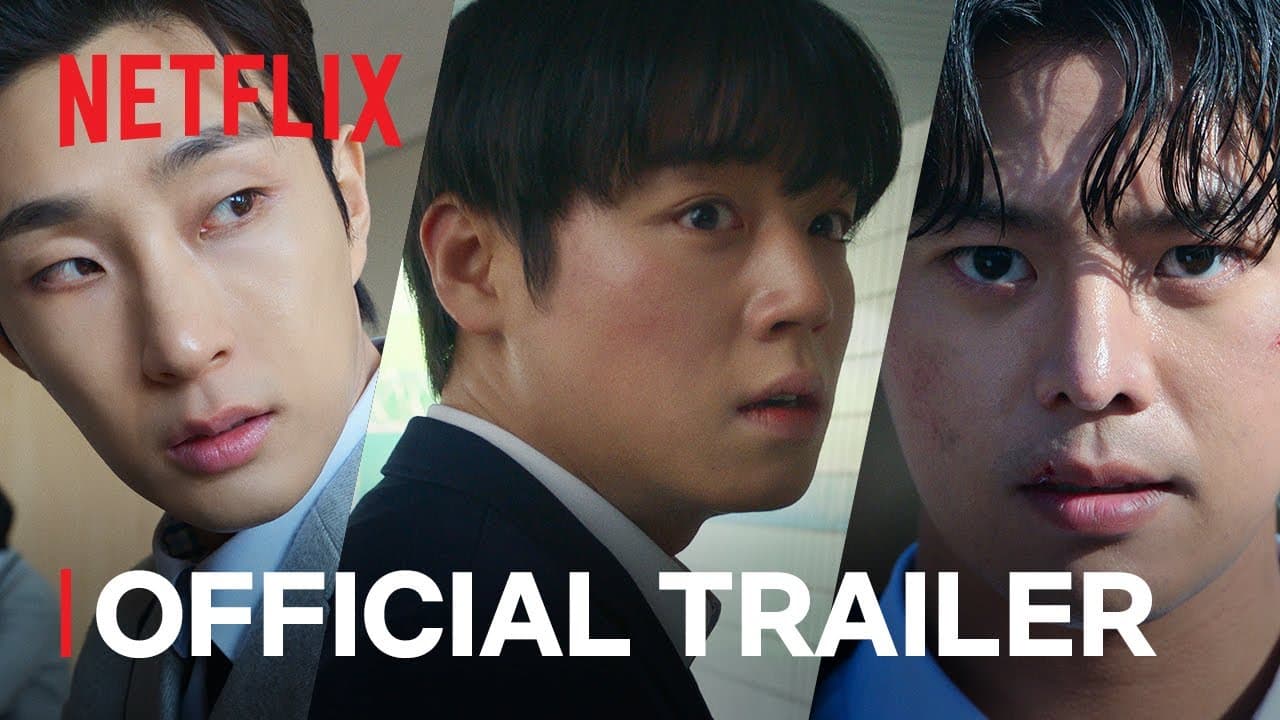
Netflix released Weak Hero Class 1 to a global audience on March 25, 2025 — bringing the Korean drama that had aired domestically on Wavve in 2022 to the international streaming audience that had been building anticipation for its wider availability since the series' domestic success. The global release was structurally significant in its timing: Season 2 was already confirmed for April 25, exactly one month later, meaning Netflix was positioning the two seasons as a back-to-back event rather than a traditional single-season release cycle. The strategy reflected the platform's understanding that the first season's content — tightly constructed, narratively complete within its eight-episode structure, and sufficiently compelling to function as a gateway for the second season's new audience — could serve as the commercial accelerant for a sequel that had already been produced and was ready for distribution. The gamble proved correct: Season 2 topped Netflix's global non-English series chart within three days of its April release, a performance that was directly attributable to the audience that the Season 1 global release had assembled in the preceding month.
The series was adapted from the Korean webtoon "Weak Hero" by SEOPASS and RAZEN, which had accumulated a devoted readership through its publication on Naver Webtoon before the drama adaptation brought it to a wider audience. The webtoon's central premise — a student of ordinary physical stature who compensates for his lack of fighting ability with precise, calculated tactical intelligence — had given Korean school drama a new protagonist type: not the physically dominant hero who overwhelms through strength, not the morally complex antihero whose violence is aestheticized for audience identification, but someone who won through understanding the mechanics of power better than those who wielded it conventionally. Park Ji-hoon's casting as Yeon Si-eun, the series' central figure, gave the character the specific physical and emotional profile that the premise required.
Park Ji-hoon and the Character of Yeon Si-eun
Park Ji-hoon's career trajectory to the lead role in Weak Hero Class 1 had moved through Wanna One's commercial peak and a solo career that had established his range as a performer without fully resolving the question of what kind of actor he was. Weak Hero Class 1 answered that question. Yeon Si-eun was a character whose internal experience — the controlled anger, the precise tactical thinking, the specific loneliness of someone who understood situations too clearly to share the comfortable fictions that social belonging required — demanded an actor whose stillness could communicate as much as his expressiveness. Park Ji-hoon had that quality, and the series' direction was constructed around it.
The performance's central challenge was maintaining the character's core of controlled intelligence across eight episodes of escalating physical and social threat without allowing the control to collapse into blankness or the intelligence to become smug. Yeon Si-eun's specific kind of heroism — tactical rather than physical, analytical rather than emotional — was only comprehensible if the audience understood the cost of that mode of operation: the exhaustion of never being able to simply react, the isolation of always being the person in the room who has already calculated what everyone else will do next. Park Ji-hoon communicated that cost through behavioral micro-expressions and physical stillness that rewarded close attention, and the series' camera work was calibrated to that reward structure.
The Webtoon Source and Its Adaptation Logic
"Weak Hero" — SEOPASS's narrative combined with RAZEN's visual artwork — had built its fandom through a consistent thematic commitment that the webtoon format enabled in specific ways. The serialized structure of Naver Webtoon allowed for gradual character development across hundreds of chapters, giving readers time to build investment in Yeon Si-eun's relationships and gradual tactical evolution that an eight-episode drama adaptation could not fully replicate. The adaptation's creative task was to identify which elements of the webtoon's extended narrative were essential to the story's emotional logic and which were surplus to what the drama format required, and to restructure the compressed narrative around those essential elements without sacrificing the character depth that the webtoon's readership had made their primary investment.
The school violence framework that "Weak Hero" operated within was not incidental to its thematic concerns — it was the mechanism through which the series explored a specific Korean social anxiety about the relationship between physical power and institutional authority, about what happened to students whose intelligence offered no protection within social hierarchies organized entirely around the threat and application of force. The webtoon's global success on LINE Webtoon had demonstrated that this anxiety was not uniquely Korean: the specific social dynamics of school violence — the complicity of witnesses, the institutional inadequacy of official responses, the particular moral calculus of survival versus resistance — were legible across cultural contexts that shared the premise that adolescent social environments were partially ungoverned by the adult world's norms.
Netflix's Two-Season Strategy and Its Validation
The decision to release Season 1 globally on March 25 and Season 2 on April 25 represented a specific streaming distribution strategy that had been refined across multiple K-drama acquisitions: position a complete first season as a discovery mechanism, allow the audience to build across the month between releases, and then capture that audience with a sequel that arrived before the discovery momentum could dissipate. The strategy worked because the first season's narrative structure — self-contained enough to function as a complete viewing experience, but with sufficient character development threads to sustain audience investment in continuation — was precisely calibrated for this distribution logic.
Season 2's performance validated the strategy completely. Topping the global non-English series chart within three days of its April 25 release, and generating the kind of social media discussion and word-of-mouth amplification that the first season's compressed release window had established the conditions for, Season 2 was evidence that the back-to-back strategy could convert a successful domestic K-drama into a global streaming event. The webtoon's readership provided an existing audience base for the adaptation, but the Netflix release expanded well beyond that community into the general K-drama viewer population that the platform had been cultivating across multiple years of investment.
The series' commercial success also drove a secondary effect that further validated the adaptation's quality: the original webtoon regained massive popularity following the global drama release, with Naver Webtoon reporting significant viewership increases as drama viewers discovered the source material. This feedback loop — drama adaptation generating new readership for the original webtoon, which in turn amplified the adaptation's narrative universe — was one of the more commercially productive dynamics in Korean content's digital ecosystem, and Weak Hero Class 1's global release demonstrated it operating at the scale that Netflix's distribution infrastructure enabled.
School Violence and Korean Drama's Social Function
Weak Hero Class entered a lineage of Korean drama addressing school violence that included The Glory, All of Us Are Dead, and multiple other series that had used the school setting as a space to examine the social mechanics of power, complicity, and institutional failure. The lineage reflected something real about Korean social consciousness: school bullying — known in Korean as "학폭" (hakpok) — had become a significant public discourse topic following multiple high-profile cases in which victims' experiences were inadequately addressed by school and legal systems, and celebrity-involved hakpok allegations had added a cultural dimension to the conversation that gave Korean drama's school violence narratives a specific resonance for domestic audiences.
What distinguished Weak Hero Class from the more emotionally operatic approaches to this subject matter was its tactical focus. The series was not primarily interested in the emotional suffering that school violence produced — though that suffering was present and acknowledged — but in the mechanics of how power operated within school social hierarchies and what forms of intelligence and resistance were available to those without access to conventional power. Yeon Si-eun's specific toolkit — his ability to identify structural vulnerabilities in his opponents' power bases and exploit them through precise, calculated action — was a fantasy of competence that served both an emotional function (the satisfaction of watching intelligence overcome force) and a analytical one (making visible the actual logic of social power dynamics). The series' craft was in making those two functions operate simultaneously without allowing the fantasy to overwhelm the analysis.
Verdict: A Webtoon Adaptation That Justified the Global Investment
Weak Hero Class 1's global release in March 2025 and its sequel's subsequent chart dominance represented one of Korean streaming drama's more complete demonstrations of how the webtoon-to-drama pipeline could function at scale. The source material provided the narrative foundation and an existing readership base; the drama adaptation focused that material into the eight-episode structure that Netflix's release strategy required; the global release timing created the audience infrastructure for the sequel; and the sequel's performance validated the investment at every level. The series proved that school drama could find a global audience when built around a protagonist whose defining characteristic was intelligence rather than physical or emotional excess — a discovery with implications for how subsequent Korean drama adaptations would be positioned for international distribution.
Park Ji-hoon's performance in the lead role was the series' most durable achievement: a portrait of controlled intelligence under sustained pressure that demonstrated a range in the actor that his previous work had suggested but not fully established. The global audience that Netflix assembled for Weak Hero Class 1 in March 2025 found in Yeon Si-eun a new kind of Korean drama protagonist — one whose weapon was understanding, and whose victories were architectural rather than physical. In a genre long associated with emotional maximalism and physical confrontation, that was a genuinely distinctive contribution.
The Eight-Episode Format and Its Narrative Discipline
One of Weak Hero Class 1's structural achievements was its deployment of the eight-episode format with a narrative discipline that distinguished it from both the elongated domestic drama format and the compressed Western streaming model. Eight episodes imposed a specific storytelling economy: not enough time to develop the full character ecology that the webtoon's extended run had accumulated, but sufficient for the core relationships — Yeon Si-eun, Ahn Su-ho, Oh Beom-seok — to achieve the depth of investment that the sequel's continuation required. The creative team's judgment about what to compress, what to develop, and what to establish as future-episode material reflected an understanding of the drama format's specific requirements that produced a series that felt complete within its eight-episode structure while leaving the narrative threads that Season 2 would need genuinely unresolved.
The school setting's confined geography — the corridors, classrooms, and rooftops that constituted Yeon Si-eun's social world — was used by the direction with an efficiency that matched the narrative economy. Weak Hero Class 1 was not a series that needed the visual expansiveness of location shooting or the production display of major set construction; its visual language was organized around close observation of faces, bodies, and the physical dynamics of confrontation. The cinematographic approach matched the subject matter in a way that made the school setting feel genuinely claustrophobic — a trap rather than simply a setting — and that claustrophobia was essential to the series' emotional logic. Yeon Si-eun's situation was not simply that he faced physical threat; it was that the environment in which the threat existed was entirely sealed, without external recourse, and the series' camera work communicated that sealing with every frame.
The SEOPASS/RAZEN Webtoon and Korean Platform Culture
Understanding why "Weak Hero" worked as source material for a Netflix adaptation required some attention to what had made the webtoon successful on Naver Webtoon before the adaptation created the drama audience. The Naver Webtoon platform — and its international equivalent, LINE Webtoon — had developed a reader culture organized around regular updates, community discussion, and the accumulation of narrative investment across months and years of continuous serialization. "Weak Hero" had thrived in this environment through SEOPASS's narrative efficiency and RAZEN's visual construction of action sequences in ways that the scroll-based webtoon format enabled specifically: panels designed for the vertical scroll, action choreography that exploited the format's capacity for sustained visual sequence without the constraints that either manga-style page layouts or traditional comic panel structures imposed.
The drama adaptation's task was to translate that format-specific energy into something that worked in a very different viewing context: full-episode streaming where the audience's physical and attentional relationship to the content was entirely different from the webtoon reader's engagement. The translation required not simple visual replication of the webtoon's action sequences but a reconstruction of those sequences' dramatic function in a medium where the temporal structure of viewing was imposed rather than reader-controlled. The series accomplished this translation with enough fidelity to satisfy the webtoon readership and enough creative re-organization to make the drama accessible to viewers with no webtoon context. That dual accessibility — rare in webtoon adaptations, which often served one audience at the expense of the other — was one of the production's most technically demanding achievements and one of its most commercially significant.
How do you feel about this article?
저작권자 © KEnterHub 무단전재 및 재배포, AI학습 및 활용 금지
Entertainment Journalist · KEnterHub
Entertainment journalist focused on Korean music, film, and the global K-Wave. Reports on industry trends, celebrity profiles, and the intersection of Korean pop culture and international audiences.
Comments
Please log in to comment