NCT Mark Waited Nine Years for This Album — And It Was Worth Every Single One
How The Firstfruit became SM Entertainment's best-selling solo debut and Billboard's K-pop album of the year
 By Park Chulwon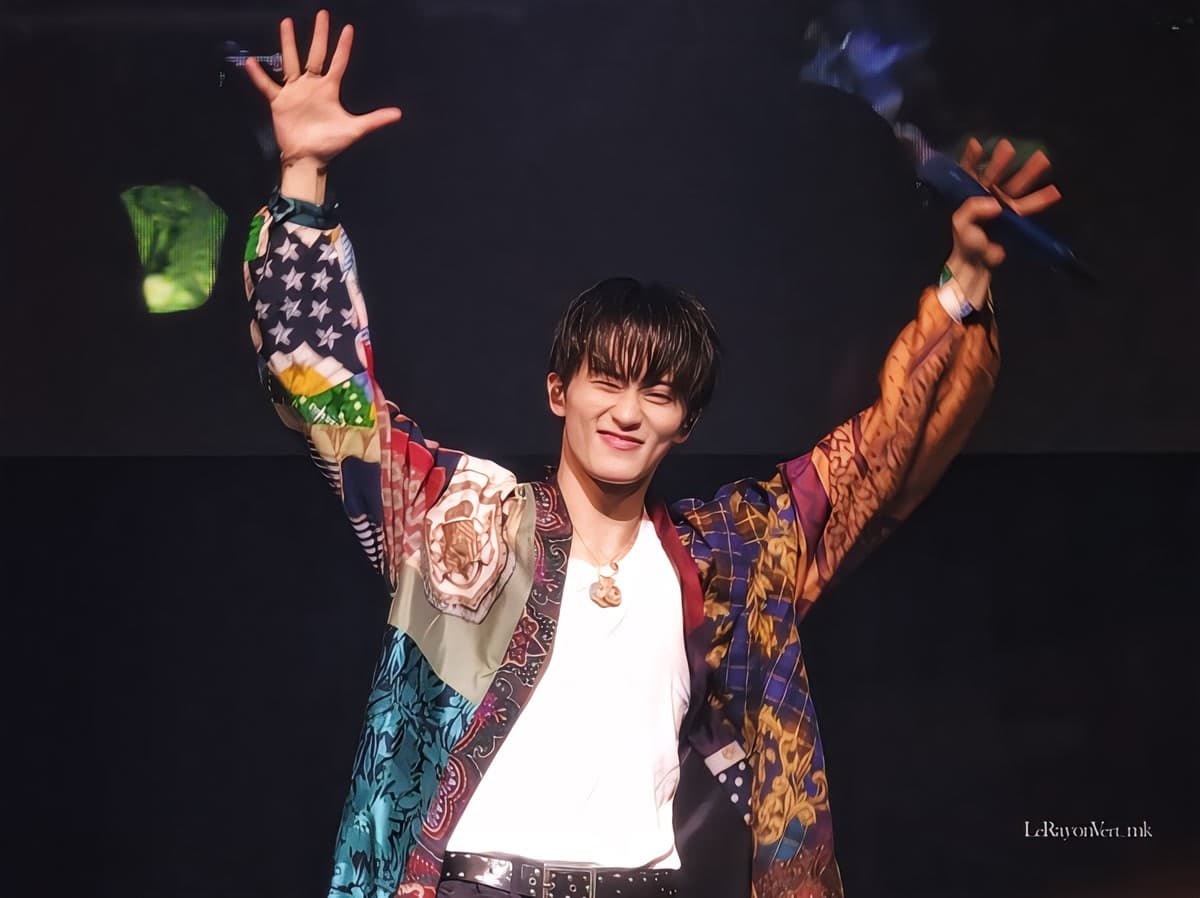
On April 7, 2025, NCT's Mark released his debut solo album, *The Firstfruit*. By the end of the first week, it had sold 544,470 copies on the Hanteo Chart — the highest first-week sales figure ever recorded for a solo debut from any artist in SM Entertainment's history. By the end of 2025, Billboard had named it the best K-pop album of the year. The title was not a minor distinction: the ranking placed it above every other release in the genre from a year that included Jennie's *Ruby*, major group comebacks, and a crowded field of high-profile solo projects. For an album that had arrived without the years of accumulated solo anticipation that typically precedes record-breaking K-pop releases, the recognition was extraordinary.
What made *The Firstfruit* exceptional was not its sales volume, though that was notable. It was the specific kind of album it was: a thirteen-track autobiographical sequence structured around four cities — Toronto, New York, Vancouver, Seoul — that mapped directly onto the geography of Mark's actual life. In K-pop's commercial production ecosystem, which prizes carefully constructed artist personas over raw personal disclosure, an album built this explicitly around one person's specific history was unusual. NME's review captured the distinction: "Mark lays it all bare," the publication wrote, in contrast to K-pop's typical "surface-level platitudes." Billboard's year-end assessment called it "an autobiographical marvel." Neither description is typically applied to K-pop albums.
Nine Years in NCT, One Album About a Life
Mark had debuted in April 2016 with NCT U's "The 7th Sense" — nearly nine years before *The Firstfruit*'s release. In those nine years, he had been an active member of NCT U, NCT 127, and NCT Dream simultaneously, accumulating a workload that NME described by calling him "the most employed idol in K-pop." He became the group's visible backbone across three sub-units with overlapping promotional schedules, distinct musical identities, and different fan demographics — managing each without a solo project of his own.
When he became the sixth NCT member to release a solo album, the gap between debut and first solo release was the longest of any member who had gone that route. Mark told Apple Music 1: "After nearly a decade of being an NCT member, I feel very, very honored to release a solo album with just my voice, with just my ideas, and just based on me." The statement was not false modesty. For a performer whose professional identity had been almost entirely defined by his contributions to a multi-unit group structure, an album that was "just based on me" was a genuine creative departure rather than a commercial pivot.
SM Entertainment's institutional decision to support the release was also significant. SM had been managing NCT's sub-unit architecture since the group's 2016 formation, steadily expanding the roster and the unit configurations while controlling the cadence of solo activities to prevent member profiles from overshadowing group identities. Mark's solo debut represented SM's assessment that the group structure was mature enough — and Mark's individual profile substantial enough — to absorb a high-profile solo launch without destabilizing the NCT commercial ecosystem. The first-week sales figure of 544,470 copies confirmed that the assessment was correct. It also set a benchmark that every subsequent SM solo debut would be measured against.
The Album: Four Cities, Thirteen Tracks, One Autobiography
*The Firstfruit* is organized around the biographical arc of its creator. Toronto is where Mark Lee was born in 1999 — the album's title track, "1999," takes its name directly from that year. New York is where his family relocated when he was in elementary school. Vancouver is where he attended high school until passing the SM Global Audition at thirteen, a passage he described as the moment that changed the trajectory of everything that followed. Seoul is where he arrived as a trainee and where he became, over nine years, one of the most consistently active members of the most architecturally complex group in K-pop.
Each city section has a distinct sonic character that reflects the emotional register of those years. The Toronto opener, "Toronto's Window," establishes faith as a structural theme — the album title itself is a biblical reference, describing the tradition of dedicating the first and best of a harvest as an offering. Mark applied the metaphor to the album itself: the work is the firstfruit of his individual artistic voice, dedicated to his parents, his faith, and the identity he had been building across nine years of collective work. The Vancouver section features "Raincouver," a track that NME specifically highlighted as showcasing Mark's "often-underutilised singing voice" — a pointed observation about a performer whose vocal contributions in group settings had been secondary to his rap output. The song's bouncy, melodic character is a direct contrast to the harder sound associated with NCT's hip-hop components.
Track twelve, "Mom's Interlude," is the album's most singular moment. The track consists of a conversation between Mark and his mother, accompanied by piano that his mother plays herself. She reflects: "It feels like your identity is just set for you, and, like this title, after these eight years, I feel like this is the real Firstfruit." The track's inclusion is the clearest expression of the album's structural honesty. Most K-pop albums contain nothing remotely like it — not because the relationships they draw on are less meaningful, but because the production and institutional frameworks that govern K-pop releases typically filter out material this personal. Mark's decision to include it, and SM's decision to approve it, said something about both the artist's creative authority and the label's willingness to let the album be what it needed to be.
The remaining tracks extend the album's tonal and emotional range: "Fraktsiya" featuring Lee Young Ji, "Watching TV" featuring Crush, "+82 Pressin'" featuring Haechan — a collaboration within the NCT family that acknowledged Mark's dual existence as solo artist and group member — and the closing "Too Much." The pre-release single "+82 Pressin'" had dropped on March 19, giving the audience a first point of contact before the full album's complexity became apparent.
Commercial Performance: Billboard, Hanteo, and the SM Record
The first-day figure — 274,000 copies on April 7 — was itself historically notable. Among NCT members' solo releases, only Taeyong's *Shalala* had achieved a higher first-day number. The first-week total of 544,470 surpassed every previous SM Entertainment solo debut, a category that includes releases from artists with significantly longer solo discographies and established solo fanbases. The commercial infrastructure supporting the release included iTunes chart-topping positions in fourteen regions, a number-one placement on QQ Music in China, and the top position on Japan's AWA realtime rising chart. On Korea's Circle Album Chart, *The Firstfruit* debuted at number one. On Japan's Oricon Albums Chart, it charted at number eight.
The title track "1999" earned at least three music show wins, including a first-ever solo win on *Show Champion* — a milestone for a performer whose previous music show victories had all come as part of group promotions. The wins confirmed that *The Firstfruit*'s commercial performance was not purely a function of pre-order purchasing behavior from established NCT fans; the title track was generating ongoing chart traction in the weeks after release.
By year-end, when Billboard published its Best K-pop Albums of 2025 list with *The Firstfruit* at number one, the ranking placed Mark's debut ahead of Jennie's *Ruby* (number three) — an album that had achieved higher global first-week sales and more Western commercial crossover by conventional metrics. Billboard's reasoning was qualitative: "The Firstfruit is an impressive body of work that immediately cements Mark's presence. It candidly captures his personal experiences, from time spent traveling on airplanes to homesickness and longing for his mother. The album unfolds as a journey seen through Mark's own perspective from start to finish, drawing listeners deep into his inner world." The language — "inner world," "candidly captures," "longing" — is not the vocabulary typically applied to K-pop album reviews. Its application here reflected both the album's distinctive character and the critical space it opened.
What "1999" Reveals About K-pop Authenticity
The critical consensus around *The Firstfruit* repeatedly returned to the word "authentic" — a word that appears with suspicious frequency in K-pop coverage, usually applied without much rigor to whatever seems least conventionally manufactured. In this case, the word was earned. The album's authenticity was not a marketing positioning or a conceptual frame layered over conventionally produced K-pop. It was structural: built into the album's organization, its track sequence, its guest choices, and its most private moment in "Mom's Interlude."
The tension that *The Firstfruit* made visible was one that runs through K-pop's entire commercial model: the gap between the managed persona that the industry produces and the individual person that the persona is built around. K-pop's commercial infrastructure is extraordinarily good at producing personas — constructing, maintaining, and marketing carefully designed artist identities that serve both the artist's commercial interests and the label's broader portfolio strategy. What it is less good at producing is the kind of unmediated personal expression that constitutes artistic authenticity in the Western critical tradition. *The Firstfruit* was unusual because it managed to exist within the K-pop commercial infrastructure while also producing something that felt genuinely unmediated.
Whether other K-pop artists would follow the precedent — whether the album's commercial and critical success would signal to the industry that personal disclosure generated better returns than persona construction — remained to be seen. The short-term data was encouraging: 544,470 first-week copies and the year's best K-pop album designation from the most commercially authoritative music publication in the world were not small commercial arguments for authenticity. Mark Lee had spent nine years being NCT's backbone. In April 2025, he spent thirteen tracks being himself. The market, it turned out, had been waiting for exactly that.
NCT's Architecture and What the Solo Era Means for the Group
SM Entertainment's NCT is the most structurally complex group in K-pop by design. Seven sub-units — NCT U, NCT 127, NCT Dream, WayV, NCT DoJaeJung, NCT Wish, and NCT JNJM — operate with partially overlapping and partially distinct memberships, creating a commercial ecosystem that maintains continuous market activity across multiple demographic segments simultaneously. Mark's participation across NCT U, NCT 127, and NCT Dream simultaneously had made him the group's most visible connective tissue — present across more of the group's commercial output than any other member.
The solo debut's success raised a structural question about how SM would manage the tension between individual member development and group identity maintenance going forward. The NCT sub-unit system had been designed partly to give members meaningful individual contributions within a collective commercial framework — to prevent the kind of member-versus-group commercial competition that had complicated earlier K-pop group structures. Mark's first-week record suggested that the individual commercial potential being suppressed by that structure was substantial. Whether SM's response would be to accelerate solo project development for other high-profile members or to maintain the current controlled cadence would be one of the more watched decisions in the company's near-term strategy. What *The Firstfruit* had established was that when the dam broke, the commercial force behind it was considerable.
The Korean-Canadian Identity in K-Pop: Mark's Specific Geography
Mark Lee was born in Vancouver in 1999 to Korean immigrant parents, relocated to Toronto, then to New York, before returning to Vancouver for his pre-teen years. He passed the SM Global Audition at thirteen in Vancouver — a city he described in interviews as the one that felt most like home — and relocated to Seoul to begin his trainee life. The biographical sequence is specific in ways that *The Firstfruit* makes audible: the album is not simply a K-pop artist's coming-of-age story, but a Korean-Canadian's account of having two cultures, two languages, two sets of cultural references, and a career that built its identity at their intersection.
The Korean-Canadian presence in K-pop is not new. Amber Liu, from f(x), navigated a similar dual-cultural identity during her SM tenure. Henry Lau, from Super Junior-M and SM the Ballad, brought a Canadian-Chinese perspective to his work. More recently, GOT7's Mark and MONSTA X's Shownu have Korean-American backgrounds that have shaped their public presentations. But *The Firstfruit* was the first K-pop album that took the dual-cultural biography as its explicit structural architecture rather than a background biographical detail. The Vancouver section — "Raincouver" in particular — represented the music that Mark made in the language of a place, not just a people.
The "1999" title track's upbeat, orchestral pop production, with its funky guitars, brass sections, and whistles, was calibrated for a generational emotional register that crossed cultural lines — a sound evoking late 1990s and early 2000s American pop and R&B that would resonate for listeners in Toronto, Vancouver, Seoul, and Los Angeles simultaneously. The song's commercial success in both K-pop fan communities and on charts that measured broader Korean digital streaming reflected this dual calibration. "1999" was not a song that required K-pop fan context to connect; it was a song that worked within K-pop's commercial structures while being accessible to audiences outside them.
The international commercial response — iTunes charting in fourteen regions, including markets with limited established K-pop infrastructure — confirmed that the album's geographic and biographical specificity was a commercial asset rather than a limiting factor. Music that is specifically grounded in a real place and a real person's experience often travels further than music assembled from generalized emotional content. *The Firstfruit* was a demonstration of that principle in a commercial context that had rarely given it room to operate.
Producer Credits and the Creative Infrastructure Behind the Album
*The Firstfruit* was produced through SM Entertainment's in-house production infrastructure, with Mark taking significant creative ownership across the album's composition and lyrical content. The "Mom's Interlude" production credits include both Mark and Kang Seung Hye — making the album's most personal moment also one of its most collaborative, in the specific collaboration between a son and his mother. The closing conversation, and the piano that accompanies it, were not studio constructions but documents of a real exchange, given additional life by their inclusion in a commercial release.
Mark's involvement in the creative process extended well beyond performing lyrics written for him — a distinction that matters in K-pop, where the gap between idol as performer and idol as author is frequently wide. The album's coherence as an autobiographical document required authorial intention and sustained point of view, both of which are present across its thirteen tracks. The guest appearances — Lee Young Ji on "Fraktsiya," Crush on "Watching TV," and Haechan on "+82 Pressin'" — were chosen for reasons that related to the album's emotional logic rather than purely for commercial synergy. Lee Young Ji's conversational rap delivery complemented the album's casual, intimate sections. Crush brought a particular kind of R&B warmth to "Watching TV" that fit the Vancouver introspective mood. Haechan's presence on "+82 Pressin'" — the track whose title references Korea's country calling code — acknowledged the Seoul chapter of the autobiography in the voice of a fellow NCT member who had been part of that chapter's story.
Verdict: The Album That Changed What SM Thought Was Possible
SM Entertainment's commercial model had been built, over three decades, on the premise that K-pop's commercial success derived from carefully managed artist personas rather than from the individual artistic authority of the performers behind them. The model had produced some of the most commercially successful acts in Korean music history — H.O.T., S.E.S., BoA, TVXQ, Girls' Generation, EXO, and NCT among them — and had generated a global expansion that made SM one of the most commercially recognized names in the global music industry.
*The Firstfruit* was not an argument against that model. Mark had spent nine years developing his skills, his profile, and his commercial relationships within SM's institutional framework. The album's commercial success was made possible by the infrastructure SM had built around NCT and by the fan relationships that Mark had developed through his group activities. What the album demonstrated was that the infrastructure could support something different from what it had typically been used for — that a K-pop artist, given the creative space and institutional support to make a genuinely autobiographical album, could produce commercial results that exceeded what carefully managed persona construction alone could generate.
Billboard's year-end number one designation was the industry's public acknowledgment of that demonstration. NCT Mark had spent nine years being an essential component of other people's musical structures. *The Firstfruit* was the first time those nine years produced something that bore only his name. The market recognized it immediately. The critics followed. In the K-pop industry's long conversation about artistic authenticity versus commercial production, April 7, 2025 provided one of the clearest data points either side of the argument had ever generated.
In the months following *The Firstfruit*'s release, Mark returned to NCT 127's group activities — a deliberate choice that reflected both contractual structure and personal commitment to the collective. The album had not been a departure from NCT. It had been an addition to it: proof that the group's architecture was capacious enough to contain an artist who could simultaneously be an essential group component and a critically acclaimed solo voice. The nine years had not been a delay. They had been the material.
The commercial precedent *The Firstfruit* set will take time to fully manifest. SM's cadence of solo releases, already accelerating through 2024 and 2025 with Taeyong, Doyoung, Jaehyun, Ten, and Yuta preceding Mark, would need to continue expanding if the label intended to develop individual commercial identities for all of NCT's most prominent members. The math of the group's full membership — and the fan investment distributed across its many units — suggested substantial untapped individual commercial potential throughout the roster. Mark's debut had measured the ceiling with unusual precision. Whether the label would build toward it systematically, or continue the controlled, incremental approach that had defined NCT's first nine years, was the question that April 7, 2025 had raised without fully answering. What it had answered, without ambiguity, was whether there was a ceiling worth building toward. There was. And it was higher than most had estimated.
How do you feel about this article?
저작권자 © KEnterHub 무단전재 및 재배포, AI학습 및 활용 금지
Entertainment Journalist · KEnterHub
Entertainment journalist focused on Korean music, film, and the global K-Wave. Reports on industry trends, celebrity profiles, and the intersection of Korean pop culture and international audiences.
Comments
Please log in to comment