NCT Has Two Colorblind Members — And Nobody Realized
A guide to color vision deficiency in Korean entertainment, from K-pop idols to veteran comedians
 By Jang Hojin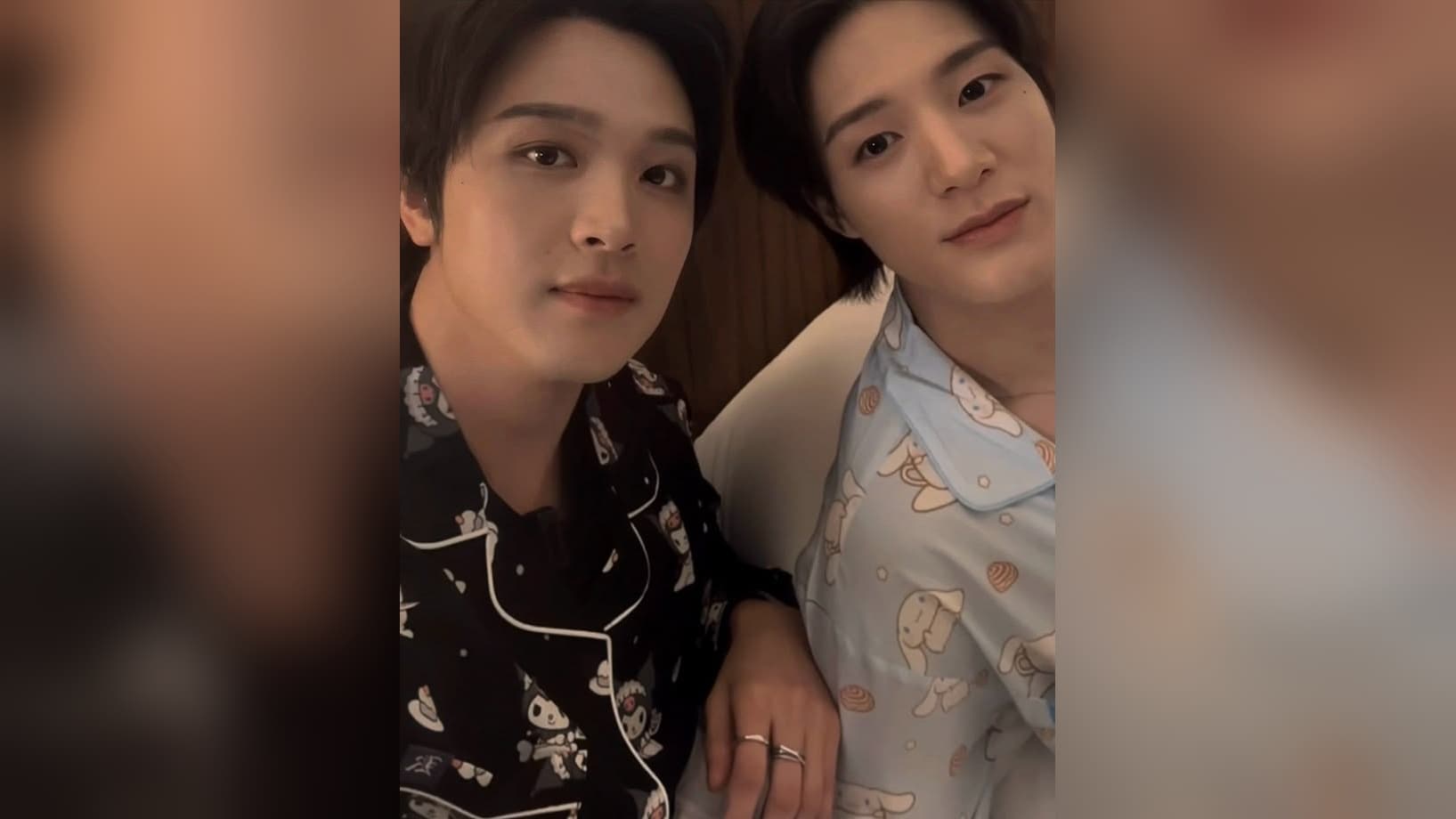
For years, millions of fans followed NCT DREAM without knowing a quiet secret shared by two of its members. When a viral post recently surfaced revealing that both Jeno and Haechan live with color vision deficiency, the reaction was immediate — and surprised even long-time devotees. The post racked up nearly two million views, with fans commenting in disbelief: "I had no idea… so shocking" and "What? Jeno too?" The moment wasn't just a fun fan discovery. It opened a window into something the Korean entertainment industry rarely discusses: just how many of its biggest stars see the world in a fundamentally different way.
Jeno first disclosed his color blindness on the variety program Weekly Idol, while Haechan addressed his condition — clinically termed color amblyopia — in a behind-the-scenes MUGI-BOX episode hosted by fellow NCT member Doyoung. "I have color amblyopia, so it doesn't really bother me," Haechan said, explaining his experience matter-of-factly while describing a broken phone screen whose halves appeared differently colored to him. Both revelations were casual, almost offhand. Yet the cumulative shock of discovering two members of the same unit share the condition underlines how little fans — and perhaps the industry itself — discuss it.
What Color Blindness Actually Is — And Why It's More Common Than You Think
Color blindness is not the dramatic loss of all color perception that most people imagine. In the vast majority of cases, it refers to a reduced ability to distinguish between specific colors — most commonly red and green — rather than a world rendered entirely in grey. The condition is genetic, carried on the X chromosome, which explains why men are significantly more likely to have it. Because males carry only one X chromosome (XY), a single defective gene is enough to produce the condition. Women, carrying two (XX), would need defective copies from both parents to be affected.
The result is a stark gender imbalance. Globally, roughly 1 in 12 men — approximately 8% — has some form of color vision deficiency. Among women, the rate drops to around 0.5%. For East Asian males, including Koreans, studies suggest a prevalence of around 4 to 6 percent. That figure translates directly: in a country of 52 million people, millions of men — including, evidently, some of its most famous — navigate daily life perceiving color differently than most.
Korean Stars Who Have Come Forward — And What They've Said
Jeno and Haechan are far from alone. A feature in Korean media compiled a list of celebrities who have disclosed color vision deficiency, and the names span the full breadth of the entertainment industry. Veteran comedian and MC Shin Dong Yup made his disclosure on SBS's My Little Old Boy in 2017, saying: "I don't really understand what beautiful colors are. I didn't understand the autumn foliage when I was young." Actor Kang Kyung Joon revealed on MBC's Radio Star that he memorized how to draw an apple for college entrance exams because red and green were indistinguishable to him. Actor Jeong Gyeo Un discovered his condition during mandatory military service, misreading the number 74 as 71 on a standard color blindness screening test.
Comedian Hong Rok Gi has spoken about mistaking colors in everyday situations — once believing an item was beige when it was actually purple. Rapper Yong Jun Hyung of B2ST disclosed his condition in an interview, and film director Jang Jin is another well-known name on the list. The pattern across these revelations is strikingly consistent: most are discovered incidentally — during military screenings, in casual variety show conversation, or when a specific situation forces the issue. None of these stars built their career around the condition. It simply emerged, as personal details eventually do.
When Color Blindness Becomes a Career Factor
For most Korean entertainers, color blindness registers as an interesting personal quirk rather than a professional obstacle. But in January 2026, actor Ahn Bo Hyun delivered a more striking disclosure: his color blindness had been severe enough to force him out of MC work entirely. Speaking on YouTube's Salon Drip, he revealed that during the 2020 MBC Entertainment Awards — which he co-hosted with comedian Jang Do Yeon — he was unable to read the cue cards because their text color blended into his co-host's outfit color. Production staff tried adjusting font colors and sizes in real time. Nothing worked. "My eyesight isn't good, and my color blindness was quite severe," he said. "I couldn't read the cue cards."
The experience left Ahn frustrated enough to undergo LASIK surgery afterward, and he has since stepped back from hosting roles. His case illustrates why the condition's impact varies so dramatically across entertainment roles. For a K-pop idol whose stage formations are spatial and memorized, whose cues come from physical positioning and sound rather than color signals, the condition may be largely invisible to both the performer and the audience. For an MC navigating color-coded prompters under shifting stage lights, it becomes a concrete barrier. The K-pop industry — with its dense, vibrantly colorful visual language — has almost certainly accommodated colorblind performers for years without ever formally acknowledging the adjustment.
The Netflix global hit The Glory (2022–2023) contributed an unexpected layer to public awareness by giving antagonist Jeon Jae Joon a clearly coded color vision deficiency, weaving it into the story as both a character vulnerability and a plot mechanism. For millions of international viewers encountering the condition for the first time through the lens of a Korean drama, it reframed colorblindness from a medical footnote into something with dramatic weight — and personal resonance.
What the Industry Still Hasn't Said Out Loud
The viral reaction to the Jeno and Haechan discovery speaks to something genuine about how fandom works. Fans invest in knowing the people they follow, and a detail like this — quietly lived with for an entire career, never quite a secret but never quite public either — lands with particular weight. The reaction online was universally warm. "I knew about Haechan, but I never knew Jeno," one commenter wrote. The surprise wasn't disappointment. It was the particular feeling of learning that someone you've watched perform under dazzling stage lights for years may have experienced those same lights in a fundamentally different palette.
But the industry conversation remains largely absent. There are no documented public statements from major Korean entertainment agencies addressing how they design stage visuals, coordinate costume color schemes, or structure cue systems to support colorblind performers. Given that 4 to 6 percent of Korean men are estimated to have some degree of color vision deficiency, and given the scale of idol group rosters over the past decade, the statistical probability of multiple colorblind performers in any given generation is not a remote possibility — it's a near-certainty. The conversation Jeno and Haechan's fans stumbled into by chance is one the industry may eventually need to open deliberately.
How do you feel about this article?
저작권자 © KEnterHub 무단전재 및 재배포, AI학습 및 활용 금지
Entertainment Journalist · KEnterHub
Entertainment journalist specializing in K-Pop, K-Drama, and Korean celebrity news. Covers artist comebacks, drama premieres, award shows, and fan culture with in-depth reporting and analysis.
Comments
Please log in to comment