Lee Sun-hee’s 6-Year Silence Is About to End — And K-Pop’s Biggest Stars Are Watching
Korea’s National Diva returns to a music market transformed by 4th-gen idols. Her comeback tests whether veteran artistry still has a place.
 By Park Chulwon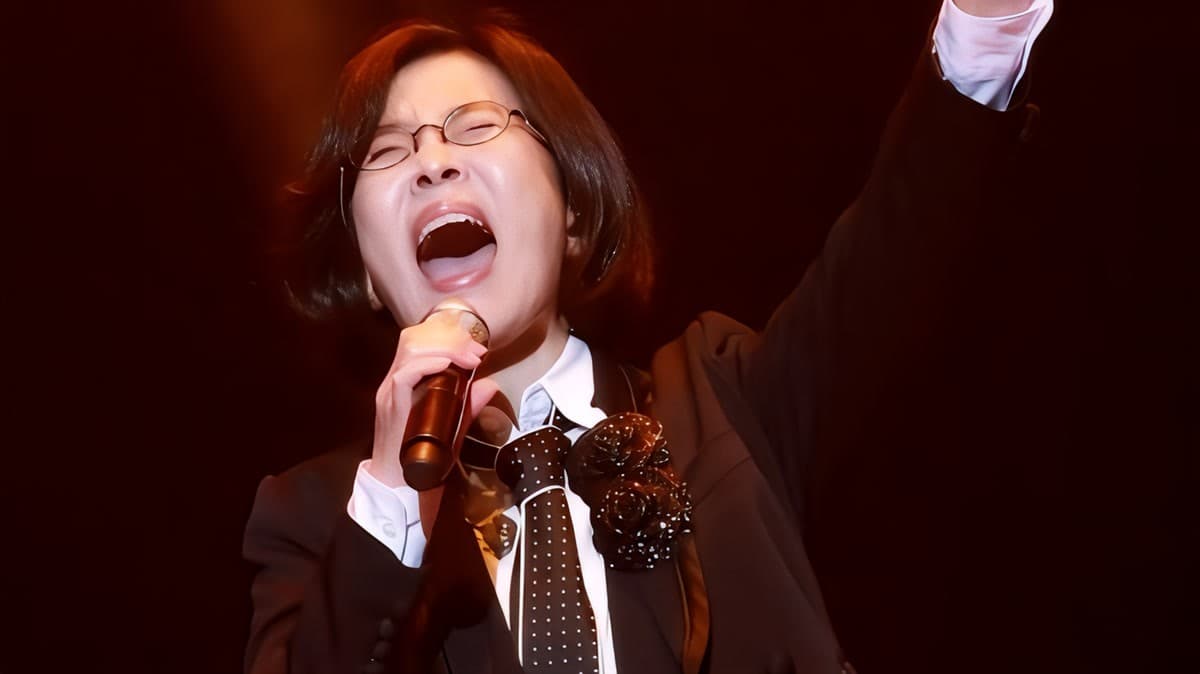
When Lee Sun-hee last released a solo album, the world was in lockdown. Her 16th studio album Anbu arrived in June 2020, a quiet meditation on comfort and human connection that felt perfectly timed for a planet learning to cope with isolation. Six years later, the woman often called Korea’s National Diva is preparing to return — and the music industry she’s walking back into looks nothing like the one she left.
According to her agency Chorokbaem Entertainment, Lee Sun-hee is in the final stages of producing new music for a first-half 2026 release. A separate exclusive report by News1 confirmed that this will be her first album under her own name since Anbu, though she did release a duet with rock band YB in 2022 titled “A Promise Not to Lose.” The anticipation is not just nostalgic. It carries a deeper question about what relevance means in a music market that has fundamentally transformed since she last competed for attention.
42 Years and Counting
Lee Sun-hee debuted in 1984 at the 5th MBC Riverside Song Festival, winning the grand prize with “To J” (J에게) at just 19 years old. In the four decades since, she has built one of the most decorated careers in Korean popular music history. From 1984 to 1990, she won awards at both the KBS Song Festival and MBC Ten Singers Song Festival every single year — a seven-year streak of annual recognition that remains unmatched. The Golden Disc Awards honored her with its main prize five consecutive years from 1986 to 1990.
Her catalog reads like a textbook of Korean pop standards. “Fate” (인연), which she both wrote and performed, became one of the most covered songs in Korean music. “Always You” (나 항상 그대를) and “Turning the Pages of Memory” (추억의 책장을 넘기면) are staples of Korean karaoke rooms and television music shows decades after their release. In 2011, she became the fourth South Korean singer to perform at Carnegie Hall, and later sold out Sydney Opera House — milestones that placed her alongside the very few Korean vocalists whose reputation transcends domestic borders.
The Korean government formally recognized her cultural impact in 2010 with the Prime Minister’s Commendation for contributions to popular culture. And in 2018, she performed in Pyongyang as part of the inter-Korean cultural exchange, becoming one of only a handful of South Korean artists to perform in North Korea twice.
The Market She Returns To
The contrast between 2020 and 2026 could hardly be starker. When Anbu dropped, BTS was at the peak of its global dominance but had not yet enlisted. BLACKPINK was between albums. aespa hadn’t debuted. NewJeans didn’t exist. The 4th-generation explosion that now defines K-pop’s commercial landscape was still in its infancy.
Today, the Korean music market is overwhelmingly idol-centric. Physical album sales — once the primary revenue metric for artists like Lee Sun-hee — are now driven almost entirely by fandom purchasing power, with groups routinely moving one to two million copies in their first week. Streaming charts are dominated by hook-driven tracks optimized for short-form video virality. The infrastructure of K-pop promotion — music show appearances, fan signing events, social media engagement cycles — is built around groups of young performers, not solo vocalists in their sixties.
Yet this very dominance creates the opening Lee Sun-hee’s comeback could fill. As multiple industry observers have noted, the homogeneity of the current chart landscape has left a vacuum for artists who offer something categorically different. A voice-driven, emotionally resonant release from Korea’s most storied vocalist would not compete with idol albums for the same audience — it would expand the audience itself.
The Veteran Comeback Wave
Lee Sun-hee is not returning alone. The first half of 2026 has seen an unprecedented convergence of veteran artist activity. Cho Yong-pil, the “King of Korean Pop,” released his 20th studio album in late 2024 after an 11-year gap. SeeYa, the vocal trio that defined early 2000s K-ballads, announced their reunion for their 20th debut anniversary. Big Bang, 2NE1, and Super Junior have all signaled group activities alongside the mega-returns of BTS and BLACKPINK.
But Lee Sun-hee occupies a different space entirely. She is not returning as part of a group reunion or a nostalgia cycle. She is a solo artist who has maintained creative control throughout her career — writing, composing, and producing much of her later work. Her 16th album featured a collaboration with EXO’s Chanyeol on the title track, demonstrating a willingness to bridge generational gaps without surrendering her artistic identity.
What Her Comeback Means
The significance of Lee Sun-hee’s return extends beyond her personal discography. It tests a proposition that the Korean music industry has been slow to embrace: that there is commercial and cultural value in artists who defy the youth-obsessed logic of the idol system.
In Japan, artists like Matsutoya Yumi and Takeuchi Mariya continue to chart and sell out arenas well into their sixties and seventies. In the West, legacy acts from Bruce Springsteen to Beyoncé demonstrate that artistic longevity and commercial relevance are not mutually exclusive. Korea’s music industry, by contrast, has struggled to create sustainable career paths for artists beyond their initial popularity window. The infrastructure rewards debut impact and rapid scaling, not decades of creative evolution.
Lee Sun-hee’s comeback challenges that model simply by existing. A successful release — measured not in million-seller first-week numbers but in streaming longevity, critical reception, and cultural resonance — would demonstrate that Korean popular music has room for more than one kind of success story.
The Voice That Outlasts Trends
What ultimately sets Lee Sun-hee apart from the comeback narratives of idol groups is the nature of her instrument. Her warm, lyric soprano — capable of both delicate intimacy and soaring power — has been described by critics as one that improves with age rather than diminishing. Where idol comebacks rely on choreography, visual concepts, and fandom mobilization, Lee Sun-hee’s appeal has always been singular: the voice itself.
At 61, she carries more than four decades of musical experience into whatever she records next. The fans who grew up with “To J” in the 1980s now have children — and in some cases grandchildren — who discovered her through variety show appearances and viral clips. The question is whether her new music can speak to all of them at once.
If it does, Lee Sun-hee will have accomplished something that no chart position can fully capture: proof that in a music industry obsessed with the next generation, the most powerful thing an artist can offer is a voice that has already survived every trend that came before.
How do you feel about this article?
저작권자 © KEnterHub 무단전재 및 재배포, AI학습 및 활용 금지
Entertainment Journalist · KEnterHub
Entertainment journalist focused on Korean music, film, and the global K-Wave. Reports on industry trends, celebrity profiles, and the intersection of Korean pop culture and international audiences.
Comments
Please log in to comment