Lee Min-woo Reveals He Was Silenced for 6 Hours on TV
The veteran actor and Jung Tae-woo reunite on Knowing Brothers to discuss the Danjong legacy — and Park Ji-hoon's stunning portrayal
 By Jang Hojin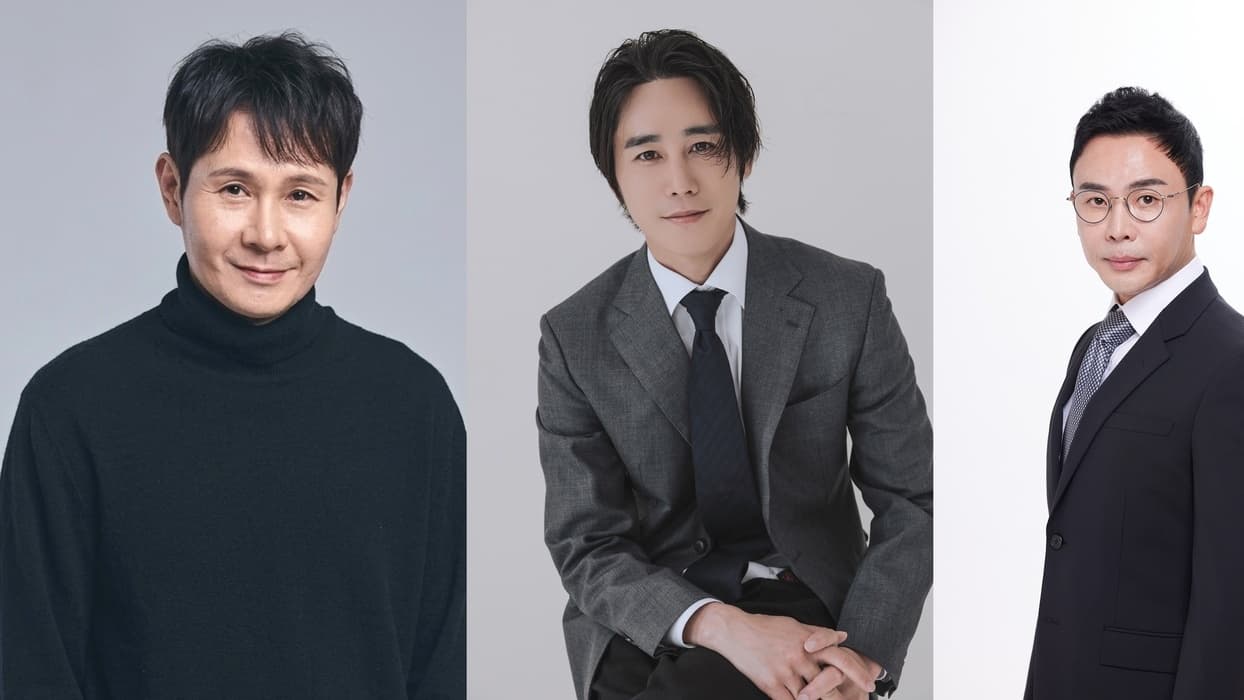
Veteran South Korean actor Lee Min-woo dropped one of the most entertaining backstage revelations of the year on JTBC's Knowing Brothers (Ask Us Anything), Episode 524, which aired on April 11, 2026 — confessing that talk show host Kang Ho-dong refused to let him speak for six straight hours during a taping nearly two decades ago.
The Saturday night special, themed around King Danjong — the tragic young monarch of the Joseon Dynasty — brought together Lee Min-woo and fellow actor Jung Tae-woo, both hailed as "original Danjong actors" from their respective TV roles, along with star history lecturer Seol Min-seok. What unfolded was part history lesson, part celebrity confessional, and entirely unmissable television.
The Six-Hour Silent Treatment That Viewers Could Not Stop Talking About
Lee Min-woo, who has been working in the Korean entertainment industry for 46 years — having debuted at the age of four as a boat pamphlet model — recalled a humbling experience from a 2007 taping of Strong Heart, the popular variety program where Kang Ho-dong served as host.
"Midway through the recording, Ho-dong suddenly turned to me and said, 'Min-woo, could you please speak a bit faster? If you keep going at that pace, people will change the channel,'" Lee Min-woo recounted, mimicking the delivery with exaggerated slowness. The studio audience erupted.
But the story didn't end there. Lee Min-woo said that after that brief scolding, Kang Ho-dong didn't give him a single moment to speak for the remaining six hours of filming. "He just stopped calling on me. I sat there the entire time," Lee Min-woo said, his tone oscillating between bewilderment and barely suppressed laughter.
Kang Ho-dong, seated among the regular cast, immediately tried to spin the narrative. "I was trying to help build your character," he insisted. "I saw you struggling and wanted to give you some breathing room." When Lee Min-woo shot back with, "Then why six hours of silence?", the room exploded again.
Jung Tae-woo seized the moment to pile on, delivering a reveal of his own: "He's actually completely different now. Back then, Lee Min-woo was like a grumpy old man trapped in a young body — stiff, slow, the whole thing. These days he talks a mile a minute." Lee Min-woo didn't argue the point.
Forty Books and a Director's Report: How Lee Min-woo Prepared for Danjong
Before the laughter faded, the conversation turned to the extraordinary lengths Lee Min-woo went to in order to portray King Danjong authentically. Describing the psychological weight of playing a real historical figure — a king who was dethroned at twelve, placed under house arrest, and executed at seventeen — he explained that the responsibility consumed him in ways other roles hadn't.
"Whenever I take on a historical role, the pressure is immense," Lee Min-woo said. "You're not just playing a character someone invented. You're standing in for a person who actually lived, who actually suffered."
To handle that pressure, he read over 40 books on the Joseon period and on King Danjong specifically, then compiled his research into written reports that he submitted to the production's director before filming began. "I needed the director to know what I understood about this person before I could commit to portraying him," he explained. Kang Ho-dong, visibly impressed, replied: "There's no other way to do it — you can't play someone you don't know."
Lee Min-woo also offered a wry observation about the physical demands of royal roles: "One upside of playing a king is that you barely have to move. You open a door, walk through it, and people have to bow. It's quite relaxing." The remark drew knowing laughter from Jung Tae-woo, who knew exactly what he meant.
Jung Tae-woo's Verdict on Park Ji-hoon's Danjong: "His Eyes Are Different"
The episode's most touching segment arrived when the conversation shifted to Park Ji-hoon, the actor who recently portrayed King Danjong in the blockbuster film The Man Who Lives with the King (Wangsanam) — a production that drew 16 million moviegoers and became one of the biggest Korean film events of the past year.
Jung Tae-woo, who first played Danjong at the age of twelve, didn't hold back. "Ji-hoon's eyes are just different," he said. "Even from his earlier work in Weak Hero Class, you could see something shifting in him. In Wangsanam, he carries this grief that is warm at the same time — sad, but also full of presence. That's rare."
He elaborated on the distinction between his own childhood performance and Park Ji-hoon's: "When I was twelve, I didn't really understand the politics. I was acting what I was told. Park Ji-hoon's portrayal feels like someone who has genuinely sat with the weight of this king's life. There's less silence — more of a longing, a plea. You feel him reaching out, not shutting down."
Jung Tae-woo added something personal: "I kept watching and thinking — he feels a little like me. I don't know why, but something in the way he holds himself reminded me of myself at that age." Then, with a grin: "He's younger and better-looking, so it's not a perfect comparison."
Lee Min-woo nodded vigorously in agreement, adding his own layer of admiration. "What struck me was the physical commitment. He lost 15 kilograms for the role — and then maintained that condition throughout three months of shooting, from the first day to the last. I've done long productions. I know how grueling that is. When I read in an interview that he 'intentionally prepared' every aspect of his physique from day one, I was genuinely moved. That's a different level of discipline."
History Class Meets Comedy: The Seol Min-seok Moment Nobody Saw Coming
History educator Seol Min-seok — whose online lectures have made him one of Korea's most beloved public figures — joined the episode as a third guest, ostensibly to provide historical context for the Danjong story. What he delivered was context, certainly, but also a revelation that sent the show's cast into momentary disbelief.
Midway through the taping, it emerged that Seol Min-seok and Kang Ho-dong share the same birth year: 1970. The two men, seated across from each other, looked at each other with matching expressions of mild shock. The regular cast was louder in its reaction — several members reportedly said "Are you serious?" in genuine disbelief.
It was the kind of unexpected, generationally leveling moment that Knowing Brothers specializes in — where a classroom setup suddenly gives way to something genuinely unscripted and human.
Why King Danjong Keeps Coming Back
The episode's central pull was a question that the three guests kept circling: why does this particular king continue to captivate Korean storytellers and audiences, generation after generation?
King Danjong, born in 1441, ascended to the throne at eleven years old and was forced to abdicate at fourteen when his uncle, later known as King Sejo, orchestrated a coup. He was exiled and later executed at seventeen. His story — of youth stolen, power corrupted, and innocence lost — has been adapted into Korean film and television for decades.
For Lee Min-woo and Jung Tae-woo, who both inhabited the role as children, the character carries a strangely personal weight. "I was close to his age when I first played him," Jung Tae-woo reflected. "The older you get, the more you understand what was actually happening to him. That understanding changes how you feel about the performance."
Lee Min-woo echoed the sentiment: "Playing a historical figure as a child is one thing. But as you grow, you keep returning to that character in your mind. You think — did I give him what he deserved? Did I understand him?"
Seol Min-seok offered a historian's perspective: Korea's ongoing fascination with Danjong is, in part, a cultural form of mourning — a recurring national acknowledgment of a story that ended too soon and too unjustly. Park Ji-hoon's acclaimed portrayal in Wangsanam is simply the latest chapter in that long conversation between Korean society and its past.
Knowing Brothers airs Saturday nights on JTBC. The April 11 Danjong special is available to stream on TVING.
How do you feel about this article?
저작권자 © KEnterHub 무단전재 및 재배포, AI학습 및 활용 금지
Entertainment Journalist · KEnterHub
Entertainment journalist specializing in K-Pop, K-Drama, and Korean celebrity news. Covers artist comebacks, drama premieres, award shows, and fan culture with in-depth reporting and analysis.
Comments
Please log in to comment