From 'Graduating' Unit to Stadium Kings: How NCT Dream Became K-Pop's Most Unlikely Touring Powerhouse
A six-day sold-out KSPO Dome finale and 86-city live viewing reveal what happens when an experimental concept meets unstoppable fan demand
 By Jang Hojin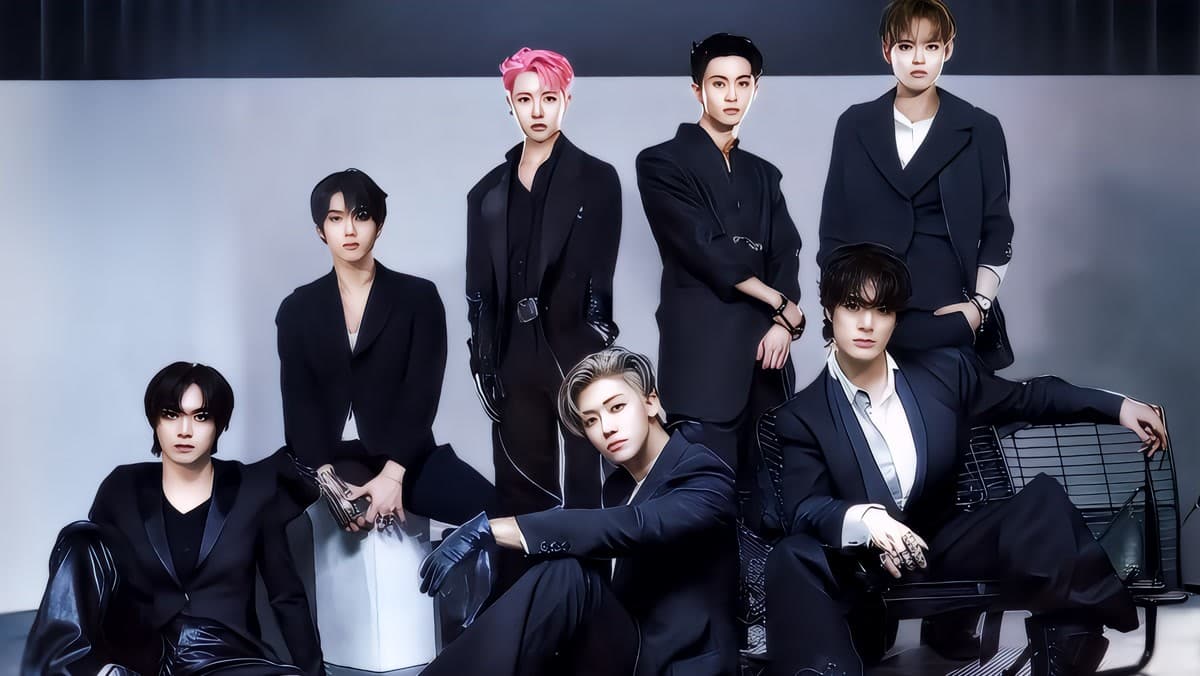
When NCT Dream debuted in August 2016 under SM Entertainment's rotating "graduation" system — where members would age out at 20 — few industry observers expected the unit to outlast a single album cycle, let alone headline stadiums across Asia. Ten years later, the group is wrapping up their fourth world tour with a six-day sold-out residency at Seoul's KSPO Dome, a finale so anticipated that it will be broadcast live in 86 cities worldwide. The journey from disposable concept to stadium headliner is not just a feel-good story. It is a case study in how fan economies can override corporate strategy.
The Graduation System That Almost Killed Them
SM Entertainment designed NCT as a modular brand — multiple units sharing a name but operating independently, with Dream specifically conceived as a youth-oriented subunit whose members would rotate based on age. The concept made organizational sense. It promised a perpetual pipeline of fresh faces. What it failed to account for was the depth of emotional investment fans make in fixed lineups.
By 2020, fan pushback had become impossible to ignore. The hashtag #FixedDream trended globally, with NCTzens (the group's fandom) arguing that the graduation policy treated artists as interchangeable parts. SM relented in April 2021, confirming NCT Dream as a permanent seven-member group. That decision — born of fan pressure rather than corporate planning — turned out to be the most commercially significant move in NCT Dream's history. Their first album as a fixed unit, Hot Sauce (2021), sold over two million copies in its first week, a performance that dwarfed anything the rotating-era group had achieved.
A Stadium Arc Built One Tour at a Time
NCT Dream's touring trajectory tells the growth story in concrete numbers. The first Dream Show in 2019 was an arena-level production. By the third tour in 2023-2024, the group was filling 37 dates across 25 cities spanning the Americas, Europe, and Asia. The fourth tour, which launched in July 2025, escalated to stadium-class venues that would have seemed absurd for the unit just five years ago.
The numbers are striking. Seoul's Gocheok Sky Dome hosted 60,000 fans across three nights in July 2025 — a venue where NCT Dream now holds the record for most concerts by any K-pop act. Bangkok's Rajamangala National Stadium, Thailand's largest venue, drew 66,000 across two nights, making NCT Dream the only K-pop group to headline the stadium for consecutive years. Jakarta International Stadium, with its 82,000 capacity, and Taipei Dome, Taiwan's largest indoor arena, both saw sold-out performances.
The KSPO Dome Finale — and Why 86 Cities Matter
The six-show KSPO Dome residency running March 20-29 sold out the moment tickets went live. But what elevates this finale beyond a standard tour closer is the scale of its distribution infrastructure. Four of the six performances will stream globally via Beyond LIVE and Weverse. More remarkably, the March 21 and 28 shows will be screened simultaneously in cinemas across 86 cities — nine in South Korea, 43 in Japan, and dozens more spanning Jakarta, Macau, Singapore, and Taipei.
This hybrid distribution model reflects a broader shift in how K-pop touring generates revenue. The concert itself is no longer the sole product. It is the anchor around which streaming subscriptions, cinema ticket sales, exclusive merchandise drops, and social media engagement campaigns orbit. SM Entertainment's Q4 2024 earnings bear this out: concert revenue reached 22.5 billion won ($15.5 million) during a quarter when NCT Dream performed nine shows, while merchandise and licensing revenue — much of it tour-driven — jumped 33.7% to 51.2 billion won ($35.3 million).
What SM Almost Got Wrong — and What the Market Corrected
The NCT Dream story is instructive precisely because the group's success contradicts its original design. SM's modular NCT concept assumed that brand continuity mattered more than member continuity. The market proved otherwise. Fans do not invest in logos. They invest in people — in the specific chemistry of seven individuals who grew up together on camera, whose inside jokes and creative evolution they have followed since adolescence.
When SM scrapped the graduation system in 2021, it was not an act of generosity. It was a recognition that the fixed lineup had already generated more commercial value than the rotating concept ever could. Hot Sauce sold 2 million first-week copies. ISTJ (2023) surpassed 3.5 million. Go Back to the Future (2025) pushed past 4 million. Each album set a new record because the audience was growing alongside a group it refused to let dissolve. The touring revenue followed the same curve.
What Comes Next
NCT Dream's finale concert promises new songs and overhauled staging that the members have described as essentially "a new show." The group has positioned itself as SM Entertainment's most consistent revenue engine — a status that seemed laughable when they were labeled a temporary training exercise for teenagers. With a decade of momentum, a fandom that literally rewrote company policy, and a stadium-touring infrastructure now spanning two hemispheres, the question for NCT Dream is no longer whether they belong on this scale. It is whether any other fourth-generation act can match the trajectory that fan devotion built.
How do you feel about this article?
저작권자 © KEnterHub 무단전재 및 재배포, AI학습 및 활용 금지
Entertainment Journalist · KEnterHub
Entertainment journalist specializing in K-Pop, K-Drama, and Korean celebrity news. Covers artist comebacks, drama premieres, award shows, and fan culture with in-depth reporting and analysis.
Comments
Please log in to comment