From Actor to Director: Jang Dong-yoon's Debut Film Nuruk
The Tale of Nokdu star steps behind the camera with a quiet, intimate story about fermentation, family, and inheritance
 By Park Chulwon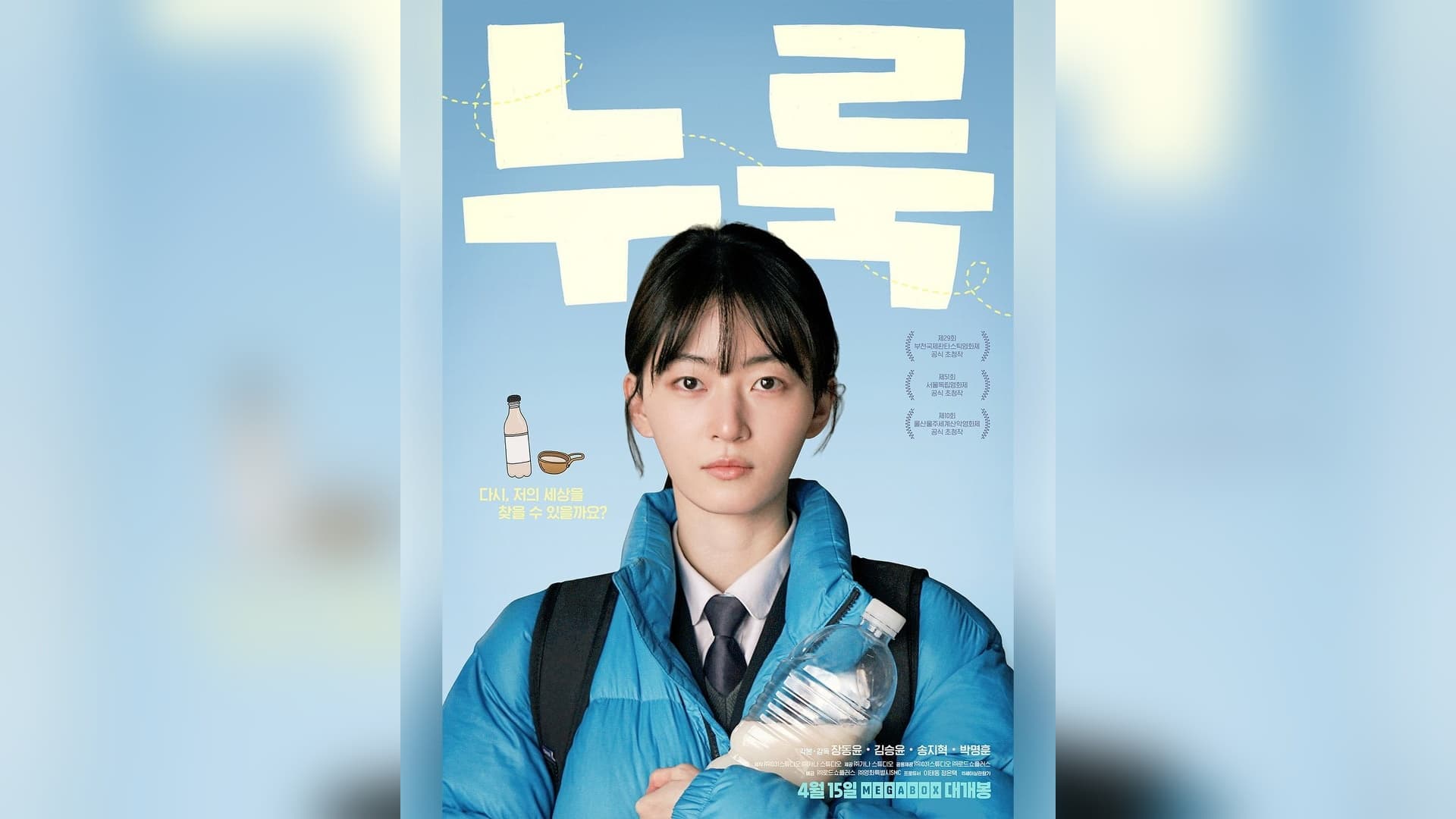
Jang Dong-yoon has spent a decade building a reputation as one of Korean drama's most instinctive actors. From his breakout in The Tale of Nokdu to his nuanced work in Netflix's Daily Dose of Sunshine, he has consistently demonstrated an ability to find emotional texture in roles that could easily become surface-level. Now, with his first feature-length directorial effort Nuruk (누룩, also titled The Yeast), he steps behind the camera — and the results have already made an impression on the Korean independent film circuit.
The film opens April 15, 2026 at Megabox in an exclusive run, distributed by Roadshow Plus. It arrives having already screened at BIFAN 2025, the Seoul Independent Film Festival, and the Ulju Mountain Film Festival, where it collected measured praise for its ambitious visual language and the precision of its symbolic framework.
A Story Rooted in Fermentation and Family
The premise of Nuruk is quietly striking. Da-seul (played by Kim Seung-yoon) is an 18-year-old girl living with her family in the rural Korean countryside, where her parents operate a traditional makgeolli brewery. Makgeolli — a milky, lightly fizzy rice wine — is one of Korea's oldest fermented beverages, and its production depends entirely on nuruk, the fermentation starter block that initiates the entire process.
When the family's precious batch of nuruk mysteriously disappears, Da-seul sets out to find it. What begins as a straightforward search becomes something more complex: an excavation of buried family truths, long-held silences, and the inherited weight of tradition. Also starring Song Ji-hyuk as Da-hyeon (Da-seul's brother) and veteran actor Park Myung-hoon, the film draws its emotional power from the gap between what families say and what they leave unspoken.
The main poster crystallizes this intent: Da-seul holds a makgeolli bottle with the careful reverence of someone protecting something irreplaceable, set against a pastel purple background. The tagline reads: "Do you have one too? The one precious thing." It is a question directed inward — at Da-seul, at her family, and at every viewer who has ever held something that felt like it belonged to the past.
Themes That Reach Beyond the Kitchen
Nuruk operates on multiple registers simultaneously. On the surface, it is a coming-of-age story — a teenage girl confronting her family with honesty and searching for something concrete in a world that feels unstable. Beneath that, the film engages with the tension between tradition and modernization, a theme that has shaped much of Korean cinema's most compelling recent work.
The makgeolli brewery is itself a character. Traditional makgeolli production in Korea has declined significantly over the past several decades as industrial alcohol production expanded and rural economies shifted. The act of choosing to maintain a nuruk-based brewery in the present day is already a form of resistance — and Jang's film is interested in what that resistance costs, and who inherits both the practice and the burden.
The film also engages, with careful restraint, with alcoholism — a subject Korean cinema and drama have historically approached with varying degrees of directness. Here, according to festival descriptions, it surfaces as part of the family's buried truth, something Da-seul must reckon with as she traces the missing nuruk. It is framed not as melodrama but as inheritance: a wound passed through generations, carried in the same hands that stir the fermentation vat.
Critics and festival programmers who saw the film at BIFAN and Seoul Independent described it as "ambitious and thoughtful," with particular attention paid to its visual precision. The cinematography draws on the earthy, textured aesthetic of the Korean countryside without romanticizing it — there is mud and silence and the weight of seasons in the frames.
Jang Dong-yoon Behind the Camera
The directorial path for Jang Dong-yoon began formally with his 2023 short film Please Be My Ear, which served as an initial exploration of his instincts as a filmmaker. Nuruk is a substantial expansion of that work — in length, ambition, and thematic complexity. That he has arrived at his first feature with a story this specific, this grounded in a particular cultural and geographic world, suggests a director who knows what he wants to say.
Produced by Lee Tae-dong, whose credits include the films Damn Good Company and Mr. Kang, Nuruk carries the fingerprints of an experienced production sensibility. Lee Tae-dong's background in character-driven, culturally specific work aligns well with what the film is attempting.
It is worth noting what kind of actor Jang Dong-yoon has been, because it illuminates the kind of director he appears to be becoming. Across Mr. Sunshine, The Tale of Nokdu, and the Netflix series Like Flowers in Sand, he has shown a preference for roles that carry historical or cultural specificity — characters defined by the world they come from, not just by their emotional arcs. The makgeolli world of Nuruk fits that pattern precisely. This is a filmmaker drawn to the texture of place and heritage.
The Road to April 15
The film's festival circuit run — BIFAN, Seoul Independent Film Festival, Ulju Mountain Film Festival — positioned it squarely within Korea's independent cinema ecosystem before any wider commercial distribution. This trajectory is common for debut features of this type: build credibility with curators and critics first, then bring the work to audiences in a focused theatrical run.
The Megabox exclusive release model keeps the film in the prestige independent space while still offering a genuine theatrical experience. It will reach audiences who seek it out, rather than those stumbling into a multiplex on a Saturday afternoon — which is, arguably, exactly the right audience for a film this quietly demanding.
For fans of Jang Dong-yoon who have followed his acting career, Nuruk offers a different kind of encounter with his sensibility. The actor who found emotional precision in roles across multiple genres is now channeling that precision into a story about fermentation and loss. The connection between the two — between the patience required to make makgeolli properly and the patience required to tell a story honestly — may not be accidental.
Nuruk opens exclusively at Megabox on April 15, 2026.
How do you feel about this article?
저작권자 © KEnterHub 무단전재 및 재배포, AI학습 및 활용 금지
Entertainment Journalist · KEnterHub
Entertainment journalist focused on Korean music, film, and the global K-Wave. Reports on industry trends, celebrity profiles, and the intersection of Korean pop culture and international audiences.
Comments
Please log in to comment