BSS Signals a Genre-Bending New Era with 'Teleparty': A Deep Dive into SEVENTEEN's Boldest Subunit
From energy anthems to retro pop sophistication — how BooSeokSoon's January return is rewriting the rules of K-pop subunit releases
 By Jang Hojin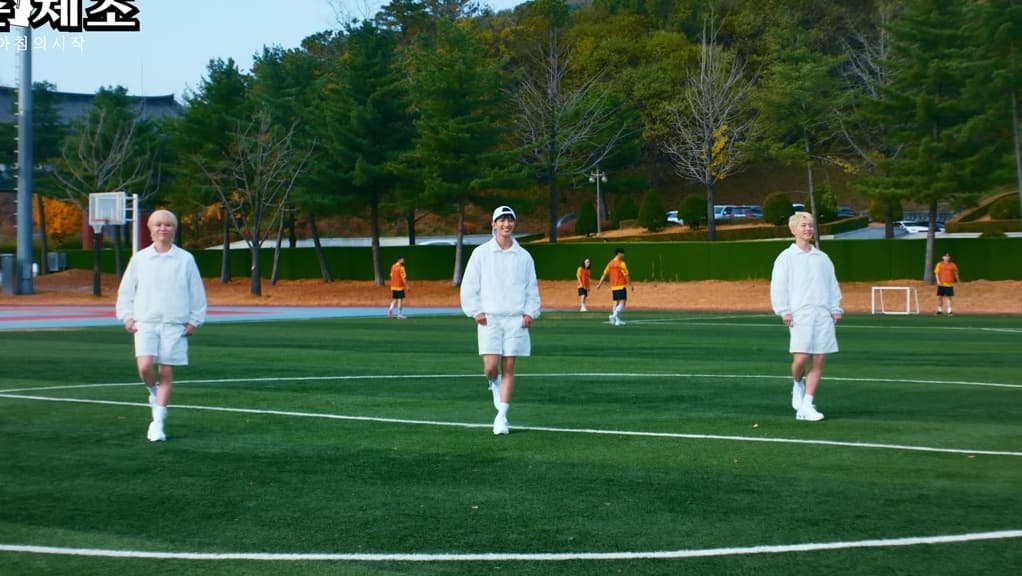
BSS, SEVENTEEN's beloved subunit, will drop their single album "Teleparty" on January 8, 2025. The three-track release — featuring "CBZ (Prime Time)," "Happy Alone," and "Love Song" — represents a striking departure from the anthemic energy that defined their breakout hit "Fighting" in 2023. Where that single channeled pure exuberance into an inescapable chorus, "Teleparty" appears poised to explore swing, country, and new jack swing influences that few would have predicted from K-pop's most charismatic trio. It is a statement of artistic intent.
The Rise of BooSeokSoon: SEVENTEEN's Most Charismatic Trio
BSS — an abbreviation of BooSeokSoon, derived from the stage names of members DK (Dokyeom), Seungkwan, and Hoshi — occupies a unique position within SEVENTEEN's elaborate unit system. While the parent group divides its 13 members into hip-hop, vocal, and performance units for album production, BSS exists outside that structure entirely. The subunit was born from variety-show chemistry rather than musical taxonomy, and that origin story is precisely what makes it interesting.
Their debut single "Just Do It" in 2018 leaned fully into comedic energy, a deliberate counterweight to SEVENTEEN's increasingly sophisticated album work. It was fun. It was loud. And for several years, it remained BSS's only official release — a one-off experiment that fans cherished but few expected to become a recurring project. That changed dramatically in February 2023, when "Fighting" arrived with the force of a cultural moment.
"Fighting" was not merely a subunit comeback. It became one of the year's defining K-pop singles, earning Song of the Year nominations at multiple major Korean music awards. The track transformed BSS from a novelty act into a commercially serious entity within the SEVENTEEN ecosystem. More importantly, it proved that a group built on joyful chaos could deliver a song with genuine staying power — one that transcended its variety-show origins to become a legitimate pop anthem.
Dissecting 'Teleparty': Three Tracks, Three Tonal Worlds
The significance of "Teleparty" lies not in its existence — a follow-up to "Fighting" was inevitable — but in its ambition. The tracklist signals a deliberate pivot away from the anthemic energy-drink pop that made BSS famous, toward something more textured and genre-conscious. Each of the three tracks appears to draw from a different retro well, and the choices reveal a subunit that takes its musical identity seriously.
"CBZ (Prime Time)" serves as the title track, and its reported swing and big-band jazz influences represent perhaps the boldest choice. Swing has enjoyed periodic K-pop revivals — most notably through acts like SHINee and some of EXO's b-sides — but it remains a relatively rare foundation for a title track. For BSS to lead with it suggests a confidence in their vocal textures that "Fighting" only hinted at. DK's tenor, Seungkwan's bright power vocals, and Hoshi's rhythmic precision could be formidable tools in a swing arrangement, where timing and vocal interplay matter more than sheer volume.
"Happy Alone" reportedly incorporates country influences — a genre that has been steadily infiltrating K-pop's sonic palette throughout 2024, from BTS members' solo work to various girl group experiments. The question is not whether country works in Korean pop, but whether BSS can bring their signature warmth to a genre built on storytelling and emotional directness. Given that their greatest strength has always been sincerity disguised as comedy, the pairing could be more natural than it appears on paper.
The third track, "Love Song," draws from new jack swing — a genre that has deep roots in K-pop's DNA but is rarely acknowledged explicitly. The choice reads as both homage and expansion, connecting BSS to a broader pop lineage while demonstrating that their genre interests extend beyond their variety personas. Together, the three tracks paint a picture of a subunit that wants to be evaluated on musical merit, not just personality.
Fan Expectations and Pre-Release Buzz
The anticipation surrounding "Teleparty" carries a different quality than the hype for "Fighting." In 2023, fans expected energy and received a polished pop anthem — a pleasant surprise that exceeded modest expectations. This time, the dynamic is reversed. CARATs (SEVENTEEN's fanbase) are arriving with elevated expectations, and BSS must deliver something that justifies the genre-bending promises embedded in the tracklist.
Pre-release discourse in fan communities has been notably analytical. Comparisons to SHINee's genre-exploratory approach have surfaced repeatedly, alongside discussions about whether SEVENTEEN's self-producing philosophy extends to subunit releases with equal rigor. The fact that fans are debating musical influences rather than simply counting down release days speaks to a maturation in how K-pop audiences engage with subunit content.
Industry observers have also taken notice. "Teleparty" arrives during a January release window that is traditionally quieter than the spring and fall comeback seasons, giving BSS room to command attention without competing against multiple simultaneous top-tier releases. The timing appears strategic — and in K-pop, strategic timing often reflects label confidence in the product.
What 'Teleparty' Means for BSS and SEVENTEEN in 2025
If "Teleparty" succeeds in establishing BSS as a musically adventurous act rather than a personality-driven novelty, the implications extend beyond the subunit itself. It would validate a model where K-pop subunits function as genuine creative laboratories rather than contractual obligations — spaces where artists can take risks that the parent group's brand identity might not accommodate.
For SEVENTEEN heading into 2025, BSS's evolution adds another dimension to an already diverse discography. The parent group's military service timeline looms on the horizon, making subunit activities increasingly important for maintaining SEVENTEEN's commercial and cultural momentum. "Teleparty" is not just a single album. It is a test case for whether one of K-pop's most successful acts can sustain its relevance through creative reinvention at the subunit level. The answer arrives January 8.
How do you feel about this article?
저작권자 © KEnterHub 무단전재 및 재배포, AI학습 및 활용 금지
Entertainment Journalist · KEnterHub
Entertainment journalist specializing in K-Pop, K-Drama, and Korean celebrity news. Covers artist comebacks, drama premieres, award shows, and fan culture with in-depth reporting and analysis.
Comments
Please log in to comment